

HubSpot started in 2005 with two MIT guys, a blog, and a pretty annoying problem: nobody wanted to answer cold calls anymore. Sixteen years later, in 2021, the company’s yearly revenue crossed $1 billion. No giant TV budget did that. Mostly it was articles, free tools, and a stubborn habit of teaching people things before asking them for money.
So here’s the question this guide chases. How HubSpot built a $1B brand is not a mystery, and it’s not luck either. The company made a string of specific choices that most businesses could still copy in a smaller form. Some of those choices were smart. A few were messy. Plenty were boring, repeated for years, which is honestly the part most people skip.
This guide walks through the whole story in plain language. You’ll see how the idea was born, how the blog really worked, why a free website grader mattered more than any ad, and what the revenue numbers look like year by year. You’ll also see where the model cracked, what critics say, and how a small team can borrow the useful bits without a Boston office or a nine-figure budget. If you’re new to marketing, every term gets explained the first time it shows up.
What You Will Learn in This Guide
- How two founders turned a frustration with cold calling into a whole marketing philosophy called inbound
- Why the HubSpot blog worked, and how it fed sales instead of just collecting traffic
- How free tools like Website Grader pulled in millions of leads without ad spend
- How HubSpot Academy, INBOUND and the Culture Code built trust and a recognizable name
- How the free CRM and the flywheel model changed the business from a marketing app into a platform
- The actual revenue and customer numbers behind the $1B milestone
- What critics say, where the strategy stumbled, and what changed with AI search
- A step-by-step playbook to apply the same ideas to your own brand
TL;DR
- HubSpot grew by publishing helpful content and free tools that people found on their own, instead of buying attention through cold outreach.
- The blog and Website Grader worked because they answered real questions and handed over a clear result in seconds.
- Free education (HubSpot Academy) created a trained customer base and a hiring pool of people who already knew the product language.
- Revenue went from about $116 million in 2014 to over $1.3 billion in 2021, helped by the IPO, the free CRM, and multiple product hubs.
- The model has limits: pricing complaints, crowded content and AI search have all hurt parts of the machine.
- Copying the spirit works better than copying the tactics: pick a narrow audience, teach first, build one free tool, then measure revenue, not just traffic.
How HubSpot Built a $1B Brand: The Real Starting Point
The story starts with a plain business problem, not a clever slogan. Brian Halligan and Dharmesh Shah noticed that buyers had stopped answering interruptions, so selling to them the old way kept getting harder. Everything HubSpot did later grew out of that single observation, and it’s worth understanding before any tactic.
The Problem Halligan and Shah Kept Running Into
Brian Halligan had spent years in enterprise software sales, and the job was getting worse. The US National Do Not Call Registry launched in 2003. DVRs let people skip ads. Email spam filters got better every year. Salespeople were still hammering the phones, but fewer people picked up. Small businesses, in particular, couldn’t afford big ad campaigns, and cold outreach burned hours for tiny returns.
Halligan and Shah met at MIT Sloan, where Shah was a student and Halligan was a lecturer and later a fellow. They compared notes. Buyers weren’t dumb or rude, they just had new habits: they Googled the problem, read a few blog posts, asked friends, and only then talked to a vendor. If a company wanted attention, it had to be the thing they found during that research, not the interruption during dinner.
That’s the whole thesis. Be where the question gets asked. Everything else is detail.
Why “Inbound Marketing” Needed a Name
Ideas that don’t have names don’t spread. Halligan began calling the approach “inbound marketing” around 2005 and 2006, as the opposite of outbound tactics like cold calls, trade show booths, direct mail and bought ads. Outbound pushes a message at strangers. Inbound pulls interested people toward you with content and tools they actually want.
The label did two jobs at once. It gave the founders a way to explain their product in one line, and it gave other marketers a word to repeat. Within a few years, “inbound” was showing up in job titles, conference talks and Google searches. Shah and Halligan later published a book, Inbound Marketing: Get Found Using Google, Social Media, and Blogs (2009), with a foreword by David Meerman Scott. Notice what happened: HubSpot didn’t just sell software, it defined the category the software lived in. That’s a much stronger position than being one more tool in a crowded list.
The First Customers and the Tiny Budget
HubSpot’s early customers were small and mid-sized businesses, think a local accounting firm, a regional manufacturer, a boutique agency. They had little budget, no big marketing team, and a nagging suspicion that their website was bringing in nothing. The early product bundled a blog tool, search optimization advice, social publishing and analytics so a non-expert could run the whole thing without stitching five tools together.
Pricing started in the range of a few hundred dollars a month, which sounds small now, but it fit buyers who might otherwise spend nothing on software. The company also had very little money for ads, so it used its own product on itself. That’s the quiet trick here. Every article HubSpot published about attracting leads was also a live demo of attracting leads. The marketing was the proof, and potential customers could watch it working in public.
If you want more beginner-friendly breakdowns of strategies like this, the digital marketing learning hub covers the basics in plain English.
The Blog Behind How HubSpot Built a $1B Brand
The blog is the part everyone remembers, and for good reason. It started in 2006 and became the main traffic source for the company. Still, most explanations stop at “they wrote lots of articles”, which misses what made it work and why plenty of imitators got nowhere.
Writing for the Questions People Actually Type Into Google
The early HubSpot blog didn’t chase clever headlines. It targeted the exact phrases small business owners searched: “how to start a blog”, “what is a landing page”, “how to get more leads from your website”. Each post answered one question clearly, with screenshots and steps, and ended with a way to learn more.
This matters because search is intent. Someone typing “how to write a business blog” is probably about to try it, and they’re at the right moment to hear about a tool that helps. The mistake most new bloggers make is writing about what they find interesting. HubSpot wrote about what customers were already confused by. That one shift, from the company’s agenda to the reader’s problem, explains much of the traffic.
If you want to practice the research side, the SEO learning section walks through finding these questions step by step.
Volume, Consistency and the Compounding Effect
HubSpot published often, and kept publishing for years. Early on, the blog ran multiple posts a week, with staff writers and later contributions from outside marketers and customers. Older posts weren’t abandoned either. Teams updated winners, merged weak overlapping articles and refreshed stats so rankings held.
Compounding is the honest explanation. A post published in 2012 could still bring in visitors in 2019, so every new article added to a growing base instead of resetting it. Contrast that with a paid ad, which stops the second the budget does. Look at what actually happens to a company that publishes twice a month for a year and then quits: traffic flattens fast. HubSpot never quit, and that’s why third-party tools estimate its blog traffic in the millions of visits a month.
How the Blog Fed Sales Instead of Just Collecting Traffic
Traffic alone pays no bills. HubSpot’s blog posts carried calls to action, usually offers for a free template, an ebook, or a tool. A reader who downloaded one gave an email address, which turned an anonymous visitor into a lead. Sales teams then saw which pages and offers that person had touched, so the first call began with context instead of a cold intro.
Later the team organized content into “topic clusters”: one broad pillar page on a subject, with many detailed posts linking back to it. That structure helped search engines see HubSpot as an authority on the whole topic. The lesson for smaller teams is simple. Don’t write random posts. Pick a handful of topics your buyers care about, cover each one deeply, and always attach a next step.
Free Tools: The Website Grader Trick and Other Lead Magnets
If the blog was the foundation, free tools were the accelerant. Dharmesh Shah, a developer by training, liked building small utilities that gave instant answers. Those utilities pulled in people who might never have read a long article, and they gave HubSpot data and trust at the same time.
Website Grader and the Power of an Instant Result
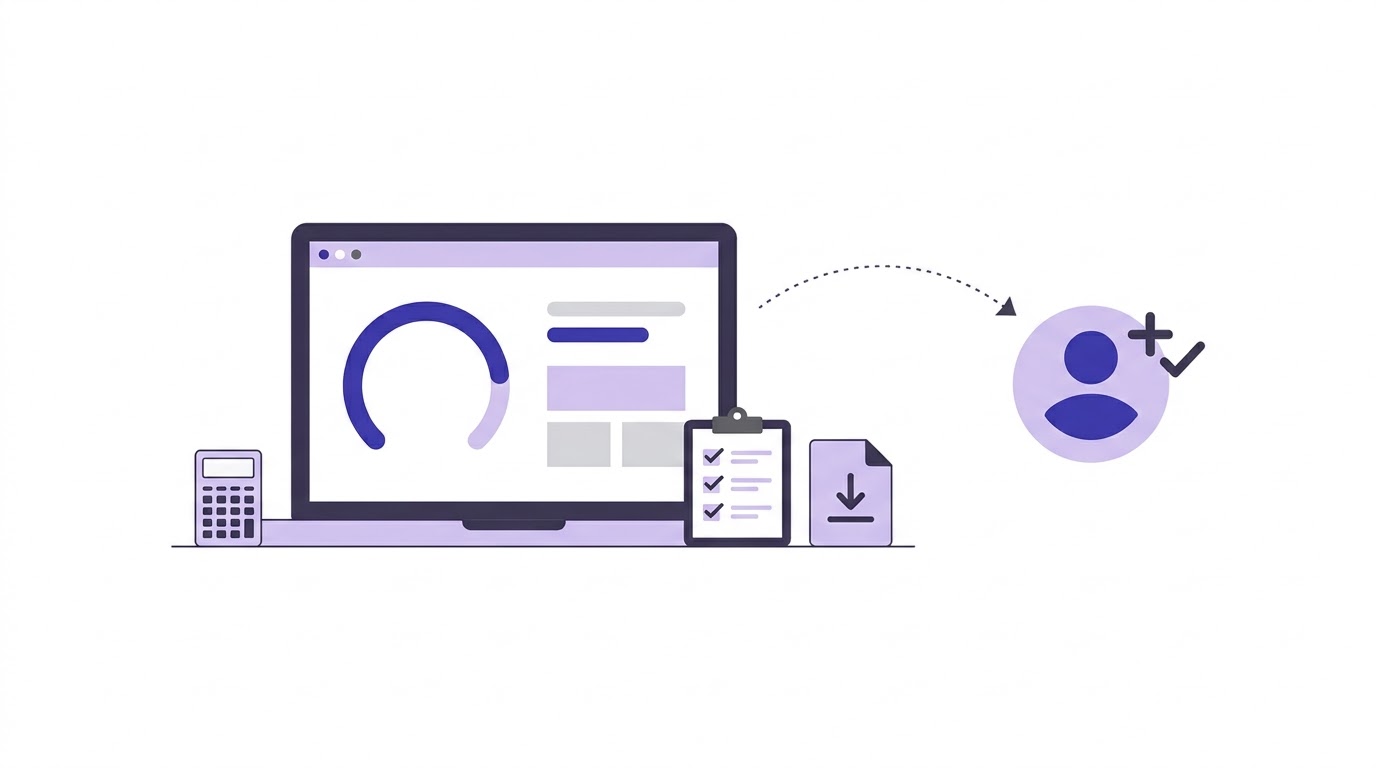
Website Grader launched in 2006. You typed in your site address, waited a few seconds, and got a score with plain advice on speed, mobile friendliness, SEO basics and security. It was free, needed no long signup before showing the result, and graded millions of websites over the years.
The score is what made it work. People love finding out how they’re doing, and a low number creates a natural question: how do I fix this? HubSpot’s answer, naturally, was its own software and content. The grader also earned backlinks from marketers who mentioned it, which helped the main site rank. A tool that solves a tiny problem in ten seconds can outperform a thousand-word ebook, because it respects the visitor’s time.
Why Free Tools Beat Gated Ebooks for Trust
A gated ebook asks for an email before delivering anything. A free tool delivers first. That order flips the trust equation. When Website Grader handed over a score before asking for contact details, visitors felt the company had earned the next step, so more of them took it.
There’s a practical difference too. An ebook gets read once, maybe. A tool gets reused, bookmarked and shared in Slack channels. HubSpot kept building along these lines, and the same logic still applies today. If you run a small agency, a basic audit checker beats yet another PDF. The mistake to avoid is building something clever that nobody searches for. Start with a question people already type, then make the shortest possible path to the answer.
Templates, Generators and Calculators That Kept Working
Over the years HubSpot released a long list of free utilities and downloadable assets: Make My Persona (a buyer persona builder), Blog Ideas Generator, an email signature generator, invoice templates, and hundreds of editable marketing templates. Each one targeted a specific search like “free invoice template” or “email signature generator”.
That’s a smart structure because each asset ranks for its own phrase and brings its own audience. Many visitors came for a template, used it, and never bought anything. That’s fine. Some did buy, and the rest still remembered the orange logo. It’s a numbers game played with patience. If you try this, pick one asset, track how many users it brings and how many convert, then decide whether to build a second. Don’t build twenty before you know one works.
Education as Marketing: HubSpot Academy and the Inbound Certification
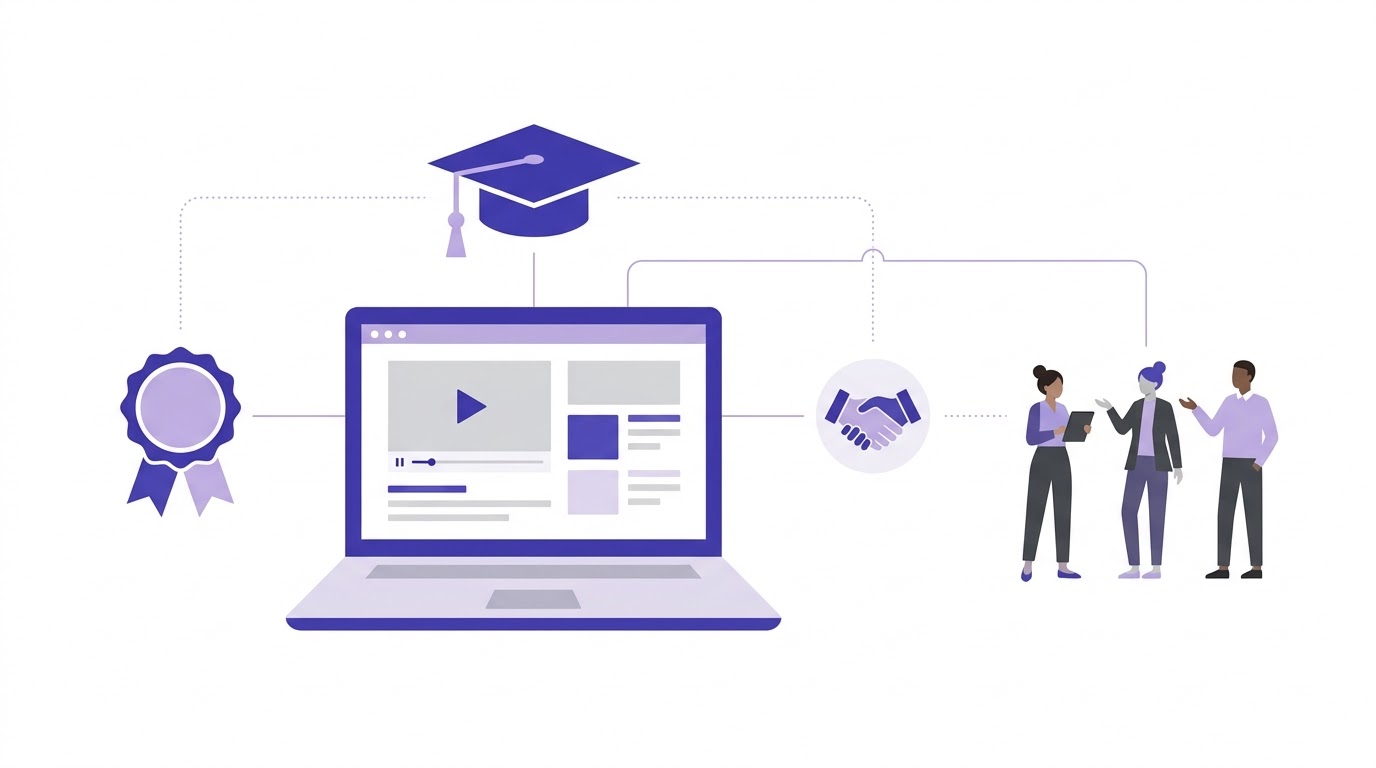
Most software companies write help docs and stop there. HubSpot decided to teach the whole craft of marketing for free. That choice created customers, trained a workforce, and gave the brand a reputation as the place to learn, not just the place to buy.
Free Courses and Certifications Anyone Could Take
HubSpot Academy opened in the early 2010s with free video lessons and certifications, starting with the Inbound Certification. Anyone could sign up, watch the lessons, take an exam, and put the badge on a LinkedIn profile. No credit card, no sales call, no trial of the software required.
That’s generous, but it’s also shrewd. A student who spends six hours learning inbound marketing from HubSpot absorbs HubSpot’s vocabulary, its frameworks, and its screenshots. Later, when that person gets a marketing job and needs a tool, guess which name feels familiar. Certifications also gave job hunters something concrete to show, so thousands of people had a personal reason to talk up the brand. Teaching worked as distribution.
Agency Partners and the Solutions Partner Program
HubSpot noticed that many small businesses didn’t want to run marketing themselves. They wanted an agency to do it. So the company built a partner program, where agencies could learn the software, get certified, resell it, and earn a share of customer revenue.
This gave HubSpot a sales force it didn’t have to hire. Thousands of agencies around the world recommended the platform to their clients, because it made their own work easier and paid them. It also spread the brand into countries and industries the core team couldn’t reach alone. Partners got training and leads, HubSpot got reach. If you run any product with a service layer around it, this is worth stealing: let people who make money from your tool become your loudest recommenders.
Teaching a Shared Vocabulary
Listen to how HubSpot users talk. They say “inbound”, “lead nurturing”, “buyer persona”, “lifecycle stage”, “flywheel”. Many of these terms were pushed into everyday marketing language by HubSpot’s content and courses, and once a customer thinks in your words, comparing you to competitors gets harder.
This effect is subtle but strong. If a buyer already describes their problem using your framework, your product feels like the natural answer rather than one option among ten. Be careful, though. Invented jargon without real substance annoys people fast. HubSpot’s terms worked because they matched real steps that marketers actually do, so the language helped instead of confusing. Name things only when the name makes the idea clearer.
Brand, Events and Culture: INBOUND, the Culture Code and Consistent Identity
Content and tools brought in leads, but a brand is more than leads. People need to feel something when they see the name. HubSpot built that feeling with a yearly conference, an unusually open company culture, and a look that never changed much.
INBOUND: A Conference That Became a Yearly Pilgrimage
The first INBOUND event in 2007 drew a few hundred people. By 2019 it pulled about 26,000 attendees to Boston, with big-name speakers, workshops, parties, and a lot of orange. Customers, partners, prospects and employees all ended up in one place, which is rare for a software company.
The event did several jobs at once. It gave sales a warm room full of buyers. It gave customers a chance to swap tips with peers. It produced a flood of social posts, photos and press every September. Most small brands can’t run a stadium-scale show, but the idea shrinks well: a local meetup, a monthly webinar, or a Slack community can create the same feeling of belonging to something.
The Culture Code Deck and Employer Brand
In 2013, Dharmesh Shah published the HubSpot Culture Code, a long slide deck explaining how the company thinks about work, transparency and autonomy. It was shared on SlideShare and was viewed millions of times. It wasn’t a polished recruiting ad. It was honest, a little nerdy, and full of specific examples of how HubSpot expected people to behave.
An employer brand matters more than founders like to admit. Good people read that deck and wanted in, and customers read it and trusted a company that was open about itself. The lesson: write down how you actually operate and publish it. If the document is real, it attracts the right hires and buyers. If it’s decorative, people sniff that out immediately.
One Color, One Voice, Repeated for Years
HubSpot’s orange sprocket logo and orange accents appear on everything: blog headers, templates, event signs, social posts. The tone is friendly, practical and a bit playful. Articles speak to a beginner without talking down to them.
Consistency sounds boring, but it’s how recognition builds. Someone might see HubSpot’s name twenty times before ever clicking, and each exposure lands harder when it looks and sounds the same. Many small brands change their colors, fonts and voice every few months because they’re bored. The audience hasn’t even noticed the old version yet. Pick a look, keep it for years, and let repetition do the work.
From Marketing Tool to Platform: The Product Moves That Fed the Brand
A brand on content alone only goes so far. To reach $1 billion in revenue, HubSpot had to turn a single marketing app into a wide platform that handled sales, support, websites and operations. Each product move also fed the brand story, so growth in features and growth in reputation kept pulling each other up.
The Free CRM Gamble of 2014
In 2014 HubSpot launched a free CRM, a customer relationship management tool that tracks contacts, deals and conversations. Salesforce charged real money for similar software, so giving one away looked strange. The point was to get companies using HubSpot as their system of record, then sell them paid upgrades for marketing, sales and service.
It worked because it matched the inbound logic: let people try something useful first. Over time the free CRM became the front door for millions of users. The risk is obvious. Free users cost money to support and many never pay. HubSpot accepted that trade because the paid share was big enough, and because users who learned the free tool tended to stay inside the ecosystem as their needs grew.
Sales Hub, Service Hub and the Multi-Hub Strategy
After marketing came Sales Hub (around 2016), Service Hub (2018), a content management system known as CMS Hub, and Operations Hub (2020). Customers could start with one product, then add others on the same data, so a support ticket could connect to a marketing email and a sales deal in a single record.
This changed the economics. Selling a second or third product to an existing customer is far cheaper than finding a new one, and it raises how much each customer pays over time. It also made switching harder, since all the data lived in one place. That’s a business advantage and a source of customer complaints, and it’s worth remembering both.
The Flywheel, Acquisitions and Newsletters
At INBOUND 2018, HubSpot dropped its old funnel picture for a flywheel: attract, engage, delight, with happy customers feeding new growth. The idea was simple. Funnels end when a person buys, while a flywheel keeps spinning if customers refer others and stay. Support and success teams became part of marketing in the model.
The company also bought its way into new areas: Motion AI (chatbots, 2017), The Hustle (a large daily newsletter, 2021) and Clearbit (data enrichment, 2023). The Hustle in particular showed that HubSpot wanted direct audience ownership, because a daily email list is a media business. For anyone building their own list, the email marketing hub explains how newsletters are actually grown.
The Numbers Behind How HubSpot Built a $1B Brand
Stories are nice, but the numbers show whether the strategy truly worked. HubSpot’s public filings make this one of the more transparent growth stories in software. Here are the key figures and what they say about the machine.
Revenue Growth From 2014 to 2024
HubSpot went public on the New York Stock Exchange in October 2014 at $25 a share, raising around $125 million. Revenue that year was roughly $116 million. After that it kept climbing: about $182 million in 2015, $513 million in 2018, $883 million in 2020, and over $1.3 billion in 2021, the year it passed the billion-dollar line.
The growth didn’t stop at the milestone. Revenue was around $1.7 billion in 2022, about $2.2 billion in 2023, and roughly $2.6 billion in 2024. A company that spent most of a decade under $1 billion then added more than a billion in about three years. That acceleration is what compounding content, partners and multi-product sales look like at scale.
Customer Count and Average Revenue Per Customer
Customer numbers tell the second half of the story. HubSpot served roughly 18,000 customers around its IPO, about 73,000 in 2019, around 135,000 in 2021, and well over 200,000 by 2023. Customer count grew many times over, yet average revenue per customer also climbed as more people added extra products and upgraded tiers.
That two-sided growth is rare. Many companies grow by signing lots of small accounts, or by squeezing a few big ones. HubSpot did both: wide at the bottom with free and starter plans, and deeper at the top with enterprise packages. For a small business, the takeaway is to design a ladder where customers can start cheap and climb without switching tools.
What the “$1B Brand” Label Really Means
The phrase “$1B brand” gets thrown around loosely. In HubSpot’s case it mostly refers to crossing $1 billion in yearly revenue in 2021, though the company’s market value at its peak was many times larger. A brand like this is really revenue plus recognition: people know the name, trust the content, and think of it first.
Look at how that reputation formed. No single campaign did it. Thousands of small interactions did: a blog post, a free template, a certification badge, a conference photo, a friendly email. If you want to see more breakdowns of how real companies grew, the case studies section collects them, and the pattern is almost always repetition over many years.
What Went Wrong: Criticism, Limits and the AI Search Problem
No growth story is clean, and this one has real cracks. Skipping them would make the whole guide useless, because copying only the wins is how people end up with a blog nobody reads. Here’s where HubSpot struggled or drew fair criticism.
Pricing Complaints and the Lock-In Feeling
Search Reddit or review sites and a pattern shows up. Customers like the software but grumble about cost. Plans are often priced by number of contacts, so as a list grows, the bill jumps. Add-ons stack up, annual contracts auto-renew, and moving data out takes real effort.
That’s the flip side of the multi-hub strategy. A platform that holds your marketing, sales and support data is hard to leave, and some customers feel trapped rather than loyal. Small businesses in particular sometimes outgrow the free tier and hit a pricing wall. The lesson for anyone building a similar ladder: make upgrades feel fair at every step, or the goodwill earned by free content gets spent on billing anger.
Content Saturation and the Copycat Problem
HubSpot proved that blogging works, and then everybody blogged. Today, searching nearly any marketing question returns dozens of near-identical articles, many written by tools or freelancers working from the same outline. The easy wins from 2010 are gone.
This is the uncomfortable part. HubSpot started when few companies published useful business content, so each good post stood out. Now a new brand has to say something different, not just something correct. Original data, a clear opinion, a personal story, a real screenshot from real work: those are the things that still cut through. Generic “ultimate guides” written to hit a keyword just add to the pile.
AI Search and the Traffic Drop
In 2024, several analysts reported that HubSpot’s blog had lost a large share of its organic search traffic after Google’s updates favoring so-called helpful content, plus the rise of AI answers that summarize a topic without sending anyone to a website. HubSpot’s content library has long covered a huge range of broad topics, and some of it wasn’t tightly tied to its product.
The company responded by trimming and refocusing content, leaning on video, community and its own AI tools. That detail matters for anyone copying the model. Traffic can be rented from search engines, and landlords change the rules. The safer version is to turn visitors into subscribers, community members or customers you can reach directly. An email list doesn’t depend on a Google update.
How to Apply How HubSpot Built a $1B Brand to Your Own Business
You probably don’t have HubSpot’s funding or a Boston headquarters. That’s fine, because the useful part isn’t the scale, it’s the sequence. Here’s how to translate the same ideas into something a small team, a freelancer, or a startup can run in 2026.
Start With One Narrow Audience and Their Real Questions
HubSpot began with small business owners who wanted more leads from their website. Not “everyone who markets”. Pick one group so specific you can picture a real person, say, owners of dental clinics in your city, or Shopify store owners selling under 50 products.
Then collect their questions. Use Google’s autocomplete and People Also Ask boxes, check Reddit threads and Quora, and read the Q&A sections on competitor pages. Tools like Google Search Console show what people already type to find you. Write the 20 most common questions in a spreadsheet. That’s your first quarter of content. The mistake to avoid is choosing topics because they sound impressive instead of because buyers actually ask them.
Teach Before You Pitch, Then Add One Free Tool
For each question, write a clear answer with steps and real examples. Put a soft next step at the end, such as a checklist, a template, or a short email course. Teach first and the pitch becomes much easier because the reader already trusts you.
After a few months, add a small free tool along the lines of Website Grader. A mortgage broker might build a monthly payment calculator. A gym might build a calorie target estimator. A marketing agency might build a simple site audit. Keep it narrow, fast and useful, and don’t hide the result behind a form. If the structured path appeals to you, the Alpha Marketer Foundation Program covers content, SEO and funnels in a guided order.
Measure Leads and Revenue, Not Just Traffic
HubSpot’s content was always tied to leads, and leads to closed deals. Do the same on a smaller scale. Set up Google Analytics 4 events for form submissions and downloads, connect them to a CRM (even the free HubSpot CRM works), and tag where each lead came from.
After 90 days, check three numbers: how many visitors became leads, how many leads became customers, and which pages produced the best ones. Often a tiny post with 200 monthly visits beats a viral one with 20,000, because it attracts people ready to buy. Drop the vanity metrics, double down on pages that bring revenue, and quietly retire the ones that don’t.
Mistakes When Copying the HubSpot Model
Plenty of companies have tried to copy HubSpot and fizzled. The reasons repeat, and most are fixable. If you’re about to start a content engine, read this section twice, because these mistakes cost months before anyone notices.
Expecting Results in Ninety Days
HubSpot’s blog ran for years before it became the machine people talk about now. A new blog typically needs six to twelve months of steady publishing before search traffic becomes meaningful, and longer in competitive niches. Teams give up at month four, right before the curve bends.
Set expectations upfront. Commit to a schedule you can actually keep, even if that’s one solid article a week, and judge it after two quarters instead of two weeks. Track early signals like impressions in Google Search Console and rankings creeping up, not just traffic. Patience isn’t glamorous, but compounding works only if you stay in the game long enough.
Writing for Search Engines Instead of People
Stuffing keywords, padding word counts and rewriting competitors’ posts with a few synonyms are the fastest ways to build something nobody reads. Search engines have gotten much better at noticing that, which is part of why even big blogs lost traffic.
Test each article with a simple question: would a smart friend find this useful, or is it filler? Add something only you can add, like your own numbers, a mistake you made, a screenshot from your account, or a step competitors skip. Readers feel that difference even if they can’t name it, and so do ranking systems.
Building a Funnel With No Product or Offer Behind It
Content without a business model behind it is a hobby. Some founders publish for a year, collect traffic, then realize they never defined what a reader should do next. HubSpot always knew: free tool, then trial, then paid plan.
Before writing anything, define the offer ladder. What’s the free thing, what’s the first paid thing, and what comes after that? Match each article to a step on that ladder. If a topic can’t connect to any offer, think hard before spending a week on it. Traffic that leads nowhere is a very expensive way to feel busy.
Conclusion
So, how HubSpot built a $1B brand comes down to a few boring, repeated habits. Find the questions buyers type, answer them better than anyone, give away tools that deliver instant value, teach the whole market, and never stop. The flywheel, the free CRM and the multi-hub platform stacked on top of that foundation, but the foundation was always trust earned through usefulness.
Your next step is small and specific. Open a spreadsheet today, list the 20 questions your ideal customer asks most, and publish the first answer this week. Add a template at the end of it. That’s the first turn of your own flywheel.
Frequently Asked Questions
How did HubSpot build a $1B brand?
HubSpot built its brand by publishing helpful blog content, releasing free tools like Website Grader, teaching marketing through HubSpot Academy, and hosting the INBOUND conference. It then expanded from a marketing app into a platform with a free CRM and several paid hubs. Yearly revenue passed $1 billion in 2021.
What is inbound marketing in simple words?
Inbound marketing means attracting customers by creating useful content and tools that people find while searching for answers, instead of interrupting them with ads or cold calls. The visitor comes to you because they’re already interested, and the company earns trust by helping first and selling second.
Who founded HubSpot and when?
Brian Halligan and Dharmesh Shah founded HubSpot in 2005 in Cambridge, Massachusetts. The two met at MIT Sloan School of Management. Halligan served as CEO for years, and Yamini Rangan took over as CEO in 2021 while Halligan moved to executive chair.
When did HubSpot reach $1 billion in revenue?
HubSpot crossed $1 billion in annual revenue in 2021, reporting about $1.3 billion for the year. Revenue had been roughly $883 million in 2020. It continued rising afterward, reaching around $2.2 billion in 2023 and about $2.6 billion in 2024.
What was Website Grader and why did it matter?
Website Grader was a free tool launched in 2006 that scored a website on SEO, speed, mobile friendliness and security. It mattered because it gave visitors an instant useful result before asking for anything, which generated leads and backlinks for HubSpot without paid advertising.
What is the HubSpot flywheel?
The flywheel is HubSpot’s model of growth where attracting, engaging and delighting customers keeps momentum going, because happy customers refer others and buy more. It replaced the older funnel picture in 2018, which treated the sale as the end of the process.
Is the HubSpot CRM really free?
Yes, HubSpot offers a free CRM with core features for contact management, deal tracking and basic reporting. Advanced capabilities like automation, sequences and detailed analytics sit behind paid plans. The free version is designed to bring teams in, and many upgrade as their needs grow.
Does the HubSpot blog strategy still work today?
Partly. The core idea of answering real questions still works, but generic content now faces heavy competition and AI summaries that reduce clicks. Original data, real experience, strong brand recognition and owned channels like email lists matter more than they did in 2010.
How long does it take to see results from content marketing?
Most new blogs need six to twelve months of consistent publishing before organic traffic becomes meaningful. Competitive topics take longer. Early signs include rising impressions and rankings in Google Search Console, which usually appear before actual visitors and leads grow.
Can a small business copy HubSpot’s strategy?
Yes, in a smaller form. Pick a narrow audience, answer their most common questions, offer one free tool or template, and track leads rather than traffic. A small team can’t match HubSpot’s volume, but it can win with specific, honest, experience-based content.
What is HubSpot Academy?
HubSpot Academy is a free online learning platform offering courses and certifications in marketing, sales, customer service and related skills. It trains customers and job seekers, builds trust in the brand, and introduces people to HubSpot’s frameworks and software.
What did HubSpot do wrong or struggle with?
Common criticisms include contact-based pricing that grows quickly, add-on costs, and a lock-in feeling once data lives inside the platform. The blog also lost a portion of its organic traffic in 2024 after search changes and the growth of AI answers, forcing a refocus.
What is the difference between inbound and outbound marketing?
Outbound marketing pushes messages to people who haven’t asked for them, such as cold calls, billboards and paid ads. Inbound marketing draws in people who are already searching, through content, tools and community. Most strong businesses use a mix, but inbound costs less per lead over time.