

Picture a guy in a warehouse, walking past a forklift, a bear costume and a few confused employees, telling you that your razor is overpriced nonsense. No studio, no celebrity, no ad agency. Just a founder who knew his customer and said what that customer was already thinking. That is how Dollar Shave Club used a single video to crack open a market Gillette had owned for about a century, and the numbers still sound a little fake. About 12,000 orders in the first 48 hours. A website that fell over under the traffic. A company that Unilever bought four years later for roughly $1 billion.
Here is the part that bugs people who work in marketing. The video cost around $4,500. Gillette spent more than that on coffee for the meeting where they discussed what to do about a razor startup nobody had heard of. Most brands spend months arguing over a tagline and then ship something safe. Michael Dubin shipped something specific, a little rude, and very clear about the price. Nobody had to guess what Dollar Shave Club sold or what it cost. You’d know in the first fifteen seconds.
So why does this one video still get taught in business schools, pitched in marketing decks and copied badly by thousands of founders? Because people remember the jokes and forget the structure underneath them. The jokes got attention, sure. But the offer, the pricing, the subscription model, the supply chain and the timing were doing the heavy lifting. A funny video with a confusing offer would have gotten a few thousand views and a polite shrug.
This guide walks through the whole story, from the garage full of razors to the Unilever deal, and then breaks down what worked, what almost broke the company and what you can steal for your own launch. Beginners can follow it, and people who’ve run campaigns for years will probably still find a few things they’d never noticed.
What You Will Learn in This Guide
Before getting into the story, here is what this guide covers so you can skip around if you want. Each point below gets a full section with real numbers, named people and plain explanations, not a quick bullet and a pat on the back.
- Why razors were a ripe target in 2011 and why nobody big wanted to fix the problem
- How the founders ended up in the razor business in the first place
- What was actually inside the video, from the budget to the script structure
- What happened in the first 48 hours after launch and how the team handled the chaos
- Why the video converted viewers into paying subscribers and not just laughing viewers
- What happened after launch, including the competition, the funding and the Unilever sale
- How to apply the same thinking to your own product without faking a personality you don’t have
- The mistakes that kill most copycat video launches
TL;DR
- The video worked because the offer was dead simple: blades for a dollar a month, delivered to your door.
- It cost roughly $4,500 and pulled in about 12,000 orders in two days.
- Michael Dubin wrote it and starred in it, which made the brand feel like a real person talking.
- The product, supply chain and subscription model had to be ready, and they were only barely ready.
- Copy the structure (problem, price, proof, call to action), not the swearing or the bear.
The Problem Behind How Dollar Shave Club Used a Single Video to Win Attention
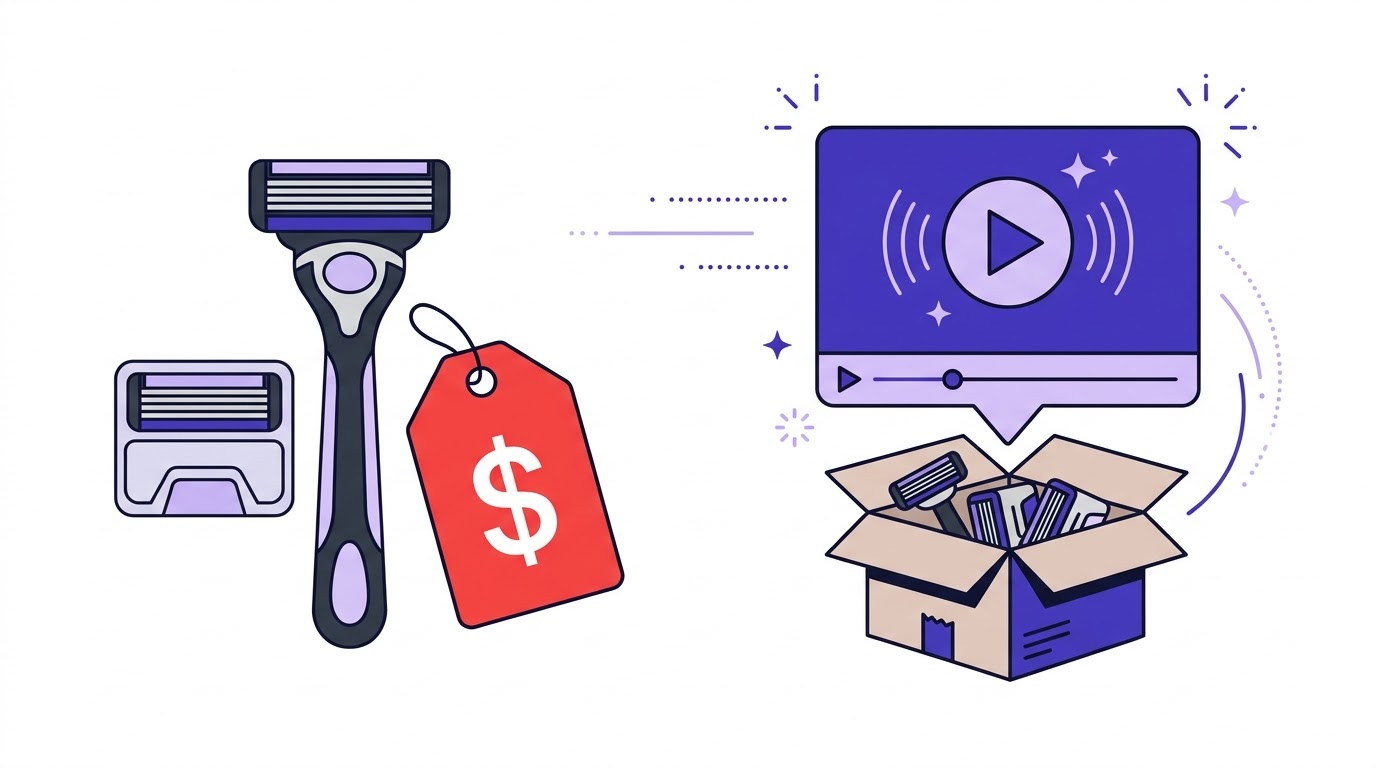
Every good launch starts with something that annoys people. Dollar Shave Club did not invent a need. It found a complaint that millions of men already had, mostly in the checkout line at a drugstore, staring at a locked glass case with a pack of cartridges priced like a small appliance. The video only worked because the problem was already sitting there, waiting for someone to say it out loud.
The $20 Cartridge Problem
Around 2011, a pack of four or five replacement cartridges from Gillette or Schick often ran past twenty dollars, and the more blades on the cartridge, the higher the price went. You didn’t buy razors once. You bought them again every month or two, forever, and the price crept up with every new “generation” that added one more blade. Nobody asked for the fifth blade. Customers just paid for it.
That repeat cost is what made razors such a good target. A one-time purchase is easy to ignore. A bill that returns every month gets resented, quietly, over years. Dubin was not selling a new thing. He was selling relief from a recurring irritation, and that is a far easier pitch.
Gillette’s Grip on the Shelf
Gillette, owned by Procter & Gamble, controlled roughly 70 percent of the US razor market around that time. It had the shelf space, the sports sponsorships, the TV budgets and the habit. Most guys used whatever their dad used, and that was usually a Gillette product. Schick held much of the rest, and everything else was a rounding error.
That sounds like a wall, and it was one. But walls have a weakness. A company that big stops listening to the small stuff, like the guy who hates paying twenty bucks, because the small stuff looks like noise on a spreadsheet. Gillette made a lot of money from a customer who felt trapped, and trapped customers leave the moment a decent exit shows up.
The Garage Full of Razors
The origin story is a bit chaotic, which makes it more believable. Dubin was at a party in 2010 when he got talking to a guy who had a garage full of razors he couldn’t move. Dubin, who had a background in marketing and online video, started wondering if a subscription could sell them. The two ended up building a business around that idea, with Mark Levine as co-founder.
Notice what happened here. Nobody sat in a boardroom and “identified a market opportunity.” A guy with too much inventory met a guy who understood how to talk to customers. Plenty of companies start with a happy accident like that, and the founders who win are the ones who notice it and act while everyone else keeps chatting about the weather.
Why the Big Brands Ignored It
Gillette had reasons to sit still. Its profit came from premium cartridges with high margins. If it pushed a cheaper product or a subscription, it would eat its own sales. That is the classic trap for big companies: the better your current business, the less you want to touch it. So the cheap, boring, perfectly good blade stayed unclaimed.
Dorco, a South Korean razor maker, became the early supplier for Dollar Shave Club. That detail matters. The product wasn’t a fancy invention. It was a decent blade, sourced smartly, sold at a lower price with a smarter delivery model, and the video was the loudspeaker.
A Founder Who Understood Video
Dubin had worked in online video marketing and had performed improv at the Upright Citizens Brigade in New York. That mix is a little weird, and it turned out to be exactly right. He understood how an online audience watches, and he knew how to be funny without sounding like an advertisement.
Plenty of founders hire an agency, hand over a brief and hope. Dubin wrote the script and played the lead. That meant the voice in the video matched the voice of the company, since they were literally the same guy. Hard to fake that, and harder to buy.
How Dollar Shave Club Used a Single Video: Inside the 90 Seconds
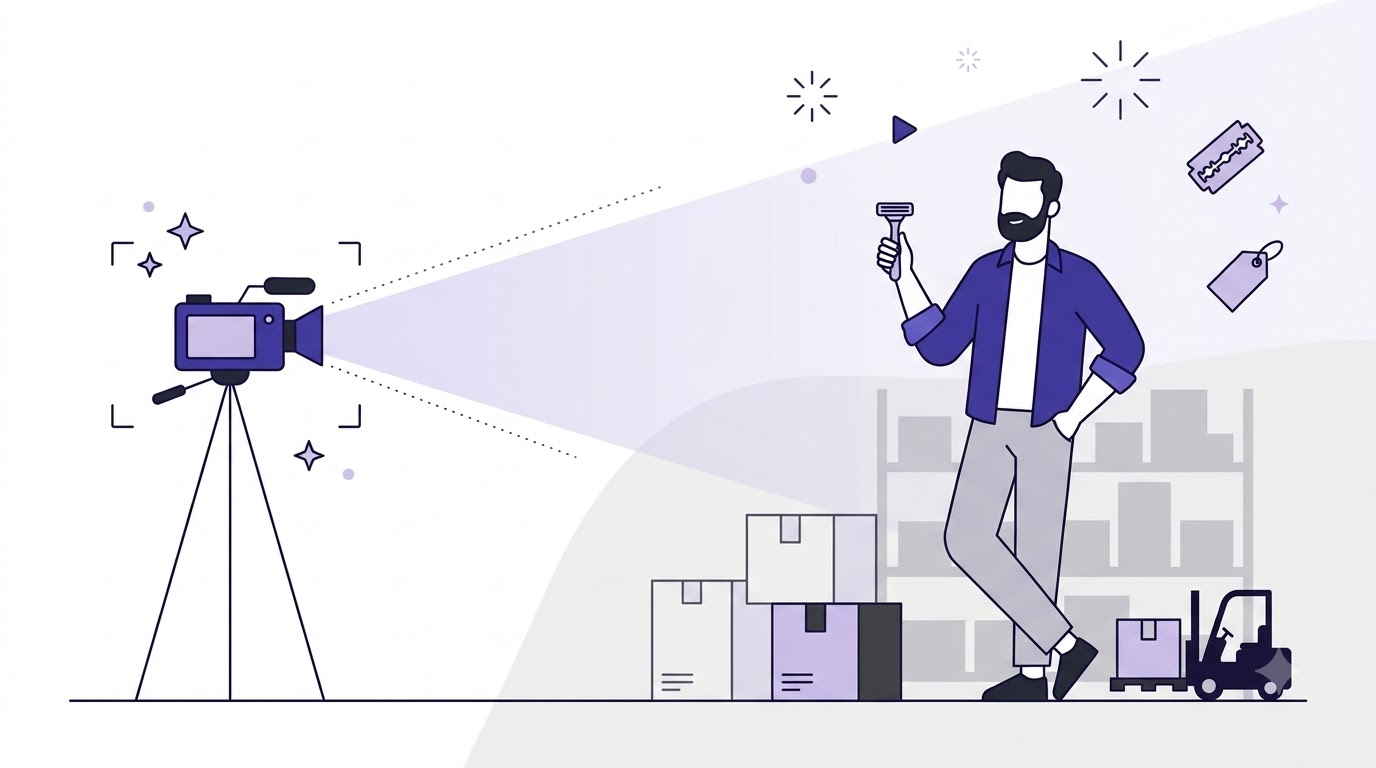
The video itself ran about 90 seconds and was uploaded to YouTube on March 6, 2012. Its full title was “Dollar Shave Club.com – Our Blades Are F***ing Great,” and the title alone told you what kind of brand this was. It looked homemade, sounded confident and never apologized. Let’s take it apart piece by piece.
A $4,500 Budget and One Day of Shooting
The production budget is usually cited at about $4,500, and the shoot took roughly a day in the warehouse that stored the company’s actual products. That limit shaped everything. Dubin couldn’t afford fancy sets, so the video used the real workplace, which made the brand feel scrappy and honest.
The cheapness was not a flaw to hide. It was part of the pitch. A company telling you it keeps costs low is more believable when the ad itself looks cheap. A glossy, expensive shoot would have contradicted the message in one frame.
The Script’s Structure
Strip away the jokes and the script follows a clean shape. It opens with a quick introduction of who he is and what the company does. Then it names the pain: you’re paying about twenty dollars a month for brand-name blades, and Dubin points out that a chunk of that goes to a tennis star for endorsing them. Then it offers an alternative: blades for a dollar, delivered monthly.
After that comes proof of quality (the blades are described as great) and a quick jab at pointless features like vibrating handles. The video ends with a call to join. Problem, price, proof, action. That order is not an accident, and the comedy is the wrapping paper around a very plain sales argument.
Dubin as the Face of the Brand
Dubin walks the camera through the warehouse like a guy giving a tour of his own house. He’s relaxed, deadpan and slightly cocky. Nobody reads a prepared statement. The performance feels like talking, not presenting.
That matters because viewers have spent their entire lives learning to tune out ad voices. A real person who sounds like a friend slips under that filter. And since Dubin was the actual founder, the claim “we’re a small company run by people who care” came with receipts attached.
The Bear, the Forklift and the Weirdness
Then there are the odd details. A forklift rolls by. A person in a bear costume shows up. Kids appear in a scene. None of it has anything to do with razors, and that is precisely why people remember it. Random visual jokes make a clip rewatchable and easy to describe to a friend (“there’s a bear, you have to see it”).
But here’s a point many copycats skip. The weirdness only works because it sits on top of a clear message. Strip the clarity out and you’re left with a strange video that sells nothing. The bear gets the share, and the offer gets the order.
The Offer Hiding in Plain Sight
Dubin spelled out the plans without fuss. The cheapest plan was one dollar a month for a two-blade razor (plus a couple of dollars in shipping), and higher plans offered four and six blades at a few dollars more. Everything came to your door on a schedule.
Think about how easy that is to repeat. “A dollar a month for razors.” Anyone who watched could tell a friend in seven words. Messages that fit in one sentence travel, and messages that need a paragraph of explanation die in group chats.
How Dollar Shave Club Used a Single Video in the First 48 Hours After Launch

Launch day is where most viral stories get a little sloppy in the retelling. People say “it went viral” like a switch flipped, and nobody mentions the part where the website crashed, the inventory ran thin and a handful of people had to scramble. The reality was messier and more interesting.
12,000 Orders and a Crashed Site
Within about 48 hours of the upload, Dollar Shave Club reportedly collected around 12,000 orders. The traffic was heavy enough that the website buckled. Think about that for a second. The company’s entire business was selling stuff online, and the site went down at the exact moment the whole internet showed up.
That is a good problem and a stressful one. It tells you the video did its job, and it tells you the team underestimated how well it would work. Most marketers dream of that kind of problem, but they never plan the tech for it either.
Where the Traffic Came From
The video spread through the usual early-2012 channels: Reddit, Twitter, Facebook shares and blog coverage. People posted it because it was funny and because posting a funny thing makes you look funny. A share is a tiny social payment, and the video was worth paying for.
Notice there was no paid media blast. The company didn’t buy its way to attention. The attention came from people who thought, “my friend needs to see this.” When your content makes sharing feel good, distribution gets cheap, but that only happens with something worth sending.
The Inventory and Fulfillment Scramble
Twelve thousand new subscribers is a lot of blades for a company of a few people. The team had to scramble to pack and ship orders, and some customers waited longer than they’d expected. Early startups live through this a lot: demand outruns the machinery.
The honest lesson is that the company survived because its supply chain, thin as it was, held together. If Dorco hadn’t been able to deliver or the logistics had cracked, the video would’ve turned into a story about overpromising. A viral hit is a loan against your reputation, and you pay it back by shipping the thing.
Why Viewers Became Customers
Plenty of videos get millions of views and sell nothing. This one converted because the path from laughing to buying was short. The offer was cheap enough to feel like a no-risk experiment, and the sign-up was simple. A dollar is a decision you don’t need to sleep on.
Compare that with a brand asking for a big commitment after a funny ad. The jump from amusement to action is too wide, and people fall in the gap. A low price lowered the cost of saying yes, so more of the people who laughed also clicked.
The Money Followed the Attention
Once the numbers were public, investors paid attention. The company went on to raise venture money within months of the video, and further rounds followed in the years after. Proof of demand is the best pitch a startup can have, and 12,000 orders in two days is the kind of proof that gets calls returned.
It also changed how everyone else viewed the company. Retail buyers, press and potential hires saw a brand that had already shown it could pull customers out of nowhere. One video turned a scrappy side project into a company that looked inevitable, even though the people running it knew how close the edges were.
The Marketing Lessons From How Dollar Shave Club Used a Single Video
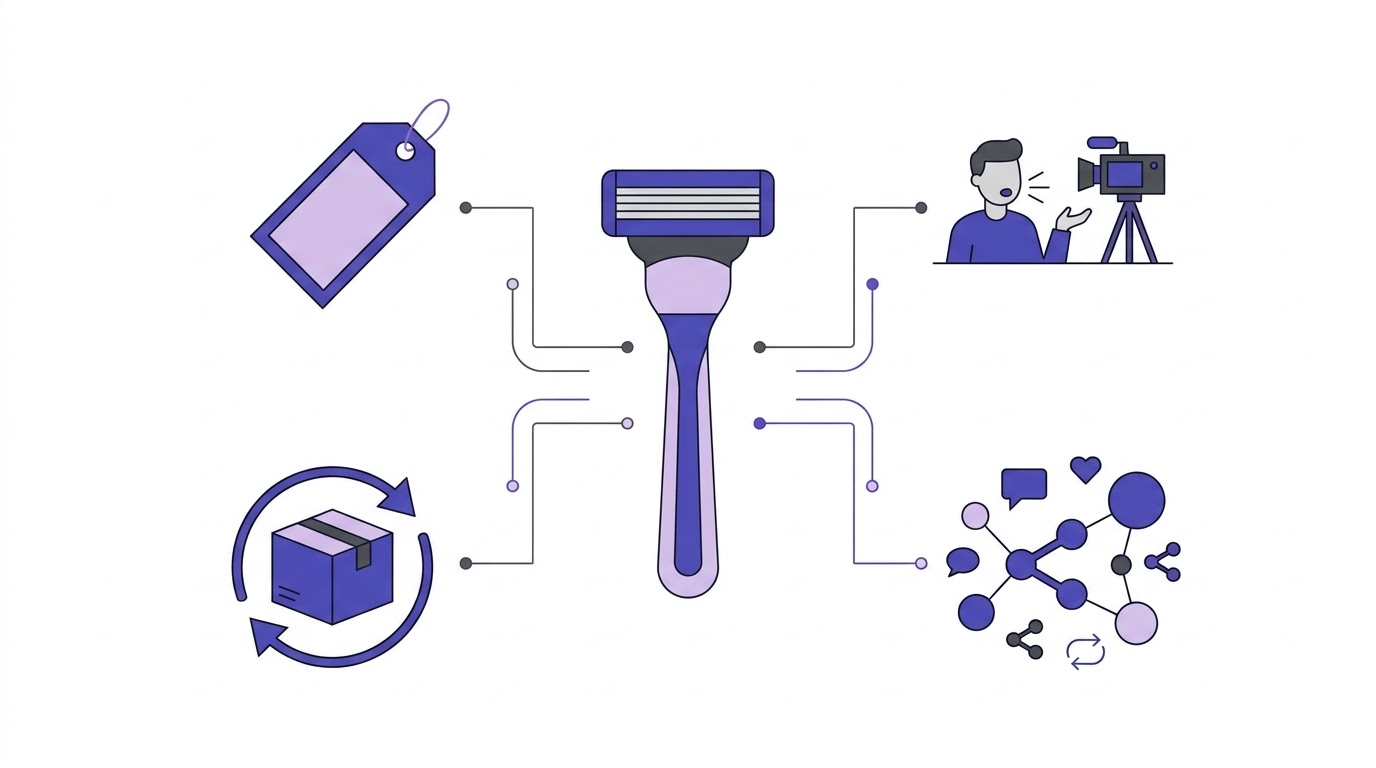
Now the useful part. A lot of articles stop at “it was funny and it went viral,” which is true and not very helpful. Let’s pull out the specific decisions that you can learn from, even if you sell accounting software and not razors.
Say the Price Out Loud
The single clearest thing in the video is the price. Dubin says it, shows it and repeats the idea. Many brands hide pricing behind “contact us” buttons and vague language because they’re afraid of scaring people off. Dollar Shave Club did the opposite and used price as the headline.
When your price is a selling point, put it on the front page of the pitch. When it isn’t, you probably have a different problem. Either way, ambiguity costs you orders from people who just don’t want to ask.
Pick One Enemy
The video had a clear villain: overpriced razors loaded with features nobody needs. Giving your audience an enemy makes the story easy to follow. You’re not just selling a product, you’re offering a side to join.
The enemy doesn’t have to be a competitor by name. Gillette was never named in the video’s pitch the way a lawsuit would require, but everyone knew who he meant. A shared annoyance makes people feel understood, and feeling understood makes them trust you faster.
Let the Founder Talk
Founders often hide behind a logo. Dubin did the reverse, and it paid off. A real face and a real voice make a small company seem human and hard to ignore. People forgive rough edges in a person, and they don’t forgive them in a corporation.
Of course, this only works if the founder can actually perform. If you freeze on camera, hire someone or write the script differently. But if the founder has charm, hiding it behind stock footage is a waste of the best asset the company has.
Build the Business Model Before the Buzz
The subscription model was the real engine. A one-time sale gives you a single transaction. A subscription gives you a stream of repeat orders, predictable revenue and a customer base you can sell more products to later, like shave butter and wipes.
So the video was acquisition and the model was retention. Without recurring orders, the 12,000 sign-ups would have been a short burst. With them, each sign-up kept paying month after month, which is how a dollar-a-month plan could still become a business worth hundreds of millions. If you’re planning a similar launch, a digital marketing strategy built around funnels and retention matters more than the clip itself.
Timing Mattered More Than People Admit
In 2012, YouTube was a place where a low-budget video could still stand out, and social sharing was cheap and fast. Subscription boxes were just starting to catch on. Consumer trust in big brands was slipping. All of that made the moment friendly to a challenger.
You can’t copy timing, but you can notice it. Ask what the audience is tired of right now, and which channels haven’t been flooded yet. Dubin walked into an open door, and the door was open because he’d looked at the right wall.
Sound Like the Customer, Not the Company
Look at the language. Casual, a bit rude, full of the kind of jokes guys tell each other. It didn’t sound like a press release. That voice told the audience this was built by someone like them.
You can see how that connects to a bigger point about social media content that sounds like people talking, where tone does as much work as the topic. Polished copy feels safe, but safe copy rarely makes anyone sit up. Specific, slightly risky language does.
After the Video: How Dollar Shave Club Used a Single Video as a Launchpad
The video was the opening move, not the whole game. What happened over the next four years shows what separates a viral moment from a lasting company, and it also shows where things got harder.
More Videos and More Products
Dollar Shave Club kept producing videos in the same irreverent voice, including a follow-up about its wipes product that leaned into the same kind of humor. It also expanded beyond blades into shave butter, body products and other men’s grooming items.
The expansion made sense. Once you have a subscription relationship with a customer, adding more products to the box is cheap compared with winning a new customer. The first video bought the relationship, and the product line made each relationship worth more.
Harry’s and the New Competition
Success attracts copycats, and the razor space got crowded. Harry’s launched in 2013 with a polished, design-led approach, and it bought a German razor factory called Feintechnik in 2014 for around $100 million to control its own manufacturing. That move gave Harry’s a quality and cost advantage that a company relying on outside suppliers didn’t have.
Soon there were many subscription razor brands, each with a nicer logo than the last. That’s the awkward truth about a clever launch: it proves the market exists for everyone else, too. Being first gets you attention, but staying ahead requires something deeper than a good ad.
Gillette Fights Back
Gillette didn’t ignore the threat forever. It launched its own subscription service and later cut prices on some products by as much as 20 percent. Those were direct responses to the pressure from challengers. The giant started doing the thing it’d avoided for years because losing customers hurt more than cannibalizing its own margins.
Think about how remarkable that is. A century-old brand with a huge advertising budget changed its pricing because of a company that started with a $4,500 video. Not because the video was perfect, but because the customer behavior underneath it was real.
The Unilever Deal
In July 2016, Unilever announced it would buy Dollar Shave Club for about $1 billion in cash. The company reportedly had more than 3 million members by then. Dubin stayed on to run the business after the sale, which was meant to keep the founder’s voice and instincts in place.
For a company founded in 2011, going from a garage-sized idea to a billion-dollar exit in about five years is a very fast ride. The video did not do that alone, but it started the fire, and it did so cheaply.
The Later Years Weren’t a Fairy Tale
It’s worth being honest here. The years after the acquisition were bumpier. Competition stayed heavy, the subscription razor market cooled and Unilever eventually sold a majority stake in the business in 2023. The big exit was real, but the long-term story had plenty of ups and downs.
That’s a useful corrective to the legend. A brilliant launch doesn’t guarantee a perfect future, since customers change, rivals improve and growth gets harder once the early audience is already on board. Great marketing opens the door. The business still has to stay in the room.
How to Copy How Dollar Shave Club Used a Single Video Without Copying the Video
Plenty of people tried to remake this video for their own products and ended up with an awkward knockoff. The trick is to take the logic and leave the surface. Here’s how to do that in practice.
Start With One Painful Number
Dollar Shave Club’s whole pitch hung on one number: the twenty dollars you were spending each month. Find the equivalent in your market. It might be the hours a small business loses to manual invoicing, the dollars wasted on unused software seats or the fee a customer pays a middleman.
Make the number specific and make it hurt a little. “Save money” does nothing. “You’re paying $240 a year for a thing you use twice” gets a reaction. Specifics are what turn a vague complaint into a decision.
Write the Script Like You’d Talk to a Friend
Write the first draft the way you’d explain your product at a bar. Then cut every word that sounds like marketing. If a sentence would make your friend roll their eyes, it goes.
Read it out loud, because writing for the eye and writing for the ear are different skills. Short sentences, concrete words and a bit of humor usually survive that test. Phrases like “industry-leading solutions” never do.
Keep the Budget Honest
You don’t need a film crew. A decent phone, good audio, natural light and a simple location can carry a video if the script is strong. Audio matters more than people think, since viewers forgive a rough picture faster than they forgive a muffled voice.
Use what you already have. A real workshop, a real office or a real kitchen adds credibility that a rented set can’t. The production should match the personality of the company, and for most small brands that means casual and a little scrappy.
Make the Offer Impossible to Miss
End with one clear action. Not three buttons, not a menu of options, one step. “Join for a dollar” is the kind of line that works because there’s no question what happens next.
Also match the landing page to the video. If the video promises one thing and the page shows something else, you lose the people you just paid attention to win. The page should feel like the next scene in the same story, with the same tone and the same offer.
Get the Back End Ready Before You Hit Publish
Test your site under heavy traffic. Line up extra inventory, or at least a plan for what to say to customers when stock runs short. Set up an email sequence so new signups hear from you right away, and check out guidance on email marketing and list building if you’ve never built one.
Dollar Shave Club survived its own launch by the skin of its teeth. You don’t need to repeat that. A few hours of prep can be the difference between a launch that builds a brand and a launch that builds a pile of angry emails.
Measure What Matters
Track the full path: views, clicks, signups, paid orders and repeat orders. A million views mean little if only ten people buy. Watch cost per customer and how many stick around after the first month.
If you want a structured way to learn that whole chain, from video to funnel to retention, the Alpha Marketer Foundation Program walks through it step by step. And if you’re still deciding where to start, browse real case studies from the Learn hub to see how other campaigns played out.
Mistakes to Avoid When Repeating How Dollar Shave Club Used a Single Video
Copycat campaigns fail in predictable ways. Knowing them in advance saves you a lot of time and a bit of embarrassment.
Being Funny but Not Clear
Humor is a hook, not a product. If viewers finish the video and can’t say what you sell or what it costs, the joke ate the message. A good test is to show the video to a stranger and ask them what the company does. If they hesitate, rewrite.
Dollar Shave Club’s video was funny and also painfully clear. Keep that balance, and when you have to choose, pick clarity every time.
Copying the Swearing and the Bear
The swearing worked for a razor brand aimed at young men in 2012. It might sink a pediatric dentist. Your tone has to match your audience and your product, not Dubin’s.
The same goes for random props and gags. If you add a bear just because the original had one, the video feels like an imitation, and audiences can smell imitation fast. Find the odd detail that’s true to your own business instead.
Ignoring Operations
A flood of orders with nothing in stock is a bad day, and a flood of orders with no customer support is a worse week. Plan the shipping, the support inbox and the refund policy before the video goes live.
It’s boring work. It’s also the work that decides whether new customers turn into repeat customers or screenshots in a complaint thread.
Treating One Video as the Whole Strategy
One video can start something. It can’t finish it. Dollar Shave Club kept making content, kept improving the product and kept building the subscription machine long after the first clip stopped trending.
If your plan stops at “make a viral video,” you don’t have a plan. You have a lottery ticket. Treat the video as chapter one, then write the rest.
Conclusion
So that’s the story. How Dollar Shave Club used a single video comes down to a few plain things done unusually well: a real annoyance, a price anyone could repeat, a founder who sounded like a human and a product that could actually be delivered. The comedy got the share, and the offer got the order.
Take one action from all this. Before you write a single line of script for your own launch, write down the one number your customer hates paying and the one sentence that offers a way out. If that sentence is sharp, the video will follow. If it isn’t, no amount of bears will save it.
Frequently Asked Questions
What was the Dollar Shave Club video about?
It was a roughly 90-second YouTube video in which founder Michael Dubin walked through a warehouse and pitched cheap razor blades delivered by mail. The video poked fun at expensive brand-name razors with extra features and offered a plan starting at one dollar a month. It was uploaded in March 2012.
How much did the Dollar Shave Club video cost to make?
The video is commonly reported to have cost about $4,500. It was shot in about a day inside the company’s own warehouse. The low budget fit the brand’s pitch of keeping costs down and passing the savings to customers.
How many orders did Dollar Shave Club get after the video?
The company reportedly received around 12,000 orders within the first 48 hours after the video went live. The surge of traffic was heavy enough to crash the website for a time. That early demand also helped the company attract investors soon after.
Who made the Dollar Shave Club video?
Michael Dubin, the co-founder and CEO, wrote the script and starred in the video. He had a background in online video marketing and improv comedy. Using the founder as the on-screen face made the brand feel personal and believable.
Why did the Dollar Shave Club video go viral?
It combined humor with a very clear offer. Viewers could repeat the pitch in one sentence, which made the video easy to share. The rough, low-budget look and the founder’s relaxed, confident delivery made it feel more honest than a typical ad.
How much did Unilever pay for Dollar Shave Club?
Unilever announced the acquisition in July 2016 for about $1 billion in cash. At the time, Dollar Shave Club reportedly had more than 3 million members. The company had been founded only about five years earlier.
Was Dollar Shave Club a real disruption of Gillette?
Yes, in the sense that it pushed Gillette to change. Gillette launched its own shave subscription service and cut prices on some products by up to 20 percent. Gillette still remained a giant in the category, but it could no longer ignore challenger brands.
What business model did Dollar Shave Club use?
It used a subscription model. Customers paid a monthly fee and received blades by mail on a regular schedule, with plans based on the number of blades per cartridge. Recurring orders gave the company predictable revenue and a chance to sell other grooming products later.
Where did Dollar Shave Club get its razors?
The company initially sourced its blades from Dorco, a South Korean razor manufacturer. It did not build its own factory at the start. Using an existing supplier kept startup costs low, unlike Harry’s, which later bought its own factory in Germany.
Can small businesses copy the Dollar Shave Club strategy?
Yes, but copy the structure and not the surface. Identify a clear customer pain, state your price openly, use a real person to deliver the message and end with a single call to action. You also need the operations ready to handle a sudden rush of orders.
What happened to Dollar Shave Club after the Unilever acquisition?
Michael Dubin stayed on to lead the company after the sale. The business kept expanding its product range, but competition in subscription razors stayed intense. Unilever later sold a majority stake in Dollar Shave Club in 2023.
Did Dollar Shave Club make more videos after the first one?
Yes. The company released additional videos in a similar humorous style, including one promoting its wipes product. These videos kept the brand’s personality consistent and helped promote new products beyond razors.
Is one video enough to build a brand?
No. A single video can create a burst of attention, but a lasting brand needs a solid product, reliable fulfillment and a reason for customers to come back. Dollar Shave Club succeeded because the video worked alongside a subscription model and a supply chain that could deliver.