


Most keyword research still gets done the same way it did in 2015. Someone opens a spreadsheet, types a seed keyword into a tool, exports a list of five hundred variations sorted by search volume, and picks the ones with the biggest number next to them. Then they write content around those keywords and wonder why traffic doesn’t show up for four months, if it shows up at all.
That process is broken, not because keyword research stopped mattering, but because the tools available now do something the spreadsheet approach never could. AI for keyword research and SEO isn’t a buzzword tacked onto old software. It changes what a keyword list can tell you before you write a single sentence: what the person searching actually wants, what format Google prefers to rank for that query, what your competitors are missing, and whether the keyword is even worth chasing given how your site currently performs.
A small SaaS client Tattvam Media worked with had 40 blog posts sitting at page 2 of Google for over a year. Nobody touched intent. Nobody checked what format was ranking. Six months after rebuilding the keyword strategy around AI-assisted intent mapping and content gap analysis, organic sessions moved from around 4,000 a month to just over 19,000. The keywords targeted barely changed. What changed was how they were chosen and what was built around them.
This guide walks through what AI for keyword research and SEO actually looks like in practice, the tools worth paying for versus the ones that are just hype, a real step-by-step framework you can run this week, and the mistakes that quietly wreck most people’s results before they even notice.
What You Will Learn in This Guide
- AI for keyword research and SEO works best when it’s used to understand search intent and content gaps, not just to generate longer keyword lists.
- Tools like Semrush’s Keyword Magic Tool, Ahrefs, Surfer SEO, and Clearscope now use AI models to cluster keywords by real intent instead of surface-level text matching.
- The biggest mistake is trusting AI-generated search volume and difficulty scores without checking them against Google Search Console data from your own site.
- A proper workflow moves from seed keyword to AI-assisted clustering, to SERP intent analysis, to content gap mapping, and only then to writing.
- AI speeds up the research phase by roughly 60 to 70%, but it still needs a human to make the final call on what to actually publish.
What AI for Keyword Research and SEO Actually Means
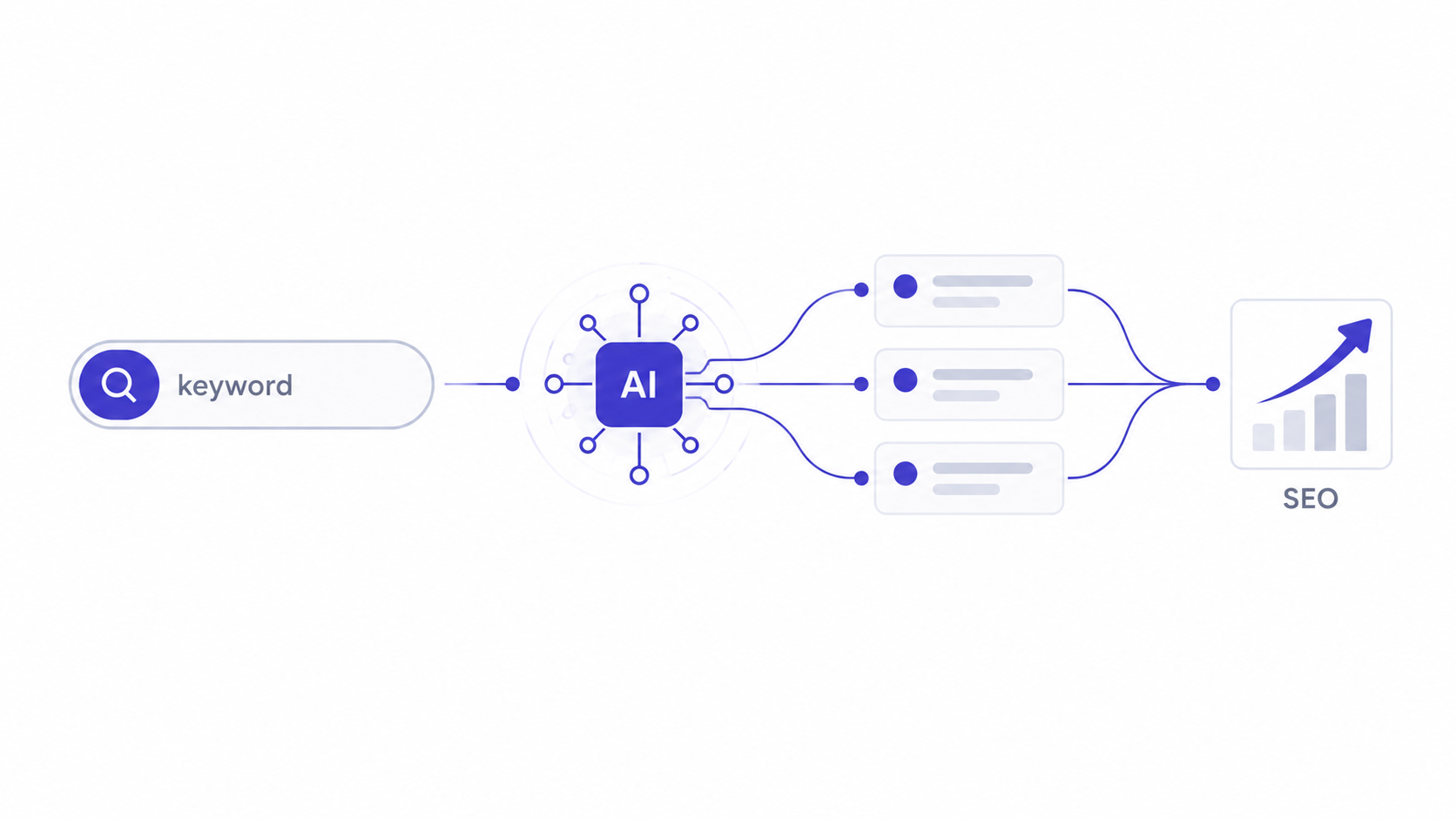
AI for keyword research and SEO refers to using machine learning models, natural language processing, and large language models to identify, group, and prioritize keywords based on real user intent and ranking potential rather than raw search volume alone. It’s not a single feature. It’s a layer that sits on top of traditional keyword databases and makes sense of the data in a way a spreadsheet never could on its own.
Here’s the thing most people get wrong about this. AI didn’t replace keyword research tools. It got built into the ones that already existed. Semrush, Ahrefs, and Surfer haven’t thrown out their old keyword databases. They’ve added an intelligence layer that reads through thousands of search results and groups keywords the way a human researcher would, if that researcher had time to manually review every SERP for every keyword, which nobody ever actually has.
The Shift From Volume-Based to Intent-Based Research
Old-school keyword research asked one question: how many people search this term per month? That number came from Google Keyword Planner or a third-party estimate, and it drove almost every decision. High volume meant priority. Low volume meant skip it.
That approach ignores something critical. A keyword with 200 monthly searches and clear commercial intent will often convert better and rank faster than one with 5,000 searches and mixed intent. AI models trained on SERP data can now read the actual search results for a keyword and classify intent as informational, navigational, commercial, or transactional in seconds, something that used to take a researcher clicking through ten search results by hand.
Google’s own Search Generative Experience and AI Overviews have made this shift even more urgent. When AI Overviews answer a simple informational query directly on the results page, ranking for that keyword with a blog post stops being worth the effort. The traffic gets absorbed by Google’s own summary. Intent-based AI research flags these keywords before you waste a week writing for them.
There’s a second layer to this that most beginners miss entirely. Intent isn’t fixed across time. A keyword like “electric SUV” carried mostly informational intent in 2019, when people were still figuring out whether electric vehicles were practical. By 2026, the same keyword pulls up a SERP dominated by comparison pages, dealer inventory listings, and price calculators, because the market matured and the buying decision moved closer. AI models that get retrained on fresh SERP data pick up this drift automatically. A keyword list built two years ago and never refreshed is often targeting the wrong intent without anyone realizing it, because nobody went back to check whether the SERP had quietly changed shape.
Why Search Volume Alone Was Never a Good Filter
Ranking a page for a 10,000-search keyword sounds better than ranking for a 300-search keyword, until you notice the 10,000-search term pulls a SERP full of Wikipedia, Reddit threads, and YouTube videos, none of which a small business site will out-rank within the next two years. Meanwhile the 300-search keyword has a SERP full of thin, outdated blog posts from small competitors nobody has updated since 2021. AI-adjusted difficulty scoring catches this gap because it reads the actual composition of the ranking page types, not just a generic authority number. Chasing volume without checking who currently owns that SERP is one of the fastest ways to burn a content budget on pages that never move past position 40.
How Natural Language Processing Changed Keyword Clustering
Keyword clustering used to mean grouping terms that shared the same words. “Best running shoes” and “running shoes for beginners” would sit in different buckets because the string matching didn’t overlap enough, even though a single well-structured article could realistically rank for both.
NLP-based clustering, the kind used inside tools like Surfer SEO and Frase, reads the actual meaning behind a phrase instead of just the characters. It groups keywords by semantic similarity, which means it can tell that “how to lose belly fat fast” and “quickest way to reduce stomach fat” belong in the same content cluster even though they don’t share a single meaningful word beyond “fat.” This is the difference between building 40 thin articles targeting near-duplicate keywords and building 8 comprehensive articles that each rank for 30 to 50 related terms. A structured path to learn this kind of on-page and technical foundation properly is exactly what a structured SEO curriculum covers in more depth.
Why Traditional Keyword Research Falls Apart Without AI for Keyword Research and SEO
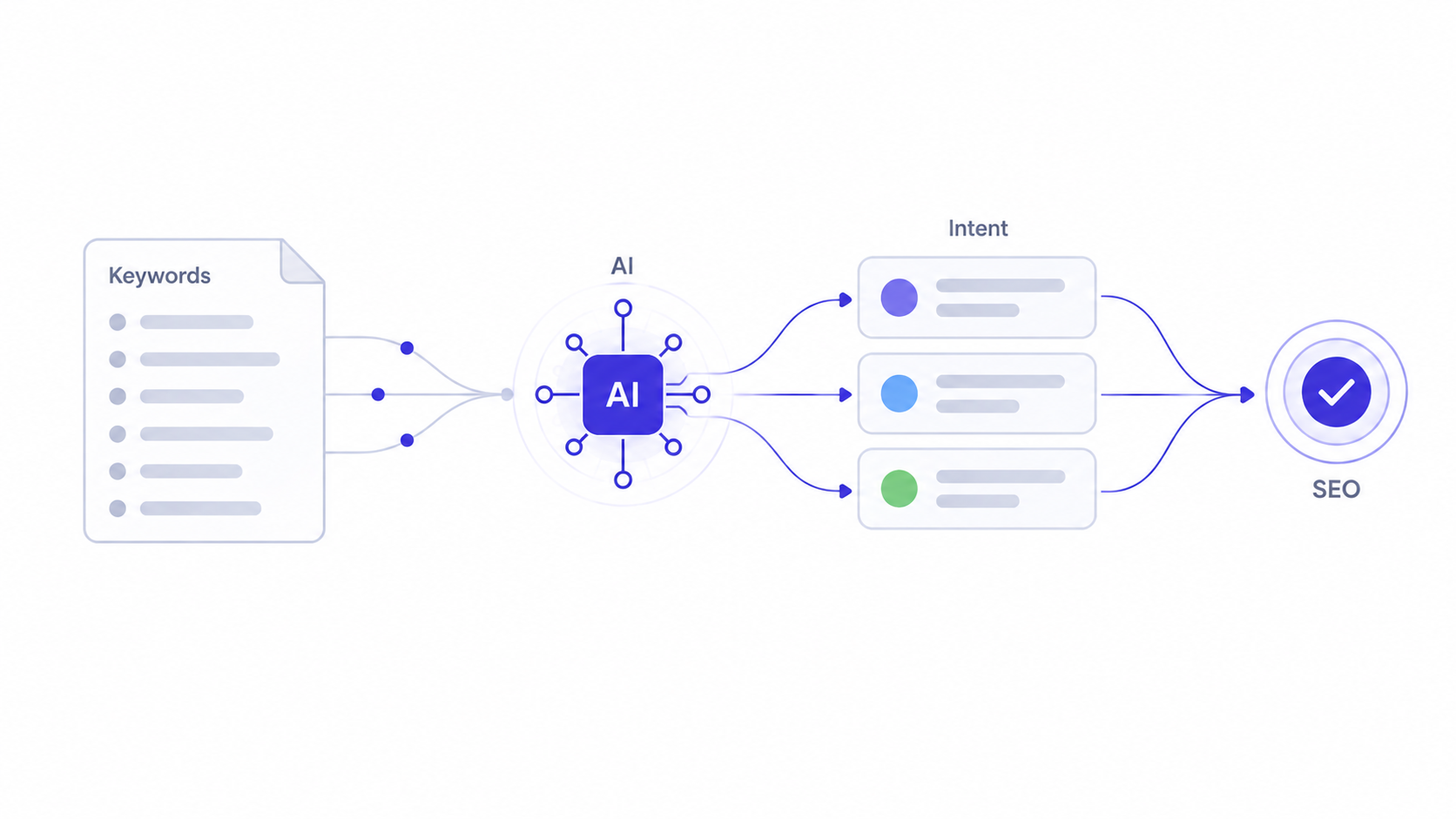
Manual keyword research isn’t just slow. It’s structurally incapable of catching things AI catches by default, and that gap gets wider every year as search behavior gets more complex.
The Volume Number Was Always a Guess
Every keyword tool on the market, including Semrush and Ahrefs, estimates search volume. They don’t have access to Google’s actual query logs. They model volume based on clickstream data, ad spend patterns, and sampled data from browser extensions and toolbars. That means the number sitting in your spreadsheet has always carried a margin of error, sometimes a significant one, especially for long-tail queries under 100 searches a month.
AI-driven tools don’t fix this problem entirely, but they reduce its impact by cross-referencing volume against real ranking difficulty, current SERP competition, and click-through rate patterns for that intent type. A keyword showing 50 searches a month with almost no strong competition and high commercial intent is often a better target than one showing 800 searches with ten established domains already ranking. Traditional research would have skipped the 50-search keyword automatically. AI-assisted research surfaces it because it weighs the full picture, not just one number.
Manual Research Can’t Scale Past a Certain Point
A single researcher doing manual SERP analysis can reasonably review maybe 15 to 20 keywords in depth per day if they’re being thorough, checking intent, reading the top five results, noting content gaps, and checking related searches. Most sites need hundreds or thousands of keywords mapped to build a real content strategy. The math doesn’t work without automation somewhere in the process.
Here’s the direct version of what that actually means day to day: AI doesn’t replace the researcher’s judgment, it just does the repetitive scanning work so the judgment gets applied where it actually matters, on the 50 keywords that will move the needle instead of the 2,000 that need sorting first. A junior SEO analyst spending an entire week just sorting keywords into buckets is a week not spent on the things that actually require a human brain, like reading customer support tickets to figure out what language real buyers use, or checking which existing pages are one internal link away from ranking better.
There’s also a cost side to this nobody talks about enough. Agencies billing hourly for manual keyword research either charge clients for hundreds of hours of repetitive sorting work, or they cut corners and hand over a shallow list built from a single tool export with no intent review at all. Neither outcome serves the client. Automating the sorting and clustering step frees up billable hours for strategy work that actually justifies the invoice, which is part of why almost every serious agency, including the teams handling multi-crore ad budgets at larger shops, has shifted its research workflow toward AI-assisted tools over the last three years.
Search Behavior Has Gotten More Conversational
Voice search, AI chat interfaces, and Google’s own natural language processing (part of the BERT and MUM updates) mean people search in full sentences now, not fragments. “SEO tools” used to be the standard query. Now it’s “what SEO tools should a small business actually pay for in 2026.” Traditional keyword tools built around exact-match string databases struggle to keep up with this shift, because the number of possible phrasings for the same intent has exploded. AI models handle this naturally because they were trained to understand meaning, not match strings.
What This Means for Long-Tail Keyword Strategy
Long-tail keywords used to mean adding extra words to a short phrase and hoping for less competition. “Shoes” became “running shoes” became “running shoes for flat feet.” The conversational shift means long-tail now looks more like full questions and statements: “why do my feet hurt after running in new shoes” or “best running shoes if you overpronate and have flat feet.” These phrasings carry far more specific intent, and they convert at noticeably higher rates because the searcher has already done part of the filtering themselves just by typing something that specific.
AI-powered tools surface these conversational long-tail variants by analyzing actual “People Also Ask” data, autocomplete suggestions, and related search patterns at scale, something that would take a manual researcher hours of scrolling and screenshotting to compile for even a single topic cluster. Building content around these specific, question-shaped keywords also happens to align almost perfectly with how featured snippets and AI Overviews pull their answers, since both formats favor direct, specific questions over broad, generic ones.
Step-by-Step Framework for Using AI for Keyword Research and SEO
This is the actual workflow worth running, not a checklist you skim once and forget. Each step builds on the last one, and skipping steps is exactly how people end up with a keyword list that looks impressive and produces nothing.
Step 1: Define the Business Goal Before Opening Any Tool
Before typing anything into Semrush or Ahrefs, define what the content needs to accomplish. Is the goal top-of-funnel awareness, mid-funnel comparison content, or bottom-funnel conversion? This sounds obvious, but most people skip it and go straight to seed keywords, which is exactly why so much content gets published that ranks fine and converts nothing.
A B2B SaaS company selling project management software doesn’t need the same keyword strategy as a D2C skincare brand. The SaaS company needs comparison and “alternative to” keywords because that’s where buying decisions get made. The skincare brand needs ingredient-level informational content because that’s where trust gets built before purchase. AI tools won’t make this decision for you. This step stays entirely human.
Write the goal down as one sentence before moving forward. Something like “get more free trial signups from people already comparing project management tools” is specific enough to guide every keyword decision that follows. A vague goal like “increase organic traffic” leads to a keyword list stuffed with high-volume informational terms that pad a traffic report without moving a single business metric that actually matters to whoever is paying for the content.
Step 2: Generate a Seed List Using AI-Powered Suggestion Tools
Start with 5 to 10 broad seed terms directly tied to the business goal from Step 1. Feed these into an AI-enhanced keyword tool. Semrush’s Keyword Magic Tool, Ahrefs’ Keywords Explorer, and ChatGPT combined with a live SERP-checking plugin all work here, each with a different strength.
Semrush’s AI-powered “Keyword Strategy Builder” takes a seed term and automatically clusters related keywords into topic groups, tagging each cluster with an estimated content type (blog post, landing page, comparison page). Ahrefs does something similar through its “Terms Match” and “Also Rank For” reports, which use their own AI model to surface keywords competing pages rank for that don’t obviously match the seed term on the surface. Running the same seed through both tools and comparing the clusters usually surfaces 15 to 20% more relevant terms than using either tool alone.
Step 3: Let AI Classify Search Intent Automatically
Once the seed list expands into hundreds of related terms, intent classification becomes the next bottleneck. Tools like Semrush and Surfer now auto-tag each keyword as informational, commercial, transactional, or navigational using a model trained on millions of labeled SERPs.
Trust this classification as a starting point, not a final answer. Spot-check at least 10% of the tagged keywords by manually pulling up the SERP and reading what’s actually ranking. AI intent classification gets confused by ambiguous phrasing more often than people expect. A term like “best CRM” might get tagged commercial, but if the top five results are all “what is a CRM” explainer articles from HubSpot and Salesforce, Google is actually reading that query as informational despite the word “best” suggesting otherwise. The SERP always overrules the label.
Build this spot-check into the calendar as a fixed step, not something that happens only when someone remembers. Set aside 30 minutes for every batch of 50 to 100 keywords tagged by an AI tool, open the top five results for a random sample, and note whether the page types match the assigned intent label. A mismatch rate above roughly 15% on a given batch usually means the seed keyword itself was too broad or ambiguous, and it’s worth narrowing the seed term and re-running the clustering rather than pushing forward with unreliable tags.
Step 4: Run Content Gap Analysis Against Competitors
This is where AI for keyword research and SEO earns its keep the most. Tools like Ahrefs’ Content Gap and Semrush’s Keyword Gap let you input three to five competing domains and instantly see every keyword they rank for that your site doesn’t touch. What used to take a researcher days of manual SERP comparison now takes under ten minutes to generate, though reviewing the output properly still takes real time.
Filter the output by keywords where competitors rank in positions 1 through 5 but you have zero presence, and where the keyword difficulty sits within reach of your domain authority. Chasing keywords that require a domain rating of 70+ when your site sits at 25 wastes months. AI-based difficulty scoring accounts for this more accurately than older metrics because it factors in the actual backlink profiles and content depth of current top-ranking pages, not just a generic difficulty formula.
Pick three competitors deliberately, not randomly. One should be a close direct competitor at roughly your own size and authority level. One should be a slightly bigger player you’re realistically trying to catch up to within the next year. One should be an aspirational competitor, the kind of domain you won’t outrank soon but whose keyword footprint shows where the entire market’s search demand actually sits. Running the gap analysis against all three gives a layered view: quick wins against the close competitor, medium-term targets against the bigger player, and a long-term roadmap based on where the aspirational competitor already owns the conversation.
Step 5: Use AI to Analyze SERP Structure and Content Format
Before writing anything, check what format Google actually wants for each target keyword. Tools like Frase and MarketMuse scan the top 10 to 20 ranking pages using natural language processing and identify patterns: average word count, heading structure, whether the top results are listicles, comparison tables, or long-form guides, and which subtopics appear across most of the top-ranking content.
This step alone prevents one of the most expensive mistakes in content strategy: writing a 2,500-word narrative blog post for a keyword where every top result is a comparison table under 800 words. The keyword might be right. The format kills it before Google even evaluates the writing quality.
Pay attention to the pattern across all ten results, not just the top one. Sometimes the number one result is an outlier, ranking mostly on domain authority rather than format fit, while positions two through eight all share a consistent structure that’s actually a better signal of what Google’s algorithm rewards for that specific query. A quick way to check this: list the format of each of the top ten results in a simple table (listicle, guide, comparison, tool, video) and look for the majority pattern rather than copying whatever sits in position one. Matching the majority format gives a new page a realistic shot at climbing into that group rather than trying to compete with an outlier that got there through years of accumulated domain trust a newer page simply doesn’t have yet.
Step 6: Prioritize Using a Weighted Scoring Model
With intent, difficulty, format, and business relevance mapped, build a simple scoring model. Weight each keyword on four factors: search volume (adjusted for AI Overview cannibalization risk), ranking difficulty relative to your domain’s current authority, commercial intent strength, and content format feasibility for your team. AI tools like Semrush’s Topic Research or a custom spreadsheet formula pulling from API data can automate the scoring, but set the weights yourself based on the business goal from Step 1.
Keywords scoring highest go into the content calendar first. This sounds simple, and it is, but almost nobody actually does it. Most teams write whatever keyword feels urgent that week instead of following a scored priority list, which is exactly why content output and traffic growth so often disconnect from each other.
A basic version of this scoring model looks like a spreadsheet with five columns: the keyword, adjusted search volume, difficulty relative to current domain rating, an intent score from 1 to 5 based on commercial value, and a format feasibility flag noting whether the team can realistically produce the winning format within the next month. Multiply or weight these however fits the business goal from Step 1, sort by total score, and the top 20 keywords become the next content sprint. Revisit the model every quarter, because difficulty scores and AI Overview presence shift enough over three months to change what used to be a top-priority keyword into one worth deprioritizing.
Best AI Tools for Keyword Research and SEO in 2026
Not every tool claiming an “AI-powered” badge actually does something different under the hood. Here’s an honest breakdown of what’s worth paying for and what each one actually does well.
Semrush’s Keyword Strategy Builder and Topic Research
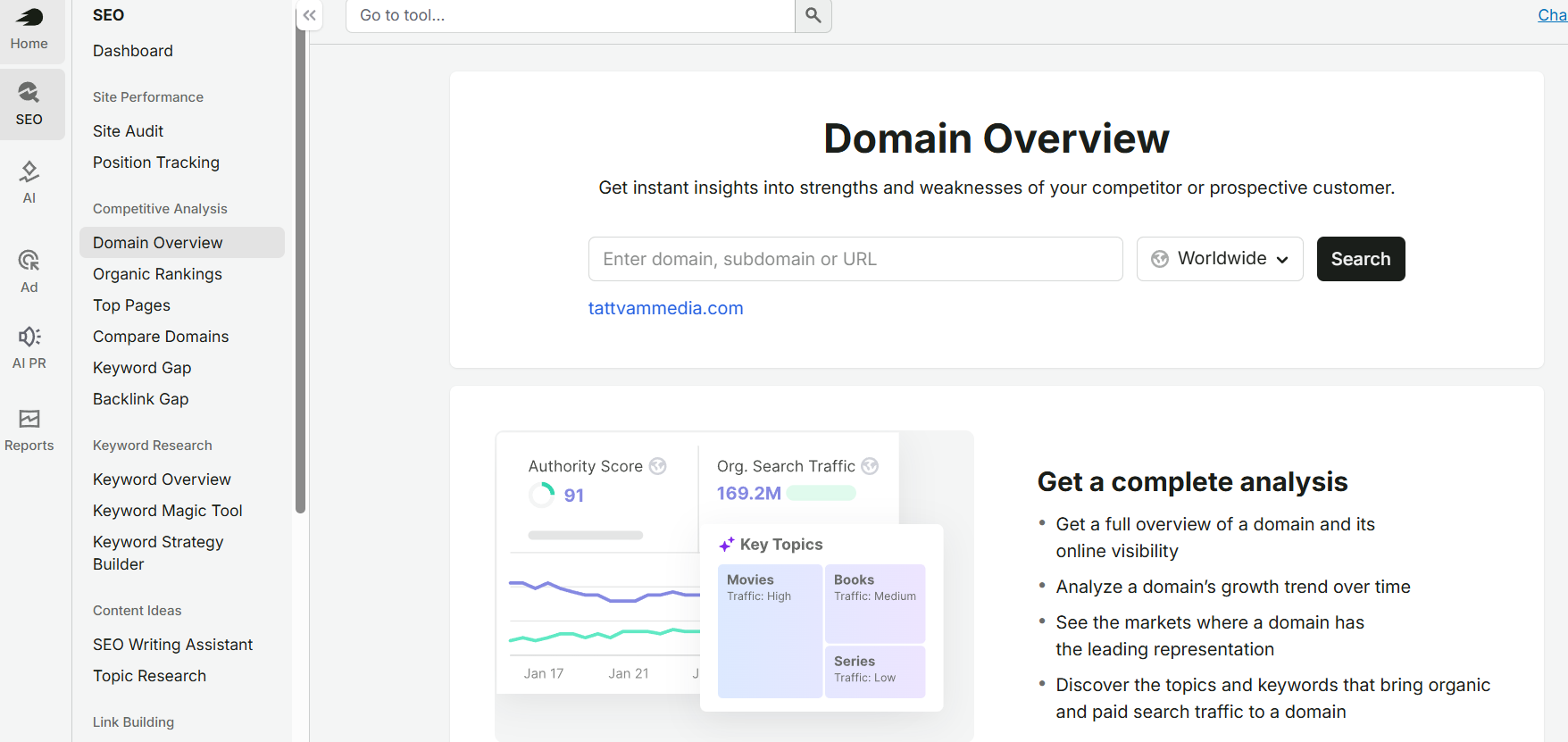
Semrush built AI clustering directly into its Keyword Magic Tool and added a dedicated Keyword Strategy Builder that groups thousands of keywords into content-ready clusters within seconds. It also flags AI Overview presence on the SERP for each keyword, which matters more every month as Google expands where AI Overviews appear. For teams managing large content operations, Semrush’s clustering saves the most time on the front end of the research process, though its intent tags still need the manual spot-check mentioned in Step 3.
Ahrefs’ Content Gap and Keywords Explorer
Ahrefs remains the strongest tool for backlink-adjusted keyword difficulty because its difficulty score factors in the actual link profiles of ranking pages rather than a generic formula. Its Content Gap tool is the fastest way to find competitor keywords a site hasn’t touched yet. Ahrefs hasn’t leaned as heavily into conversational AI features as Semrush, but its underlying data accuracy for search volume and backlink metrics is still considered the most reliable in the industry among practitioners who compare numbers across tools regularly.
Surfer SEO for Content Planning and On-Page Optimization

Surfer’s AI clusters keywords by topic and then generates a content editor that scores your draft against the top-ranking pages in real time, flagging missing subtopics, entities, and structural elements as you write. This closes the gap between research and execution in one interface. A writer working inside Surfer’s editor can see exactly which related terms and entities are missing from a draft compared to what’s ranking, something that used to require a separate manual competitor read-through.
[Screenshot: Surfer SEO Content Editor showing a live content score with missing keyword terms highlighted in the sidebar]
ChatGPT and Perplexity for Rapid Intent and Angle Research
Large language models aren’t keyword databases and shouldn’t be treated as one, since they don’t have live access to real search volume unless connected to a plugin or API that pulls current data. Where they genuinely help is generating angle variations, drafting the initial seed list faster than typing manually, and simulating what a searcher’s actual question sounds like for a given topic. Feeding a seed keyword into ChatGPT with a prompt asking for 30 related questions a beginner would search often surfaces long-tail phrasing that keyword tools miss entirely, because those tools rely on historical search data and a brand-new phrasing pattern hasn’t accumulated volume yet.
AlsoAsked and AnswerThePublic for Question-Based Research
Both tools scrape and visualize Google’s “People Also Ask” data into a tree structure, showing how one question branches into related follow-up questions real users asked. This maps naturally to FAQ sections and H3 subheadings, and it captures a layer of intent that pure keyword-volume tools completely miss, since these are literal questions pulled from real Google search behavior rather than modeled estimates. For anyone building out a broader toolkit around these platforms, the full list of recommended SEO and research tools is worth bookmarking before committing to a paid stack.
Clearscope for Entity-Based Content Scoring
Clearscope reads the top-ranking pages for a target keyword and generates a list of related terms and entities graded by importance, using an A through F scoring system for how well a draft covers what Google’s algorithm appears to expect. It leans heavily on natural language processing to identify not just keywords but named entities, specific brands, ingredients, statistics, and concepts that repeatedly show up across top-ranking content. Writers working in competitive niches like health and finance tend to get the most value from Clearscope because those topics require covering a wide net of related subtopics to be seen as genuinely comprehensive, and missing even a handful of expected entities can quietly cap how high a page climbs.
MarketMuse for Topic Authority Modeling
MarketMuse takes a different angle from most tools on this list. Instead of just scoring a single article, it builds a full topic model for an entire site, showing which subtopics already have strong coverage, which have thin or outdated coverage, and which haven’t been touched at all. This works well for larger content operations trying to build genuine topical authority in a niche rather than publishing isolated articles that never connect to each other through internal linking. Its AI-generated content briefs also include a “difficulty to compete” score per topic, factoring in the depth of coverage from currently ranking domains, which helps prioritize where a smaller site actually has a realistic shot at competing.
Mistakes People Make With AI for Keyword Research and SEO
AI tools make research faster, but speed without judgment just means making bad decisions quicker. These are the mistakes that show up constantly in real audits.
Trusting AI Search Volume Without Cross-Checking Search Console
Every third-party tool estimates volume. Google Search Console shows the actual impressions and clicks your site already gets for keywords it’s ranking for, even loosely. Before committing a content calendar to a keyword list, pull the Search Console Performance report and check whether any target keywords already show impressions with zero or minimal content built around them. This often reveals low-hanging opportunities that no external keyword tool would ever surface, because Search Console data is specific to your domain’s existing relevance, not a generic estimate.
Letting AI Clustering Group Keywords That Actually Need Separate Pages
AI clustering sometimes over-groups. It might combine “email marketing for beginners” and “email marketing software comparison” into one cluster because the topic overlaps, when in reality those two keywords have completely different search intent and deserve separate pages, one educational and one commercial. Blindly following an AI-generated cluster without checking the actual SERPs for each keyword inside that cluster leads to content that tries to serve two audiences and satisfies neither.
Ignoring AI Overview Cannibalization Risk
Google’s AI Overviews now answer a growing share of simple informational queries directly on the results page, and organic click-through rates for those queries have dropped noticeably wherever an AI Overview appears above the fold. Chasing a high-volume informational keyword without checking whether an AI Overview already dominates that SERP means writing content for traffic that may never actually reach the page. Tools like Semrush now flag AI Overview presence per keyword. Check this before prioritizing purely informational, low-commercial-intent terms.
Skipping the Human Review of Intent Tags
Covered earlier in the framework, but worth repeating because it’s the single most common shortcut people take. AI intent classification is good, not perfect. A 10 to 15% manual spot-check of tagged keywords against real SERPs catches misclassifications before they waste a content brief and a writer’s week.
Using AI-Generated Content Briefs Without Editing the Structure
Tools like Frase and MarketMuse generate content briefs automatically based on competitor analysis, listing suggested headings and word counts. These briefs are a strong starting point, not a finished blueprint. They tend to recommend the same heading structure competitors already used, which is useful for coverage but does nothing to differentiate your content. A brief needs a human pass to add an actual angle, a contrarian point, or a specific example the AI-generated outline has no way of knowing about.
Chasing Keywords That No Longer Match Current Site Authority
AI difficulty scores get calculated at the moment you run the report, but a site’s domain authority and topical relevance keep shifting month to month. A keyword that looked reachable six months ago might now sit behind three new competitors who published deeper content and built stronger backlink profiles in the meantime. Re-running difficulty checks on a keyword list before finalizing a content calendar, rather than relying on data pulled during initial research weeks earlier, catches this drift before a writer spends days on a page that has already slipped out of reach.
Forgetting That AI Tools Reflect Google’s Past Behavior, Not Its Next Update
Every AI model powering these keyword tools trained on historical SERP data. That means the intent classification and format recommendations reflect how Google has ranked pages up to that training cutoff, not necessarily how it will rank them after the next core update. Google rolled out multiple core updates through 2024 and 2025 that meaningfully shifted which content formats and depth levels got rewarded, and tools took weeks to fully reflect those changes in their scoring models. Treating any AI tool’s output as a permanent truth rather than a snapshot of recent SERP behavior leads to strategies that lag behind actual algorithm shifts by a month or more.
Combining AI for Keyword Research and SEO With Human Judgment
Here’s what most guides skip entirely: the actual output quality depends almost entirely on what happens after the AI generates its list, not the list itself.
Where AI Should Do the Heavy Lifting
Let AI handle the repetitive, high-volume tasks: expanding seed keywords into hundreds of variations, clustering by semantic similarity, scanning SERPs for format patterns, and flagging AI Overview or featured snippet presence. These are pattern-recognition tasks across large datasets, exactly what machine learning models do well and what would take a human researcher days to replicate manually with any consistency.
Where Human Judgment Still Wins
Business context, brand voice, and knowing which keyword actually matches a real customer’s buying stage stay firmly human decisions. AI has no idea that your sales team closes 40% of deals from a specific comparison page, or that a particular keyword drove a support ticket surge last quarter because customers were confused, not because they wanted to buy. That kind of contextual knowledge shapes priority in ways no clustering algorithm will ever catch on its own.
The strongest content teams treat AI output as a first draft of the strategy, not the final version. Someone still needs to look at the scored keyword list and ask: does this actually match what we know about our customers? Does this fit the current content team’s bandwidth? Is there a business reason to prioritize a lower-scoring keyword this month because of a product launch or a seasonal push? A foundational digital marketing course covers exactly this kind of strategic layer that sits above tool usage, which is the part most people skip when they’re trying to learn SEO purely from YouTube tutorials.
A Real Example of the Combined Approach Working
Back to the SaaS client mentioned earlier. The AI clustering tool grouped “project management software” and “task management software” into one cluster based on semantic overlap. A quick manual SERP check showed these actually served different buying stages: “task management” skewed toward individual users and freelancers, while “project management software” skewed toward team leads comparing enterprise tools. Splitting that single AI-suggested cluster into two separate content pieces, each targeting its actual audience, was the single change that contributed most to that traffic jump from 4,000 to 19,000 monthly sessions over six months. The AI got the topical overlap right. It took a human read of the actual SERPs to catch the intent split underneath it. Real growth stories like this one get broken down in more detail in the site’s SEO case studies section, if you want to see the before-and-after numbers laid out fully.
Advanced Tactics for AI for Keyword Research and SEO Once the Basics Are Working
Once the core framework is running smoothly and the team trusts the AI-assisted process enough to move quickly, a few more advanced tactics start paying off. These aren’t beginner moves, so don’t reach for them until the fundamentals from the earlier sections are already in place and producing consistent results.
Building Predictive Keyword Models From Historical Ranking Data
Larger sites with a few years of Search Console history can feed that data into predictive models that estimate which currently low-ranking keywords are most likely to break into the top 10 with a moderate content update, rather than a full rewrite. This works by analyzing patterns across keywords that previously moved from position 15 to position 5 after specific changes, like adding a comparison table, updating the publish date, or expanding word count past a certain threshold. Tools like Semrush’s Position Tracking combined with a custom analysis in a spreadsheet or a data science notebook can surface these “quick win” keywords, which almost always produce faster ranking improvements than targeting brand-new keywords from zero.
Using AI to Identify Zero-Click Keywords Before Wasting Content Budget
Some keywords generate high search volume but produce almost no organic clicks because Google satisfies the query entirely on the results page through a featured snippet, a knowledge panel, or an AI Overview. Checking projected click-through rate alongside raw volume, a feature now built into Semrush’s keyword overview and several other tools, filters these zero-click traps out of a content calendar before a writer spends a week on a page that technically ranks well but never receives meaningful traffic. This single filter alone can save a content team from wasting a noticeable share of its monthly output on keywords that were never going to generate real visits regardless of ranking position.
Layering Competitor Content Update Tracking Into the Research Process
AI-powered content monitoring tools, including Semrush’s Content Audit and specialized crawlers built for this purpose, can track when competing pages get updated and flag which keywords those updates targeted. If a competitor refreshes their guide on a keyword your site already ranks for, an early alert gives the content team a head start on updating before rankings actually start to slip. This turns keyword research from a one-time planning exercise into an ongoing monitoring system, which matters more in competitive niches where the top five positions change hands every few months as different sites refresh their content on a rolling basis.
Combining Multilingual Keyword Research for International SEO
For sites expanding into new markets, AI translation combined with keyword research tools handles a problem that used to require hiring separate native-speaking researchers for every target language. Feeding a validated English keyword cluster through an AI translation layer, then cross-checking the translated terms against local search volume data in tools like Semrush’s regional databases, catches cases where a direct translation doesn’t match how people in that market actually search. A term that translates literally correct in Spanish might carry zero search volume in Mexico while a slightly different regional phrasing carries thousands of searches, something only local SERP data can reveal, and AI-assisted cross-referencing speeds up catching that gap significantly compared to manual research market by market.
How to Measure Whether AI for Keyword Research and SEO Is Actually Working
Running a smarter keyword process means nothing if nobody checks whether it actually produced better results than the old way. Measurement needs to happen at two points: right after publishing, and again three to six months later once rankings have had time to settle.
Tracking Rank Movement by Intent Category, Not Just Position
Most rank tracking dashboards, including Semrush’s Position Tracking and Ahrefs’ Rank Tracker, show position changes across a flat keyword list. A more useful view splits that same data by intent category. If commercial-intent keywords are climbing steadily while informational keywords stay flat or drop, that’s a strong signal the AI-assisted intent classification from Step 3 is working as intended, since it means content matched to buying-stage keywords is earning trust with Google faster than generic informational content competing against Wikipedia and established publishers.
[Screenshot: Semrush Position Tracking dashboard showing keyword rank movement over 90 days]
Checking Whether Clustering Actually Reduced Content Cannibalization
One of the clearest signs that AI-assisted clustering is paying off shows up in Google Search Console’s Performance report, under the “Queries” tab filtered by page. Before proper clustering, it’s common to find three or four separate blog posts on a site all competing for slight variations of the same keyword, splitting authority between them and confusing Google about which page to actually rank. After consolidating those variations into a single comprehensive page based on AI clustering, watch that one URL start absorbing impressions and clicks that used to scatter across multiple weaker pages. That consolidation effect alone often produces a bigger ranking jump than any new content published in the same period.
Comparing Time-to-Rank Before and After Adopting AI-Assisted Research
Track how long it takes a new page to reach page one for its target keyword, from publish date to first appearance in the top 10. Pages built around properly clustered, intent-matched keywords with a format that matches the SERP tend to reach page one noticeably faster than pages built around keywords chosen the old way, often shaving weeks off the typical ranking timeline because there’s less trial and error involved in guessing intent and format after the fact. If that gap isn’t showing up after a few months of using AI-assisted research, it usually means the human review steps in the framework, particularly the manual SERP spot-checks, are getting skipped somewhere in the process.
Conclusion
AI for keyword research and SEO isn’t about replacing the researcher. It’s about removing the repetitive scanning work so the time saved goes into the decisions that actually require a human, checking real SERPs, understanding your specific audience, and building content around genuine intent rather than a number in a spreadsheet. The tools covered here, from Semrush’s clustering to Ahrefs’ backlink-adjusted difficulty scores to Surfer’s live content scoring, all do their job well, but none of them replace the ten-minute manual SERP check that catches what the algorithm gets wrong.
Start with one seed keyword this week. Run it through the six-step framework above, spot-check the AI’s intent tags against the real SERP, and see how differently the resulting content brief looks compared to whatever list your old process would have generated.
The gap between teams that win at organic search and teams that stall out rarely comes down to which tool they pay for. Two agencies can subscribe to the exact same Semrush plan and produce completely different results, because one team treats the software’s output as gospel and the other treats it as a first pass that still needs a real human checking the actual search results before a single word gets written. That checking step is the part worth protecting as AI keeps getting faster at everything else around it.
Frequently Asked Questions
What is AI for keyword research and SEO?
AI for keyword research and SEO is the use of machine learning and natural language processing to identify, cluster, and prioritize keywords based on actual search intent, SERP structure, and ranking potential, rather than relying only on raw search volume numbers pulled from a traditional keyword database.
Is AI keyword research more accurate than manual keyword research?
AI keyword research is faster and better at spotting patterns across large datasets, but it isn’t automatically more accurate. Search volume estimates still come from modeled data, and intent classification can misread ambiguous queries. The most accurate results come from combining AI-generated clusters with a manual review of real search engine results pages.
Can ChatGPT replace a keyword research tool like Semrush or Ahrefs?
No. ChatGPT and similar large language models don’t have live access to real search volume or ranking data unless connected to a plugin or live search feature. They’re useful for generating angle ideas, related questions, and long-tail phrasing suggestions, but they can’t replace a dedicated keyword database for volume and difficulty metrics.
How does AI decide search intent for a keyword?
AI models classify intent by analyzing patterns across millions of labeled search engine results pages, looking at factors like the type of pages ranking (blog posts, product pages, comparison tables), the wording of the query, and click behavior data where available. The model then tags the keyword as informational, navigational, commercial, or transactional based on those patterns.
Do AI Overviews reduce the value of keyword research?
AI Overviews change which keywords are worth targeting rather than eliminating the value of keyword research entirely. Simple informational queries fully answered by an AI Overview see reduced organic click-through rates, so it makes more sense to prioritize keywords with commercial or transactional intent where a full page still earns the click.
What is keyword clustering and why does AI matter for it?
Keyword clustering groups related keywords together so a single piece of content can target multiple search terms at once instead of writing separate thin articles for each variation. AI matters here because it clusters based on semantic meaning rather than exact word matching, catching related terms that don’t share obvious keywords but represent the same underlying search intent.
Is keyword difficulty score from AI tools reliable?
Keyword difficulty scores give a useful directional estimate but shouldn’t be treated as an exact prediction. Tools like Ahrefs calculate difficulty based on the backlink profiles of currently ranking pages, which is a strong signal, but factors like content quality, page experience, and topical authority also affect actual ranking outcomes and aren’t fully captured in a single difficulty number.
How long does AI-assisted keyword research take compared to manual research?
A manual keyword research process covering a full content cluster of 50 to 100 related keywords can take a researcher several days when done by hand, checking SERPs and grouping terms manually. AI-assisted tools compress the initial clustering and intent-tagging phase down to minutes, though reviewing and validating that output properly still takes real time, typically cutting total research time by roughly 60 to 70%.
Which AI keyword research tool is best for beginners?
Semrush’s Keyword Magic Tool with its built-in AI clustering tends to be the most beginner-friendly starting point because it visually groups keywords into clear topic buckets and labels intent directly in the interface, requiring less manual interpretation than tools built primarily for advanced technical SEO workflows.
Can AI keyword research help with local SEO?
Yes. AI-powered tools can cluster location-based keyword variations, identify local search intent patterns, and flag “near me” and location-specific query trends that manual research often misses because of how many small phrasing variations exist across different neighborhoods, cities, and regions searching for the same core service.
What is the biggest risk of relying too heavily on AI for keyword research?
The biggest risk is treating AI output as a finished strategy instead of a starting point. AI can misclassify intent, over-group keywords that actually need separate pages, and miss business-specific context like which keywords historically convert for a particular brand. Skipping the human review step is the fastest way to waste a content team’s time producing pages that rank for the wrong intent.
Do I still need to learn manual keyword research if AI tools exist?
Understanding manual keyword research fundamentals still matters, because it’s the only way to properly evaluate whether an AI tool’s output actually makes sense. Someone who never learned how to manually read a SERP for intent has no way to catch it when an AI clustering tool gets something wrong, which happens often enough to matter.
How often should keyword clusters be refreshed with AI tools?
Refreshing keyword clusters every three to four months keeps a strategy aligned with shifting search behavior and recent Google algorithm updates. Search intent for a given term can drift over just a few months, especially in fast-moving industries like technology and finance, so a cluster built a year ago may no longer reflect what’s actually ranking or what searchers currently want.
Does AI keyword research work the same way for every industry?
The underlying process stays the same, but the depth of coverage AI tools provide varies by industry. Well-documented industries like software and e-commerce have massive amounts of training data behind their AI models, producing more reliable clustering and intent tagging. Niche or highly regulated industries, like specialized medical equipment or legal services, often need more manual SERP review because there’s less historical search data for the AI model to learn from.
What happens if two AI tools give different keyword difficulty scores for the same term?
This happens regularly because each tool calculates difficulty using its own proprietary formula and its own backlink index, which never covers the exact same set of pages. Rather than picking one number as the final answer, look at the actual ranking pages for that keyword and judge difficulty based on their domain strength, content depth, and backlink profile directly. Use the AI-generated scores as a rough starting filter, not a precise measurement.