

A content manager at a mid-size SaaS company told me something last month that stuck. Her team published 214 blog posts in one quarter using AI tools. Traffic went up for about six weeks. Then it dropped below where it started, and nobody on the team could figure out why until they pulled up the pages side by side with a competitor’s much smaller, much slower content library. The competitor had 40 posts. Every single one had a named author, a real screenshot, a specific number pulled from their own data. Her 214 posts read like they were written by the same person having the same mediocre day, 214 times in a row.
That’s the story behind this whole debate, really. Not “is AI good or bad,” but “what happens when you scale something that was never built to sound like a person who actually knows what they’re talking about.” Marketers are stuck in the middle of this right now, watching Google shift its stance, watching readers get sharper at spotting filler, and watching their own budgets get squeezed to produce more with less. Nope, there’s no clean answer here. But there is a real one, and it’s more useful than the “AI bad, human good” takes flying around LinkedIn.
This guide breaks down what AI content and human content actually look like when you put them next to each other, where each one wins, where each one embarrasses itself, and how the smartest teams are combining both instead of picking a side. Look, if you’re a marketer trying to make a real decision about your content calendar this quarter, not just trying to win an argument on Twitter, this is for you.
And honestly, the timing matters. Budgets got cut in a lot of marketing departments over the past two years, headcount didn’t come back the way people expected, and the pressure to “just use AI for that” landed on real people trying to hit real numbers. At the same time, Google kept rolling out updates aimed squarely at low-effort content, and readers got noticeably less patient with anything that felt like filler. So this isn’t an academic question anymore. It’s showing up in performance reviews, in traffic graphs, and in awkward meetings where someone has to explain why the blog that used to bring in leads suddenly doesn’t. That’s the backdrop for everything below.
What You Will Learn in This Guide
- Why the AI content vs human content debate actually matters for your rankings and your budget right now
- What’s structurally different between how a machine writes and how a person writes
- The genuine strengths of AI content that most critics gloss over
- The specific ways AI content breaks down, with real patterns you can spot in five seconds
- What human writers still do that no model has cracked yet
- How Google and actual readers judge quality, and why those two things aren’t always the same
- Real examples of brands that got this right and brands that got burned
- A workable hybrid workflow you can start using this week
- A simple framework for deciding which content needs a human and which doesn’t
- Where this is all heading over the next few years
Why the AI Content vs Human Content Question Is Suddenly Everywhere
Three years ago, nobody outside a handful of SEO forums was arguing about this. Now it’s the first thing that comes up when marketers talk shop at conferences, and honestly, it’s because the ground shifted under everyone’s feet at the same time. Tools got good enough to fool a casual reader, budgets got tighter, and search engines got better at telling the difference. Put those three things together and you get an industry-wide identity crisis about what “good content” even means anymore.
The Sheer Volume Problem
Content production exploded once AI tools became accessible to anyone with a laptop and a subscription. A single marketer can now generate what used to take a five-person team a month, and that sounds great until you realize everyone else has the same tools. The web filled up fast with pages that answer the same question in the same structure with the same six-word sentences. When everyone can produce volume, volume stops being an advantage. It becomes noise, and noise is exactly what search engines and readers have started tuning out.
Search Engines Changed the Rules Mid-Game
Google’s updates over the last two years, especially the ones targeting what it calls “unhelpful content,” went straight after the kind of mass-produced, low-effort pages AI made easy to churn out. Sites that leaned hard into AI-only production without editorial oversight saw real traffic drops, sometimes overnight. That’s not a rumor, it’s something you can watch happen in Search Console if you were one of the sites affected. So this isn’t a theoretical debate anymore. It has direct, measurable consequences on whether your content shows up at all.
Readers Got Sharper, Whether They Admit It or Not
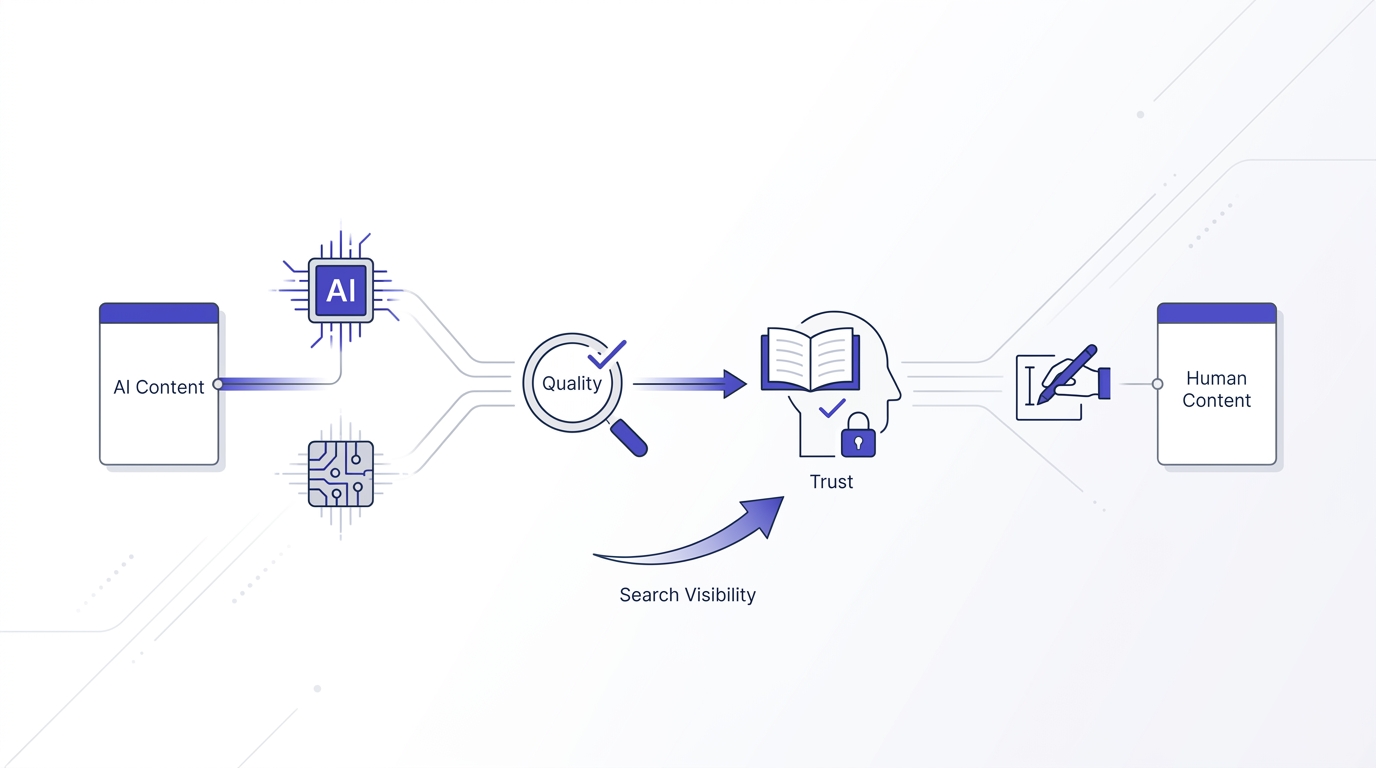
People have read enough AI-generated text now to recognize the rhythm of it even when they can’t explain why something feels off. The overly balanced paragraphs, the “in conclusion” wrap-ups, the way everything sounds vaguely confident but says nothing specific. That instinct is showing up in bounce rates and time-on-page numbers across the industry. Trust used to be assumed. Now it has to be earned line by line, and that changes what marketers need to prioritize when they sit down to write.
Some of this is anecdotal, sure, but the pattern shows up in surveys too. A 2024 Pew Research study found a big chunk of adults say they’d trust a news article less if they knew it was written mostly by AI, even when the content itself was accurate. That gap between “accurate” and “trusted” is the whole ballgame for marketers. You can be factually correct and still lose the reader if the piece doesn’t feel like it came from somewhere real.
Budgets Got Tighter at the Exact Wrong Time
Marketing teams shrank across a lot of industries starting in 2023, and the ones that survived got asked to produce roughly the same output, sometimes more, with fewer hands on deck. That squeeze is a big part of why AI tools got adopted so fast, not because marketers suddenly stopped caring about quality, but because the alternative was missing deadlines entirely. Understanding that pressure matters, because a lot of the “lazy AI content” criticism ignores the fact that teams were often choosing between imperfect AI-assisted content and no content at all.
What Actually Separates AI Content vs Human Content
Before you can decide when to use which, you need to understand what’s actually happening under the hood of each one. This isn’t philosophical. It’s mechanical, and once you see the mechanics, a lot of the debate stops feeling confusing.
How AI Generates Text, In Plain Terms
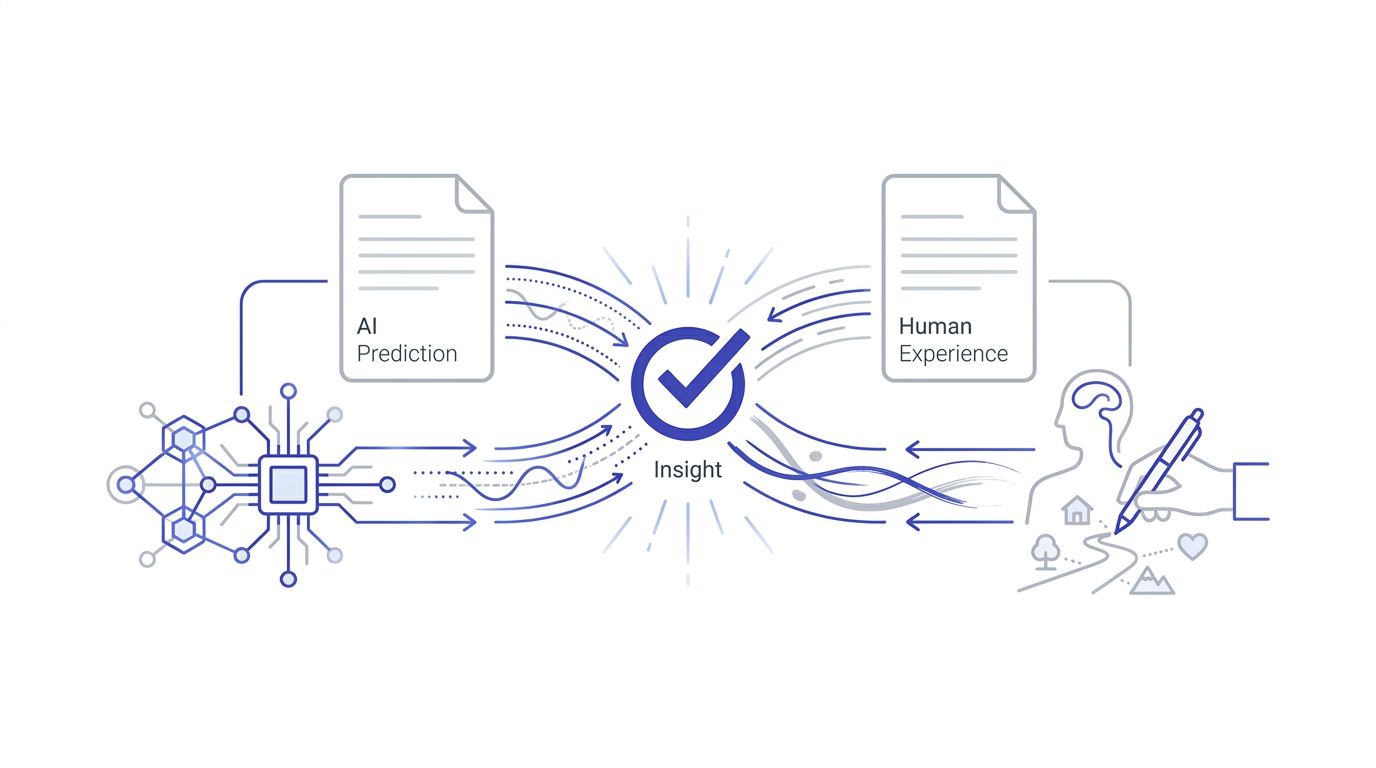
An AI model predicts the next most statistically likely word based on patterns in the data it was trained on. It doesn’t know anything the way a person knows things. It has no memory of using the product you’re writing about, no opinion formed from watching a campaign flop, no scar tissue from a client call that went sideways. What it produces is a very convincing average of everything similar that’s already been written. That’s powerful for structure and speed. It’s a real limitation for anything that needs a specific, lived point of view.
How Human Writers Generate Text
A person writing about, say, email deliverability has probably sent a campaign that landed in spam, dug through the logs, found the actual cause, and fixed it. That memory shapes every sentence they write about the topic afterward, even the parts they don’t consciously think about. Human writing carries friction, bias, specific detail, and sometimes mistakes, but those same qualities are what make it recognizable as coming from someone who was actually there. That’s the whole game, honestly. Presence versus prediction.
The Experience Gap Nobody Talks About Enough
This is the part that matters most for marketers specifically. Google’s quality guidelines put a heavy emphasis on “experience” as a ranking signal, meaning content written by someone who has genuinely done the thing they’re describing. AI, by definition, hasn’t done anything. It can describe a process convincingly, but it can’t tell you that step four always breaks if you’re on the free tier of a certain tool, because it never hit that wall itself. That gap between describing and having lived through something is where a huge chunk of the AI content vs human content debate actually lives.
Think about the difference between a listicle on “best project management tools” written from a prompt versus one written by someone who actually ran a six-person team through Asana, Monday, and ClickUp for a quarter each. The AI version will get the feature comparisons roughly right. The human version will mention that Monday’s automation limits kicked in halfway through a sprint and forced a workaround nobody warned them about. That one sentence is worth more to a reader trying to make a real decision than three paragraphs of accurate-but-generic feature summaries.
Why This Gap Is Getting Harder to Fake
Some marketers try to close the experience gap by prompting AI to “write in first person as if you used the product.” That trick worked for a while, but it’s getting easier to spot because the fabricated details tend to be vague where real experience is specific. A genuine user complaint mentions the exact error code or the exact plan tier. A fabricated one says something like “I found the interface a bit clunky at times,” which could describe literally any software ever made. Readers, and increasingly search algorithms, are getting better at telling those two things apart.
Strengths of AI Content Marketers Can’t Honestly Ignore
Look, dismissing AI content outright would be dishonest, and it would also be bad advice. There are real, measurable wins here, and pretending otherwise just makes you look out of touch at the next planning meeting.
Speed That Changes What’s Even Possible
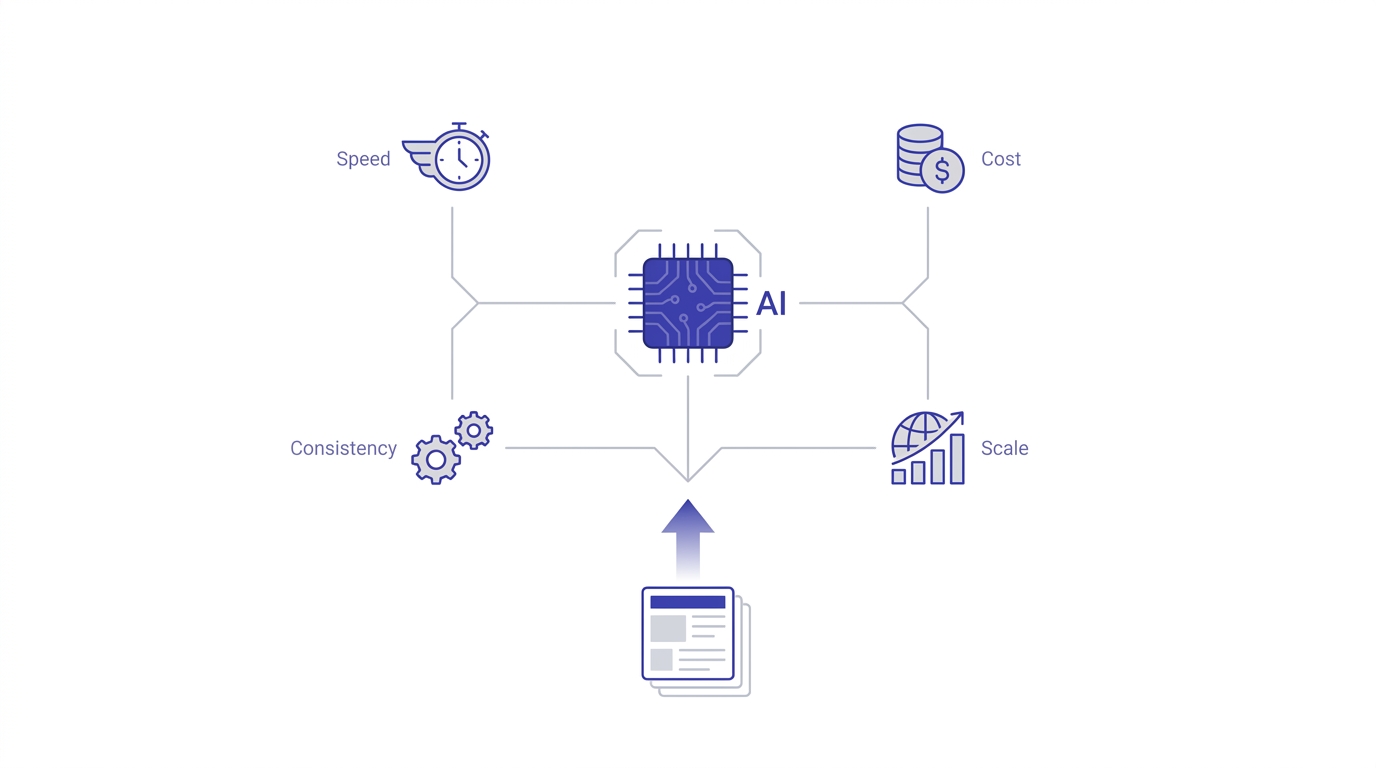
A first draft that used to take three hours can now take fifteen minutes. That’s not a small efficiency gain, it’s a structural shift in what a lean team can attempt. Product update pages, meta descriptions, internal FAQs, first-pass outlines for a fifty-page guide, all of that moves faster with AI in the loop. Marketers who fight this on principle are usually the ones falling behind on deadlines they didn’t need to miss.
Cost Savings That Free Up Budget for What Matters
Every dollar not spent on a first draft of a routine blog post is a dollar that can go toward an original survey, a proper case study interview, or a designer who makes your content actually look like something worth reading. AI content, used well, isn’t about replacing the budget for good writing. It’s about reallocating it toward the parts of content that genuinely need a human touch, and that reallocation is where the real value shows up on a spreadsheet.
Consistency Across a Growing Number of Channels
Brand voice guidelines are easy to write and hard to enforce across twelve writers, three agencies, and a rotating cast of freelancers. AI tools, fed the right prompt and enough examples, hold a consistent tone across product pages, support docs, and social captions in a way that’s genuinely hard for a sprawling human team to match without heavy editorial oversight. That consistency matters more than people give it credit for, especially for brands scaling into new markets fast.
Handling Repetitive, High-Volume Formats Without Fatigue
Some content is just structurally repetitive by nature: product descriptions for a 4,000-SKU catalog, localized landing pages for forty city markets, or weekly market recap emails that follow the same template with new numbers each time. A human writer doing that same format 200 times a month burns out and starts cutting corners around entry 150. AI doesn’t get bored, doesn’t lose focus in the afternoon, and doesn’t start copy-pasting old sections out of fatigue the way tired humans sometimes do under deadline pressure.
Where AI Content Falls Apart, Often in Public
For every strength, there’s a failure mode that’s bitten real companies, sometimes badly enough to make the news. This is the section skeptics point to, and honestly, they’re not wrong to.
Hallucinations That Make It Into Published Work
AI models generate confident, fluent sentences that are sometimes flatly false, a statistic that doesn’t exist, a study that was never conducted, a feature the product doesn’t actually have. A law firm got sanctioned in 2023 for submitting a legal brief full of fabricated case citations an AI tool invented. Marketers have quietly pulled blog posts citing research that turned out to be made up. This isn’t a rare edge case. It’s a known, documented behavior of these tools, and it’s the single biggest reason AI drafts need a human fact-check before anything goes live.
The Sameness Problem, Also Known as AI Slop
Read ten AI-generated articles on the same topic and you’ll notice the same three-item lists, the same balanced “on one hand, on the other hand” framing, the same slightly hollow confidence. Readers have started calling this “AI slop,” and the term stuck because it’s accurate. When your competitor’s content sounds exactly like yours because you’re both running the same prompt through the same model, you’ve lost the one thing content was supposed to give you: differentiation.
Missing the Experience That E-E-A-T Actually Rewards
Google’s quality raters are explicitly trained to look for signs of firsthand experience, not just accurate information. A page about hiking boots that never mentions a specific trail, a specific blister, a specific brand that fell apart after one season, reads as thin even if every fact in it is technically correct. AI content, left unedited, tends to produce exactly that kind of technically-correct-but-experientially-empty writing, and search engines are getting better at recognizing the difference every single quarter.
Legal and Copyright Gray Areas That Nobody Fully Settled Yet
AI models are trained on huge amounts of existing text, and there’s still active litigation over whether that training process infringes on the original authors’ rights. The New York Times sued OpenAI and Microsoft in late 2023 over exactly this. None of that is fully resolved as of now, which means marketers publishing AI-generated content are operating in a legal environment that could still shift under them. It’s not a reason to avoid the tools entirely, but it is a reason to keep a human reviewing anything that closely mirrors a specific existing source.
Strengths of Human Content That AI Still Hasn’t Cracked
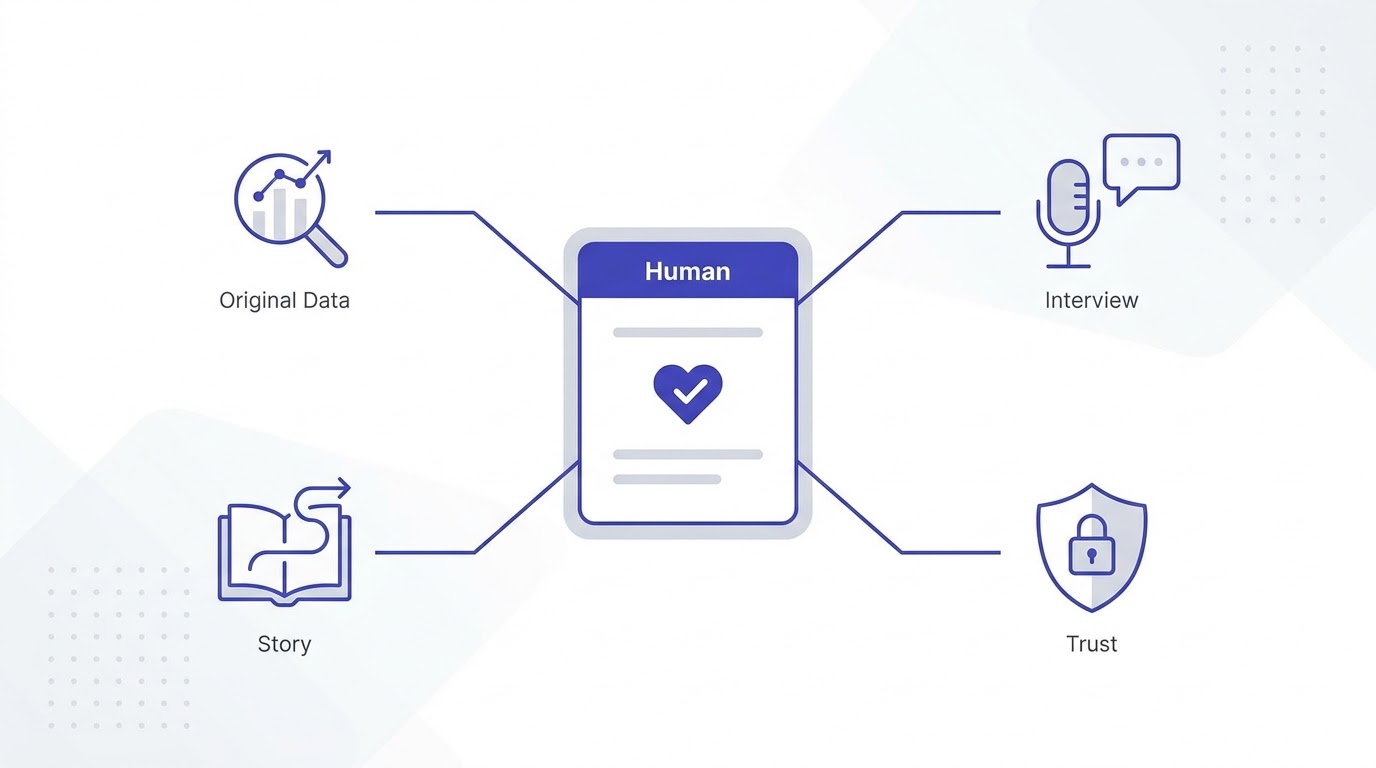
This is the flip side, and it’s worth being just as specific about it instead of waving vaguely at “creativity,” which is a cop-out answer that doesn’t tell you anything useful.
Original Research and First-Party Data
Nobody’s model can run your own customer survey, pull your own product usage data, or interview your own support team about the top five complaints from last quarter. That kind of original data is genuinely rare online right now, which is exactly why it performs so well. A single proprietary chart with your own numbers on it will outperform ten AI-summarized “top trends” listicles every time, because it’s the only place that specific information exists.
Ahrefs has published its own internal data on things like average traffic growth curves for new sites, and those posts get cited and linked far more than generic “how SEO works” explainers, precisely because nobody else has that dataset. That’s the model worth copying: pick a question your own company’s data can actually answer, publish the specific numbers, and let other sites do the linking for you because you’re the only source.
Real Interviews and Firsthand Reporting
A phone call with an actual customer, a Slack thread with your own support team, or a walkthrough with the engineer who built a feature produces detail no model can invent convincingly. That reporting layer is slower and more expensive than prompting a chatbot, but it’s also the layer that turns a forgettable blog post into something other publications want to reference, because it contains information that genuinely didn’t exist anywhere else before you published it.
Storytelling That Actually Lands Emotionally
A human writer who’s felt the exact frustration a reader is feeling right now can write toward that feeling with precision. That’s not something a model fakes convincingly for long stretches of text. It can mimic the shape of an emotional story, but it tends to flatten out, hitting generic beats instead of the specific, weird, true detail that makes a story stick. Readers can tell the difference even when they can’t articulate why one story moved them and another one didn’t.
Think about Mailchimp’s early brand content, built around specific, odd little stories from real small business owners, the guy who started a hot sauce company out of his garage, the couple running a taco truck who nearly gave up twice before it worked. That kind of narrative depends on details nobody could invent from a prompt: the exact reason the truck’s engine died in 2019, the specific customer who left the review that kept them going. AI can write a technically fine short story about a fictional small business, but it can’t report on a real one it never talked to.
Judgment Calls That Require Actually Caring About the Outcome
Should this paragraph go before or after the pricing table? Is this joke going to land with our audience or embarrass us? Is this claim defensible if a competitor challenges it publicly? Those are judgment calls that require caring about consequences in a way a model simply doesn’t, because nothing is actually at stake for it. A human writer who’ll get an angry email from a customer if a claim is wrong makes different choices than a system generating the statistically likely next sentence.
Relationships and Trust Built Over Time
A lot of B2B content marketing runs on relationships: the writer who’s interviewed forty founders in a niche industry and knows exactly which questions get past the rehearsed answers, or the community manager who remembers that a specific customer had a bad support experience last year and adjusts tone accordingly. That accumulated, relational knowledge doesn’t transfer into a prompt. It lives in a person’s memory and shows up in small, specific choices that readers notice even when they can’t name why a piece feels more credible than another one covering the same topic.
Where Human Content Genuinely Struggles
Fairness cuts both ways here. Human content has real, practical downsides that AI content solves cleanly, and pretending otherwise is just as dishonest as dismissing AI outright.
Speed That Simply Can’t Scale to Modern Demands
A skilled writer producing one excellent 2,000-word article a day sounds impressive until your content calendar needs forty pieces a month across three product lines and five languages. Human bandwidth has a hard ceiling, and hitting that ceiling means either missing deadlines or quietly lowering quality anyway, which defeats the whole point of insisting on “human-only” in the first place.
This isn’t a knock on writers, it’s just math. A content calendar that used to feel ambitious a few years ago now looks conservative next to what competitors are shipping with AI-assisted workflows in the mix, and pretending that pressure doesn’t exist doesn’t make it go away.
Cost That Adds Up Fast at Scale
Good writers, editors, and subject matter experts cost real money, and that cost multiplies across every language, every product line, every seasonal campaign. Plenty of marketing teams simply don’t have the headcount budget to produce everything they need entirely by hand, and pretending budget constraints don’t exist is how you end up with a content strategy that looks great in a slide deck and falls apart in the actual spreadsheet.
Inconsistency That Creeps in Without Anyone Noticing
Different human writers bring different vocabulary, different sentence rhythms, different levels of attention to brand guidelines, especially across a large team or a rotating freelancer pool. Without heavy editorial oversight, a “fully human” content library can end up sounding more inconsistent than a well-prompted AI system, which is an uncomfortable thing for human-content purists to sit with, but it’s true often enough to matter.
Anyone who’s audited a company’s blog after three or four content managers have cycled through it knows this firsthand. Voice drifts, formatting standards change, and old posts start looking like they belong to a different brand entirely. That’s a real cost of “human-only” content strategies that rarely gets mentioned in the debate.
The Tools Marketers Are Actually Using Right Now
It helps to get concrete instead of talking about “AI” as one giant blob of technology. Different tools get used for different jobs, and the marketers getting good results tend to be specific about which tool does what instead of expecting one system to handle everything.
Large Language Models for Drafting and Ideation
Tools like ChatGPT, Claude, and Gemini get used for the heavy lifting of first drafts, outline generation, and brainstorming headline variations. Teams that get the best results treat these as a smart junior collaborator, feeding them real examples of brand voice, real data points to work from, and specific instructions rather than vague one-line prompts. The output quality tracks pretty directly with how much real information goes into the prompt in the first place.
SEO and Optimization Tools Layered on Top
Platforms like Surfer, Clearscope, and MarketMuse analyze what’s already ranking and suggest structure, keyword coverage, and length targets. These tools don’t write the content, but they shape the skeleton AI or human writers fill in, and skipping this layer is a common reason AI-assisted content underperforms even when the writing itself is decent.
Editing and Fact-Checking Tools That Catch What Humans Miss
Grammarly and similar tools catch surface issues fast, but the fact-checking layer still mostly falls on a human opening a second tab and verifying a claim against a primary source. Some teams now use a second AI pass specifically to flag statistics and claims for human review, which speeds up the verification step without skipping it entirely, and that combination is becoming a pretty standard part of serious editorial workflows.
AI Content vs Human Content: How Google and Readers Actually Judge Quality
Here’s where things get interesting, because Google’s ranking systems and actual human readers don’t always weigh the same signals the same way, and marketers who only optimize for one of them are leaving something on the table.
Google’s Official Stance on AI-Generated Content
Google has said repeatedly that it doesn’t penalize content for being AI-generated specifically. What it penalizes is content generated primarily to manipulate rankings, regardless of how it was produced. That distinction matters a lot. A thin, unedited AI draft gets treated the same as a thin, unedited human draft: badly. A thoroughly edited, fact-checked, experience-backed piece that started as an AI draft gets treated fine. The method of production isn’t the signal. The quality and usefulness of the final output is.
E-E-A-T in Practice, Not Just as a Buzzword
Experience, Expertise, Authoritativeness, and Trustworthiness sound like consultant jargon until you break down what they mean in a real quality-rater guideline. Experience means firsthand use. Expertise means demonstrated depth, not surface-level summary. Authoritativeness means other credible sources point to you. Trustworthiness means your claims hold up under scrutiny and your site doesn’t feel sketchy. AI drafts can hit expertise-level breadth pretty easily. They almost never hit experience without a human injecting it, because experience is, by definition, something that happened to a specific person.
What Readers Actually Trust, Based on Behavior, Not Surveys
Forget what people say in surveys about trusting human content more. Look at what they actually do: they trust specific numbers over vague claims, they trust named authors with real bios over “Team” bylines, they trust pages with screenshots of the actual product over generic stock illustrations. None of that is exclusively human or exclusively AI. It’s about specificity and proof, and either production method can deliver that if someone actually puts in the work to include it.
Real Examples of AI Content vs Human Content in Marketing
Abstract arguments only go so far. Here’s what this has actually looked like playing out at real companies over the last two years.
Brands That Leaned Too Hard Into AI Alone
CNET published dozens of AI-generated financial explainer articles in early 2023 without clear disclosure, and reporters quickly found factual errors scattered through the batch, including basic math mistakes in articles about compound interest. The backlash was fast and public, and CNET ended up pausing the program and adding corrections. Sports Illustrated faced a similar mess later that year when it published articles under fake AI-generated author profiles with invented bios and headshots, which is a different kind of problem but comes from the same root cause: treating AI output as finished work instead of a draft that needs a human to check it.
G/O Media, which owned Sports Illustrated at the time, defended the practice initially before quietly removing the affected content once the story picked up momentum across tech and media outlets. What made both cases worse wasn’t really the use of AI itself. It was the attempt to disguise it, inventing fake human bylines and headshots rather than just being upfront about the process. Readers tend to forgive the tool. They don’t forgive being lied to about who, or what, wrote something.
A Smaller, Less Famous Example That’s Just as Telling
Plenty of smaller e-commerce and SaaS blogs went through a quieter version of the same story. A marketing agency I heard about through a colleague pushed a client’s blog from 8 posts a month to 60 using AI drafts with almost no editing, and organic traffic actually tripled within two months. Six months later, after a core algorithm update targeting unhelpful content, that same traffic had dropped to below where it started, and the client ended up letting the agency go. Nobody wrote a news story about it, but that pattern has repeated at a smaller scale across thousands of sites that never make headlines.
What Worked When Brands Blended Both Deliberately
HubSpot has talked publicly about using AI to accelerate research and first drafts while keeping subject matter experts and editors firmly in the loop for anything customer-facing, and their content output scaled without the same kind of public credibility hit other brands took. The pattern that actually works isn’t “AI or human,” it’s “AI drafts, human verifies and adds what only a human can add.” That’s a boring, unglamorous answer, but it’s the one that keeps showing up wherever this has gone well.
The Pattern Across Every Case Worth Studying
Every AI content disaster you can name shares one root cause: publishing without a human genuinely checking the work, not just skimming it. Every AI content success story shares the opposite: a human treating the AI output as a rough draft from a smart but inexperienced junior writer who needs supervision, not as a finished product ready to ship. That framing alone would prevent most of the embarrassing headlines in this space.
That “smart but inexperienced junior writer” comparison is worth sitting with for a second, because it changes how you’d actually manage the process. You wouldn’t let a brand-new hire publish straight to the company blog without a manager reading it first, no matter how well they interviewed or how fast they type. AI output deserves exactly that level of supervision, not more trust just because it sounds fluent, and definitely not less oversight just because it’s faster to produce.
How to Build a Hybrid Content Workflow That Actually Works
Enough theory. Here’s a workflow that real content teams are using right now, adjusted for whatever team size you’ve got.
Using AI for Research, Outlines, and Rough Drafts
Let AI handle the unglamorous first pass: pulling together a structure, summarizing existing coverage of a topic, drafting boilerplate sections like definitions or step-by-step instructions. This is the stage where AI’s speed genuinely earns its keep, and there’s no shame in starting here. The mistake is stopping here.
Human Editing, Fact-Checking, and Voice Correction
Every claim, every statistic, every named source in an AI draft needs a human to verify it against a real, checkable source before it goes anywhere near “publish.” This step also catches the flat, generic phrasing AI tends to default to, and it’s where a real editor rewrites the sentences that sound like nobody in particular said them. Skipping this step is how you end up in a CNET-style headline.
Injecting Original Insight, Data, and Actual Experience
This is the step that turns a competent draft into content that actually ranks and actually converts. Add your own screenshot. Add the number from your own analytics dashboard. Add the sentence about the thing that broke when you tried it yourself. This is the layer AI structurally cannot provide, and it’s also the layer that determines whether your content looks like everyone else’s or stands out from it.
Some teams build this step directly into their content brief template, with a required field for “one detail that only we could include.” That small process change forces the original-insight step to happen instead of getting skipped when deadlines get tight, which is exactly the moment teams are most tempted to publish the AI draft as-is and move on to the next task on the list.
Assigning Real Ownership So Nothing Slips Through
Hybrid workflows fail most often when nobody’s actually accountable for the human layer. If “someone will edit it eventually” is the plan, it usually doesn’t happen consistently. Assign a specific person to sign off on fact-checking and a specific person to sign off on brand voice before anything publishes, even if it’s the same person wearing two hats on a small team. Clear ownership is the difference between a hybrid workflow that works every time and one that works until the week everyone’s slammed.
A Practical Framework for Deciding AI Content vs Human Content
You don’t need a philosophy degree to make this call correctly on a Tuesday afternoon with a deadline. You need a simple checklist.
Content Types Where AI Can Lead, With Light Editing
Meta descriptions, internal documentation, first-draft social captions, basic FAQ answers, and routine product update announcements are all strong candidates for AI-led production with a light human pass for accuracy and tone. The stakes are low, the format is predictable, and the speed gain is real without much quality risk.
Content Types That Need a Human From the Start
Original research reports, customer case studies, opinion pieces tied to your brand’s actual point of view, anything making a specific factual claim about your product’s performance, and anything where a mistake could damage trust or invite legal risk should start with a human, even if AI assists with structure along the way. These are the pieces where the experience gap discussed earlier actually shows up in the final output if you skip the human layer.
A Simple Checklist Before You Publish Anything AI-Assisted
Ask three questions before hitting publish: has a human verified every specific claim and statistic against a real source, does this piece include at least one detail that could only come from actual experience with the topic, and would you be comfortable putting your own name on this if a reader challenged a claim in the comments. If the answer to any of those is no, it’s not ready, regardless of how polished the sentences sound.
How to Measure Whether Your Content Strategy Is Actually Working
None of this matters if you’re not tracking the right numbers afterward. A lot of teams adopted AI content, watched a vanity metric go up, and declared victory too early.
Look Past Traffic to Engagement Signals
Traffic is the easiest number to celebrate and the easiest one to be misled by. A spike in pageviews from a batch of AI-assisted articles means nothing if average time on page is forty seconds and bounce rate is climbing. Pull up scroll depth and time on page for your AI-heavy content next to your human-written content and compare them honestly. If the gap is wide, that’s your answer about which one readers actually value, regardless of what the traffic chart shows on the surface.
Track Rankings Over Months, Not Weeks
Content that leans entirely on AI without editorial depth sometimes ranks fine for the first few weeks and then slides once Google’s systems reassess it against fresher, more helpful competition. Set a calendar reminder to check rankings on your AI-assisted batch at the 30, 60, and 90 day marks specifically, because the real signal shows up in that slower window, not in the first flush of indexing.
Watch Conversion Rate, Not Just Volume of Content Published
More published pages doesn’t automatically mean more pipeline. Several teams that scaled AI content aggressively found their overall conversion rate from content dropped even as raw traffic went up, because the new volume was attracting less-qualified visitors who bounced without engaging further. Tie every content push back to actual conversion numbers, not just publishing velocity, or you’ll be optimizing for a metric that doesn’t pay the bills.
Mistakes Marketers Make With AI Content
Watching teams adopt these tools over the last couple of years, the same handful of mistakes keep showing up, and they’re avoidable once you know what to look for.
Publishing the First Draft Without a Real Edit
This is the mistake behind almost every AI content horror story in the news. Treating a fluent AI draft as finished because it reads smoothly, without checking a single fact or adding a single original detail, is how companies end up correcting published articles in public. Fluency is not accuracy, and it never was, even in human writing.
The fix isn’t complicated, it’s just unglamorous. Build a mandatory second pass into your workflow where someone other than the person who generated the draft reads it specifically looking for unverified claims, and don’t let anything skip that step regardless of how tight the deadline is. Teams that treat this step as optional are the ones who end up writing an apology post six months later.
Treating AI Output as a Finished Product Instead of Raw Material
There’s a subtle version of this mistake where a marketer does technically edit the piece, fixing typos and tightening sentences, but never actually adds anything the AI couldn’t have generated on its own. The result reads clean but still says nothing specific. Real editing means adding, not just polishing, and that distinction is where a lot of “edited” AI content still quietly fails the experience test.
Ignoring Brand Voice and Letting Everything Sound the Same
Without specific examples of your actual brand voice fed into the process, AI defaults to a generic, competent-but-forgettable tone that could belong to literally any company in your industry. That’s the fastest way to make years of brand-building effort evaporate into a sea of interchangeable blog posts that nobody remembers reading.
Skipping Fact Verification on Anything That Sounds Confident
AI models are trained to sound confident regardless of whether the underlying claim is true, which means confidence is a genuinely useless signal for accuracy. Every number, every study citation, every “studies show” needs to be traced back to a real source by an actual person before publication, no exceptions, no matter how busy the week is.
Forgetting That AI Doesn’t Know Your Product Changed Last Week
Models are trained on data up to a certain point and don’t automatically know about a pricing change you made on Monday or a feature you deprecated last quarter. Marketers who let AI draft product pages without checking against the current state of the actual product end up publishing outdated claims that support teams then have to field angry emails about. A quick cross-check against your own changelog before publishing anything product-related catches this before it becomes a support ticket.
The Future of AI Content vs Human Content in Marketing
Nobody has a perfect crystal ball here, but the direction of travel is visible enough to plan around it right now.
AI Getting Better at Structure, Still Behind on Judgment
Models keep improving at grammar, structure, and even matching a specified tone when given good examples to work from. What they’re not close to solving is judgment: knowing which detail matters most to a specific reader in a specific moment, knowing when a claim needs a caveat, knowing when the honest answer is “it depends” instead of a clean five-step list. That gap looks likely to persist for a while yet.
Newer models are also getting connected to live data, browsing tools, and company-specific documents, which closes part of the freshness gap that used to be an easy way to spot AI content. A model that can pull your current pricing page before drafting a comparison chart makes fewer of the outdated-claim mistakes discussed earlier. That’s a real improvement, but it still doesn’t give the model an opinion about whether that pricing feels fair, which is the kind of judgment a customer-facing writer brings to the table.
Human Roles Shifting Toward Strategy, Editing, and Original Reporting
The writers who’ll do best over the next few years probably aren’t the ones producing the highest volume of drafts. They’re the ones who get good at directing AI tools, catching what those tools get wrong, and spending the time they save on original research, real interviews, and firsthand testing that no model can replicate. That’s a real shift in what “being a content marketer” even means, and it’s already showing up in job postings that ask for “AI-assisted editing” as a listed skill.
What Almost Certainly Won’t Change
Readers will keep rewarding specificity over vagueness, proof over claims, and a real point of view over a balanced non-answer. That was true before AI content existed and it’ll stay true no matter how good the models get, because it’s not really about the technology. It’s about what makes writing worth someone’s time to read, and that bar isn’t going anywhere.
It’s worth remembering this was true back when the debate wasn’t “AI vs human” but “SEO-stuffed keyword farms vs actual expertise,” a fight the content industry already had once in the mid-2010s. The keyword farms lost eventually, not because Google banned a specific technology, but because thin, unhelpful content stopped working as search quality improved. The same basic dynamic is playing out again, just with a faster, more convincing production method on one side of the fight this time.
Preparing Your Team for What’s Coming
Practically, that means investing now in the skills that stay valuable regardless of how the tools evolve: interviewing sources well, running original research, editing critically instead of just proofreading, and developing an actual point of view worth reading. Teams that build those muscles now will adapt fine to whatever the next generation of AI tools looks like. Teams that only ever learned to prompt a model and publish whatever comes back are the ones who’ll struggle once the current gap between “good enough” and “actually good” closes further.
Conclusion
If you take one thing from all of this, let it be this: the AI content vs human content debate was never really about which one is “better” in some abstract sense. It’s about matching the right tool to the right job and being honest about where each one runs out of road. AI earns its place handling volume, speed, and routine structure. Humans earn their place handling judgment, original experience, and the specific details that make a reader trust what they’re reading. Marketers who treat this as an either-or fight are going to keep losing ground to the ones who just quietly figured out how to use both, well, and moved on to the next problem.
Frequently Asked Questions
Does Google penalize AI-generated content?
No, not automatically. Google has stated its systems reward content that’s helpful and demonstrates real experience and expertise, regardless of how it was produced. What gets penalized is content, AI or human, that’s created mainly to game rankings rather than help a reader. Quality and usefulness are the actual signals, not the production method.
Can readers actually tell the difference between AI content vs human content?
Often, yes, at least when the AI draft hasn’t been edited. Readers pick up on the generic phrasing, the overly balanced framing, and the lack of specific detail, even when they can’t name exactly what feels off. A well-edited AI-assisted piece with real human insight added, though, is genuinely hard to distinguish from fully human writing.
Is it unethical to use AI to write marketing content?
Using AI as a drafting tool isn’t inherently unethical, in the same way using spell-check or a template isn’t unethical. It becomes a problem when it’s used to fabricate expertise, fake authorship, or publish false claims without verification, which is exactly what got CNET and Sports Illustrated into trouble.
How much editing does AI content actually need before publishing?
Enough to verify every factual claim against a real source, remove generic phrasing that doesn’t sound like your brand, and add at least one detail that proves firsthand experience with the topic. For most marketing content, that’s a substantial edit, not a quick skim, even if the underlying structure from the AI draft stays intact.
What is E-E-A-T and why does it matter for this debate?
E-E-A-T stands for Experience, Expertise, Authoritativeness, and Trustworthiness, and it’s part of how Google’s quality raters evaluate content. It matters here because “Experience” specifically rewards firsthand use of a product or topic, which is the one thing AI models structurally cannot provide on their own without a human adding it.
Should small businesses use AI content or hire human writers?
Most small businesses do best with a hybrid approach: AI for routine, low-stakes content like product descriptions and social captions, and human writers or the business owner’s own voice for anything tied to original expertise, customer stories, or content meant to build long-term trust and authority in a niche.
What industries need human content the most?
Finance, health, and legal topics, often called YMYL (Your Money or Your Life) content, need human expertise and verification the most, because factual errors in these areas carry real consequences for readers. Google’s quality guidelines apply extra scrutiny to these topics specifically because the cost of getting it wrong is higher.
Can AI content rank well on its own without human editing?
It can rank in the short term, especially for low-competition queries, but it tends to underperform over time compared to edited, experience-backed content, particularly after Google’s helpful content updates. Several sites that leaned entirely on unedited AI output saw noticeable traffic declines once those updates rolled out.
How do you disclose AI use in content without hurting credibility?
Being upfront about AI-assisted drafting, paired with clear evidence of human review, fact-checking, and added expertise, tends to build more trust than staying silent and hoping nobody notices. The CNET situation escalated specifically because the AI authorship wasn’t disclosed clearly upfront, and readers felt misled once it came out.
Is AI content cheaper in the long run than human content?
It’s cheaper for first drafts and routine, low-stakes content, but the total cost evens out once you factor in the editing, fact-checking, and human oversight that responsible publishing requires. Teams that skip that oversight to save money tend to pay for it later in corrections, credibility damage, or ranking drops.
Will AI eventually replace human content writers entirely?
Unlikely, based on current tools and their limitations. AI is closing the gap on structure and grammar, but it still can’t generate original experience, take responsibility for a factual claim, or make judgment calls tied to real consequences. The more realistic shift is writers spending less time on rough drafts and more time on the things only a person can actually do.
How do you fix content that already sounds too much like AI slop?
Go back through it and cut anything vague enough to apply to any competitor’s product too. Replace generic claims with a specific number, a named example, or a detail from actual use. Adding one real screenshot, one direct quote from a customer, or one specific data point usually does more to fix the sameness problem than rewriting the whole piece from scratch.
Does using AI content hurt your brand’s credibility long term?
It can, but only if it’s used carelessly and readers find out the hard way, the way CNET and Sports Illustrated did. Used responsibly with disclosure and human oversight, it doesn’t seem to carry the same credibility risk, based on how brands like HubSpot have handled it without major backlash.
What’s the biggest difference between AI content vs human content for SEO specifically?
The biggest practical difference is depth of experience signals, not keyword usage or grammar, both of which AI handles fine on its own. Search systems increasingly reward pages that demonstrate someone actually did the thing being described, and that’s the layer that has to come from a human, no matter how good the underlying draft is.