

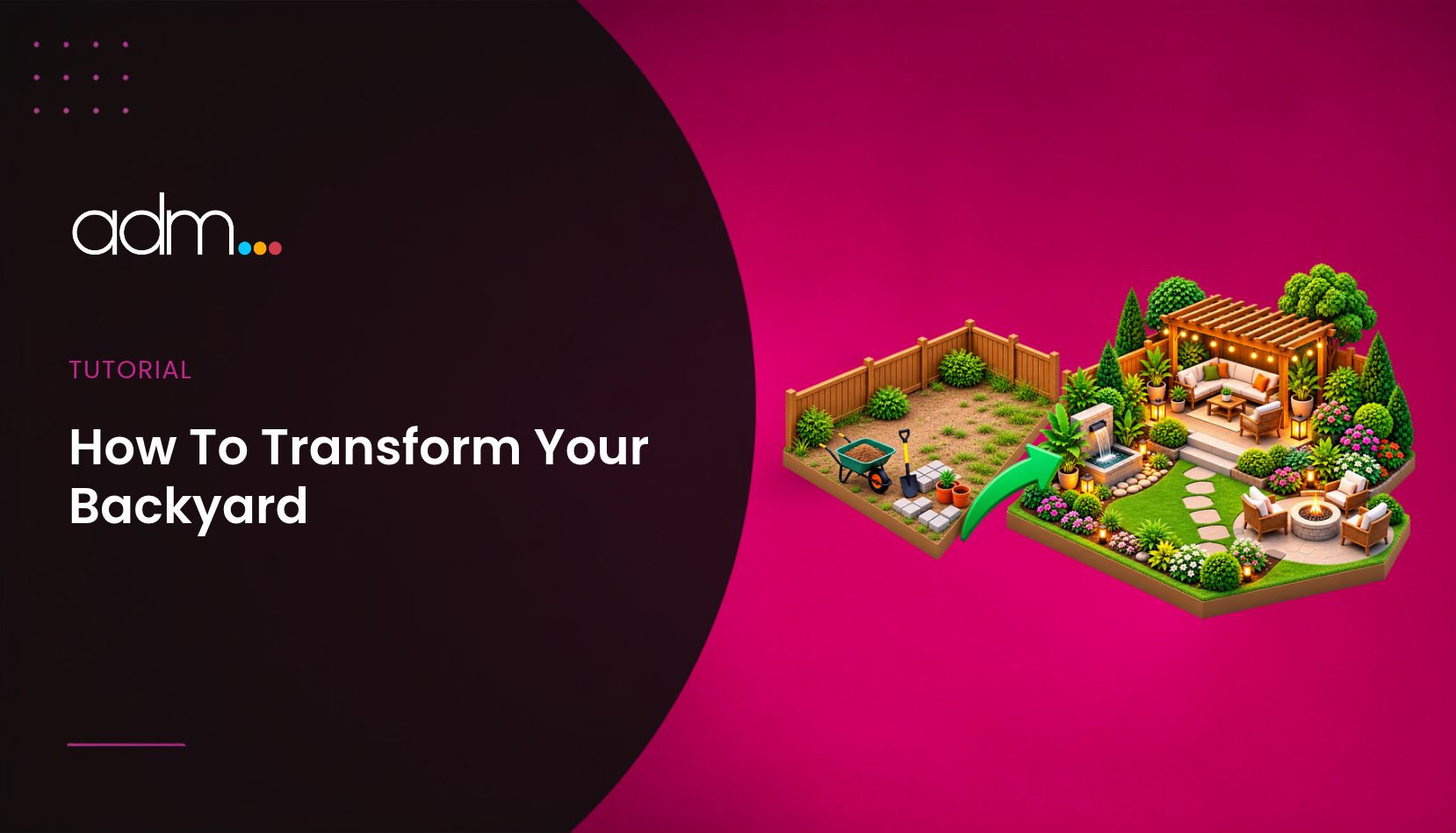
For most of the year, you probably only set foot in your garden to take the recycling out or rescue the laundry from a surprise downpour.
Then, the sun shows up for a fortnight in June, and you find yourself perched on a wobbly folding chair, balancing a burger on your knee and squinting at the fence.
If that’s how you use your garden, you’re leaving a lot of potential on the table. With a few ideas borrowed from the way people are designing outdoor spaces right now, you can turn it into a place where you’ll want to spend your evenings.
Connect Your Indoor and Outdoor Spaces
Before you buy a single cushion, think about how you get into your garden. If the route involves a narrow back door and an obstacle course around the bins, you’re unlikely to wander out with your morning coffee.
So, start by making the two spaces feel like they belong together. Large bifold or sliding doors help enormously. But if new doors aren’t in the budget, try moving the bulky sofa or the clutter on the windowsill so you can see your garden properly from inside.
You can also choose patio paving in a similar tone to your indoor flooring, then pick one colour from your living room and use cushions or planters in the same shade outside.
Make Privacy Feel Natural
Now that your garden feels like an extension of your house, you’ll want it to feel just as private. After all, it’s hard to relax with a book when you keep making eye contact with a neighbour looking out their upstairs window.
You don’t need a towering wall, though, and in England and Wales, you’d usually need planning permission for any fence over 2 metres.
Instead, try fixing trellis panels to the top of your existing fence and letting climbers like star jasmine or clematis scramble up them. You’ll gain height without blocking out the light.
If your garden is overlooked by upper-floor windows, pleached hornbeam or tall planters of evergreen grasses can give you privacy without making the space feel enclosed.
Not sure what will thrive in your soil and that shady corner by the shed? A gardening service that keeps up with outdoor living trends can recommend screening that suits your plot.
Make Shade Part of the Design
With your garden screened from view, the next thing you’ll want to block out is, believe it or not, the sun. Britain might not be famous for its heatwaves, but a south-facing patio in July can turn a relaxed lunch into an endurance test.
If you’ve got the space, add a pergola, since it’ll give your seating area structure. Train wisteria or a grapevine over the top, and you’ll get dappled shade that looks better every year.
For smaller gardens, you can fix a retractable awning to the back wall or go for a cantilever parasol. This way, you won’t be staring directly at a giant metal pole stuck in the centre of the table while having dinner.
Prefer shade sails? Fix the corners at different heights and pull them taut so rain runs straight off instead of collecting in a sagging pool above your head.
Build a Comfortable Seating Area
You won’t linger outside if every chair you have leaves you shifting around like you’re waiting outside the headteacher’s office.
Since the weather here is famously unpredictable, you’ll need furniture that can handle a bit of rain. Powder-coated aluminium and synthetic rattan need very little care, while untreated teak weathers into a beautiful silver-grey over time.
For cushions, look for quick-dry foam with removable covers, and keep a waterproof storage box nearby for rainy evenings.
As for the layout, don’t push everything against the fence. Arrange your seats in a loose U-shape around a low table so people face each other, and leave at least a metre to walk through.
Bring Your Kitchen Outside
Once your guests are settled, it won’t be long before someone asks when the food is coming. And if your barbecue sits alone in the corner, you’ll spend the evening jogging indoors for tongs, plates, and the salt you forgot.
With an outdoor kitchen, you get enough counter space for preparation, storage for utensils and a place to serve your guests, all within reach of your grill or pizza oven.
You don’t need a full stone island straight away, either. Modular stainless-steel units let you add pieces over time, while porcelain or granite worktops will cope with frost far better than timber.
For the best results, keep your kitchen close enough to the house to carry dishes easily but downwind of your seating so smoke doesn’t blow straight into your guests’ faces.
Finally, if you’re planning to run electricity or gas out there, don’t attempt to DIY it and hire a certified electrician or Gas Safe engineer instead.
Add Lighting That Changes the Mood
By the time you’ve cleared the plates, the sun will be dipping, and that’s usually when everyone retreats indoors. So, you’ll want enough light sources to keep the evening going.
Just avoid relying on that single, blinding 500-watt security floodlight that switches on every time a cat scurries past.
Instead, start by adding low-level step or path lights so nobody trips carrying a tray of drinks. Then, install festoon lights above your seating and a couple of uplighters at the base of a tree.
If you want a cosy glow, go for warm white bulbs at around 2700K. Solar lights are handy, but they fade fast during an overcast winter, so you might prefer low-voltage wired lighting for the areas you use most.
Keep the Layout Flexible
Of course, a dinner party for eight and a quiet Sunday with the papers require different set-ups. So, you’ll want a layout that can change as quickly as your plans.
You can split modular outdoor sofas into separate chairs or push them together into one big corner unit. Pair them with an extendable dining table and keep a couple of folding chairs in the shed for when the cousins turn up unannounced.
You might also want to swap a fixed fire pit for a movable steel bowl. Stick to dry, seasoned logs, and your neighbours won’t have to bring their washing in every time you light it.
And if you put your larger planters on wheeled bases, you can roll them aside whenever you need room for a game of swingball or a paddling pool.
Conclusion
If your garden currently consists of a soggy lawn, two mismatched plastic chairs, and a barbecue you drag out once a year, it doesn’t have to stay that way.
Pick one idea, start this season, and you’ll soon have a garden you can use all year round, not just on the three hottest days of summer. Your neighbours might even start peering over to take notes.