

Picture three guys in San Francisco in 2008, behind on rent, carrying tens of thousands of dollars in credit card debt, with a website almost nobody used. Their fix was cereal. They hand-made boxes called Obama O’s and Cap’n McCain’s, sold them for $40 each around the Democratic National Convention, and pulled in about $30,000. That’s where the story of how Airbnb grew to a billion-dollar brand really starts. Not with a big ad budget or a slick funnel. With a weird, shareable story that got the press interested in a company nobody had heard of.
Fast forward and the numbers get silly. Airbnb hit a $1 billion valuation in July 2011 after raising $112 million, only three years after launch. When it listed on the stock market in December 2020, it was worth well over $80 billion by the end of its first day of trading. Today it lists millions of homes in more than 100,000 cities and towns. And the part that surprises people is how little of that early growth came from paid ads. Airbnb built its audience by publishing things people actually wanted to look at, read, share, and trust: photos, host stories, guest reviews, neighborhood guides, city pages, and a few stunts that got talked about for years.
This guide walks through what really happened, step by step, in plain language. You’ll see the scrappy early moves, the content engine that kept running in the background, the brand storytelling that made strangers comfortable sleeping in each other’s homes, the SEO and social work that got all of it found, and the mistakes along the way. Then comes the part you can actually use: how a small business, a student, or a solo founder can copy the pattern with almost no budget. Fair warning, content didn’t do it alone. A real product, good timing, and plenty of luck were in the mix too. But content is the piece you can learn from, so that’s where we’ll spend our time.
TL;DR
- Airbnb got its first real traction from a cereal box stunt that earned press coverage, not from paid ads.
- Photos of listings were treated as content, and the founders say bookings doubled after they shot them in New York.
- Reviews, host profiles, and neighborhood guides gave every listing fresh, unique text that people trusted and Google could read.
- The 2014 “Belong Anywhere” rebrand turned a booking site into a story about people, not rooms.
- City pages, Instagram, a print magazine, and big stunts kept bringing in attention long after the early hustle ended.
- You can copy the pattern on a tiny budget: pick one real customer story, document it well, and publish it where your buyers already look.
What You Will Learn in This Guide
Before getting into the story, here’s a quick map of what’s coming. Each part of this guide covers one piece of how Airbnb built its audience with content, and each one ends with something you can try yourself. You don’t need a marketing degree to follow along, and every term gets explained the first time it shows up.
- How the founders turned a cereal box stunt into national press and rent money
- Why they flew to New York, sat in strangers’ living rooms, and rented a camera
- How photos, reviews, and host stories work together as a content engine
- What “Belong Anywhere” meant and why Pixar-style storyboarding mattered
- How Airbnb’s city pages, Instagram, and magazine kept the traffic flowing
- The mistakes and backlash Airbnb ran into, and what they teach
- A simple, low-budget playbook you can start this week
Read it top to bottom the first time through. After that, jump straight to whichever section matches the problem you’re stuck on right now.
How Airbnb Grew to a Billion-Dollar Brand: The Early Years Nobody Planned
Airbnb’s early years were messy, broke, and a bit desperate. Nobody in that apartment was running a content strategy. They were trying to pay rent. But the habits they picked up in that stretch, telling a story, meeting users face to face, and fixing the product by looking at real listings, became the base for everything that followed.
Air Mattresses, a Design Conference, and Three Paying Strangers
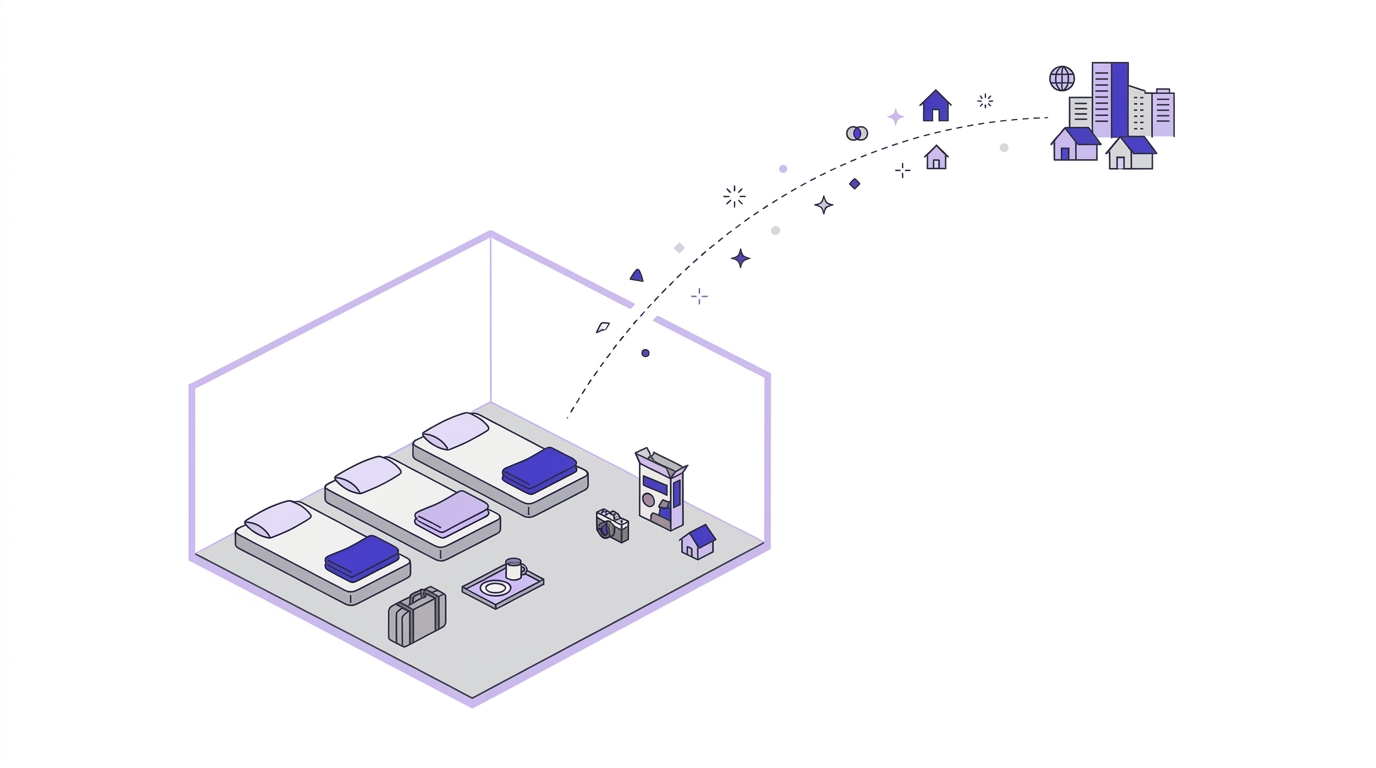
In October 2007, a big design conference came to San Francisco and the hotels filled up. Brian Chesky and Joe Gebbia, two roommates and design school grads whose rent had just gone up, saw a gap. They blew up three air mattresses on their living room floor, put together a simple website called AirBed & Breakfast, and charged $80 per guest. Three people showed up. Nobody found them through a Google ad, because there wasn’t one.
Here’s the bit people skip. That first weekend wasn’t a business yet. It was a story. Real strangers slept on real air mattresses and ate breakfast the founders made. That small, slightly absurd picture is what journalists remembered, and later what investors remembered too. A story with a person, a problem, and a funny detail travels. A feature list doesn’t.
The takeaway for you is pretty simple. Your first customers are your first content. Write down who they were, what they needed, and what surprised you about them. Nathan Blecharczyk, an engineer and Gebbia’s former roommate, joined as the third co-founder and built the site, but the narrative already existed by then. Most small businesses have this raw material sitting around and never publish it, which honestly is a waste. Start with one paragraph about your very first customer and see where it goes.
Obama O’s and Cap’n McCain’s: When a Stunt Becomes Content
Early 2008 wasn’t kind. The site launched around South by Southwest in March and got almost nothing. Then the Democratic National Convention landed in Denver that August, with tens of thousands of visitors and not enough hotel rooms. Some bookings came in, but nowhere near enough. Money was running out, credit cards were maxed, and investors kept passing.
So they went with cereal. Obama O’s, branded as a breakfast of change, and Cap’n McCain’s, a joke on the two candidates, were assembled by hand as limited-edition boxes. Each sold for $40. They sold roughly 800 boxes and made about $30,000, and outlets like CNN covered it. Think about that for a second. A cash-strapped startup ended up on national television by selling collectible cereal that had nothing to do with its actual product.
Was it content marketing? Yeah, absolutely. It was a piece of content, a story with a hook and a visual, that earned attention for free. The cereal paid some debt, but the coverage did more. It told people Airbnb existed, and it taught the founders that people share things that are funny, timely, and a little bit rebellious. The lesson isn’t “go sell cereal.” The lesson is to hook your story to something people already care about, like an election, a holiday, or a big local event, and give reporters a picture they can describe in one sentence.
Paul Graham’s Advice: Go Meet Your Users in Person
In early 2009 the founders got into Y Combinator, the startup program run by Paul Graham. As the founders tell it, Graham needed some convincing about the idea until he heard about the cereal. People who’d sold cereal to stay alive, he figured, weren’t going to quit easily. Y Combinator gave them a small amount of funding and, more usefully, a lot of blunt guidance. Then came advice that shaped the whole company.
His advice was to go see their users. Most of their listings were in New York, so the founders took trips there, stayed with hosts, sat in their living rooms, and watched how people actually used the site. Graham’s well-known line of thinking is to build something a small group of people love instead of something a big group sort of likes. Airbnb’s earliest hosts were that small group, and Chesky and Gebbia learned what those hosts cared about by being in the room instead of staring at analytics.
Those visits fed straight into content. Every conversation produced a story about a host with a spare room, a guest in a strange city, or a neighborhood nobody had put on a map. Notebooks full of that stuff turn into blog posts, host profiles, and later whole ad campaigns. If you want to copy it, block one afternoon a month to talk to three customers, record the calls with permission, and pull out the exact phrases they use. It costs nothing except time, and those phrases will beat anything you’d come up with alone.
The Photo Experiment That Changed What Airbnb Thought It Was
Here’s where it gets practical. Back in New York, the founders went through listings and noticed the photos were bad. Dark, blurry, shot on old phones. Nobody wants to pay to sleep in a room that looks like a crime scene. They had a theory: people weren’t booking because they couldn’t see what they’d be booking.
So Gebbia and Chesky rented a camera, reportedly worth a few thousand dollars, and went door to door shooting the listings themselves. As the founders tell it, revenue from those listings doubled within a week. Later on, Airbnb built a professional photography program for hosts in many cities. That’s a content decision disguised as a product decision, and it’s probably the most copyable move in this whole story.
What it shows is that content isn’t just blog posts. A photo is content. A listing description is content. When a page’s whole job is to make a stranger feel safe, every image and every sentence is doing marketing work. Before you write anything new, look at what’s already on your site. Are your product photos dark? Are your service descriptions vague? Fixing those two things is usually worth more than ten new articles, and you can do it in a weekend.
A Reality Check: Craigslist, Funding, and Luck
Content wasn’t the only thing in play, and pretending otherwise would be dishonest. Around 2010 the team built a tool that let hosts cross-post listings to Craigslist, a move people still argue about. Accounts differ on how it worked technically, but the idea was clear: go where the audience already is and borrow some of its traffic. Content and clever distribution worked together.
Money helped too. Sequoia put in roughly $600,000 in 2009, Greylock led a round of about $7.2 million in 2010, and the $112 million round in 2011 pushed the valuation to $1 billion. Those investors were buying the numbers, sure, but they were also buying a story the founders told over and over, from the cereal to the camera. A clear, repeatable story makes fundraising, press, and hiring easier all at once.
If you want more real-world breakdowns like this, the case studies section on our Learn hub has plenty of them. The pattern shows up again and again: scrappy first moves, honest storytelling, then a system that keeps running without the founders pushing it every day. Airbnb just happens to be the most famous example.
The Content Marketing Engine Behind Airbnb’s Growth
Once the early stunts faded, Airbnb needed a repeatable machine, not another gimmick. What it built was a loop where hosts, guests, and the company kept creating content that other people read before booking. Each piece below is something you can still see on any Airbnb page today.
Host and Guest Stories as the Real Product Page
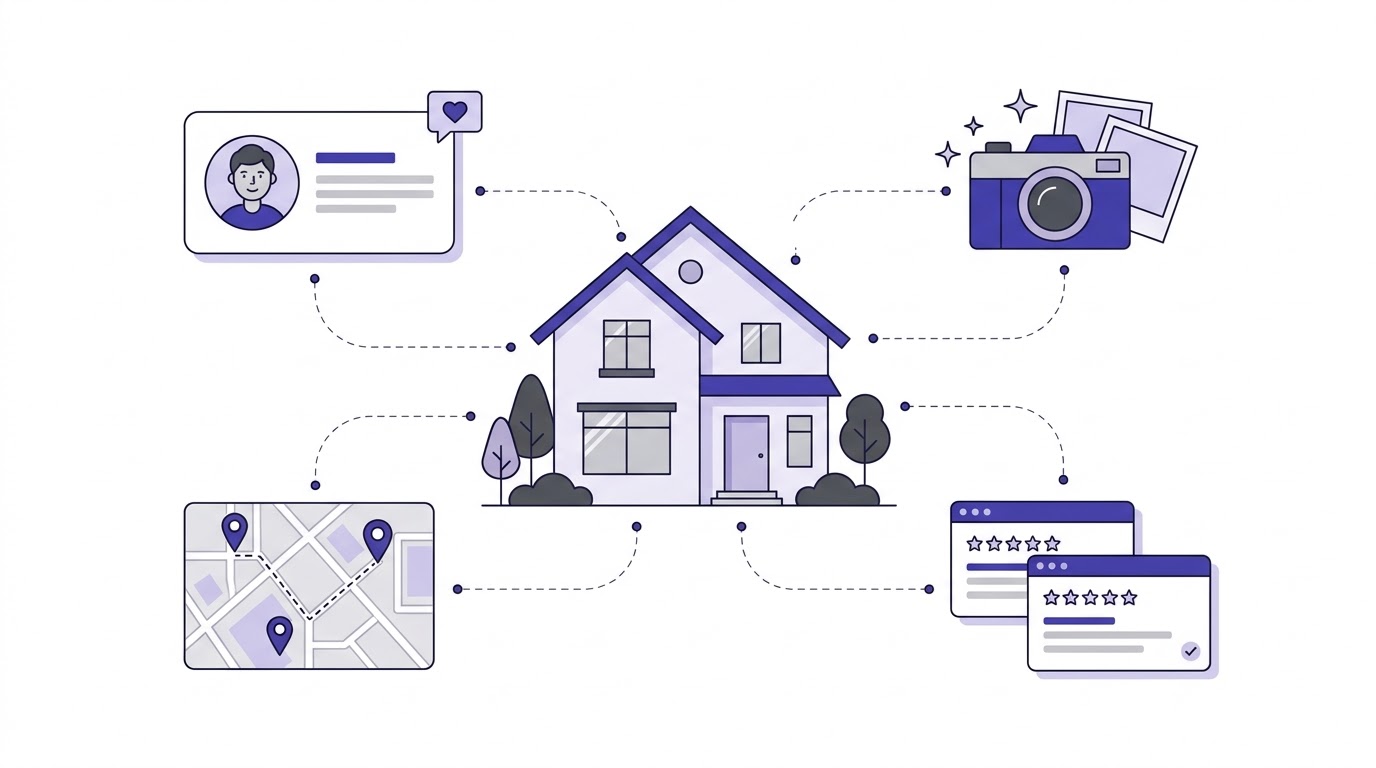
Open any Airbnb listing and scroll. Before you get through the details, you meet a person. There’s a host photo, a short bio, maybe a line about their favorite local bakery. That’s not decoration. On a booking site where strangers sleep in each other’s homes, the host’s story does the job a hotel brand does. It tells you somebody real is on the other end.
Airbnb pushed this hard. Host profiles, the Superhost badge, descriptions written in the host’s own voice, and later its stories and newsroom pieces about individual hosts all pointed the same way. When Airbnb ran campaigns, it leaned on real hosts, like a retiree renting a spare room or a family in a small town, over models. That choice is simple and a bit risky, because real people are messy. But messy reads as honest, and honest is what a nervous first-time guest needs.
For your own site, the equivalent is a customer story page. Not a testimonial with a stock photo and a fake name. A real name, a real before and after, a number, and a quote you didn’t polish to death. Three of those will outperform a generic About page almost every time. Ask your happiest customer two questions: what was going on before you found us, and what changed? Write the answers down word for word, then trim lightly.
Professional Photography as Content, Not Decoration
After the New York experiment, photography became a standing part of Airbnb’s playbook. The company ran a professional photo program for hosts in many cities and later built guidance so hosts could take better pictures themselves. Better photos meant more bookings, and more bookings meant more money for the host and for Airbnb. Everyone’s incentives lined up, which is the quiet reason this worked for years.
There’s an SEO and sharing angle too. Image-heavy pages get shared, saved, and screenshotted into travel boards and group chats. A single great photo of a treehouse or a Lisbon flat can travel to people who never searched for Airbnb at all. Every one of those shares works like a free ad, and the photo isn’t just converting the person already on the page, it’s pulling in new people from other places.
Practical step: open your top three pages tonight and look at the first image on each. Is it a stock photo? Is it dark? Does it show the real thing? Swap in a bright, honest, well-framed picture of your actual product or place. A modern phone and window light work fine. Then add a short caption saying what the viewer is looking at, because captions get read more than body text.
Reviews: The Content Nobody Had to Write for Airbnb
Airbnb runs a two-way review system. After a stay, guests review hosts and hosts review guests, and both sides write before seeing the other’s review, within a window of about 14 days. That design cuts down on revenge reviews and nudges people toward honesty. The result is a huge pile of fresh, specific, human writing that Airbnb never paid a writer to produce.
Reviews do three jobs at once. They build trust, because a stranger’s comment about the noisy street or the great coffee is more believable than the host’s own description. They give every listing unique text that search engines can read, which matters because most competitors reuse the same copied descriptions. And they give Airbnb a free stream of the exact language real travelers use, which feeds product tweaks and marketing copy.
If you run a business, build a review loop. Send a short email three days after purchase with one question: what was the best part? Put the answers on the relevant product or service page, with permission. Reply to every review, including bad ones, in a calm, specific tone. A thoughtful reply to a two-star review often convinces more prospects than a wall of five-star ratings, because it shows what happens when something goes wrong.
Neighborhood Guides and Local Knowledge
Around 2013, Airbnb started publishing neighborhood guides, pages describing the feel of a part of a city with tips from people who actually lived there. The thinking was that travelers don’t book a city, they book a block. Telling someone this street in Lisbon has the best pastries, or that one corner of Brooklyn gets loud on weekends, helps them decide and keeps them on Airbnb instead of wandering off to a travel blog.
Hosts also write guidebooks inside their listings, with recommendations for restaurants, parks, and shortcuts. That’s content created by thousands of locals, for free, and it makes each listing feel different from the next. A hotel chain can’t copy that easily, because a hotel chain doesn’t know which bakery opens at 6 a.m. This is the kind of detail that makes a guest tell friends about a trip.
Small businesses can copy this with local content. A plumber can publish a seasonal guide to what breaks in older homes in their town. A yoga studio can publish a map of walking routes near the studio. Look, you know your area better than any national brand does, so use it. Specific beats general almost every time, and local content is hard for big competitors to fake.
How Airbnb Used Brand Storytelling to Build Trust With Strangers
The hardest thing Airbnb had to sell wasn’t a room. It was the idea that sleeping in a stranger’s home is normal, even nice. Storytelling did that job. The brand work below is where Airbnb stopped sounding like a website and started sounding like a friend telling you about a trip.
Belong Anywhere: The 2014 Rebrand Explained
In July 2014, Airbnb unveiled a new logo called the Bélo and a new tagline, “Belong Anywhere.” The London agency DesignStudio worked on it with the in-house team. The symbol was meant to combine a head for people, a location pin for places, a heart for love, and the letter A. Plenty of people on the internet mocked it, and a lot of the jokes weren’t kind. Airbnb kept it anyway.
Here’s why that matters. Before the rebrand, Airbnb described itself in the way booking sites do, with cheap rooms and unique stays. After it, the company talked about a feeling: you can walk into a city you’ve never seen and feel at home. That’s a bigger promise, and it gave every future piece of content a filter. Does this photo, story, or campaign make someone feel like they belong? If not, it doesn’t get published.
You can steal this today. Write one sentence that describes the feeling your customers want, not the thing you sell. A bakery doesn’t sell bread, it sells the first warm bite on a cold morning. Put that sentence at the top of a document and check every blog post, caption, and email against it. Mediocre content usually fails that test within seconds, which makes the test cheap and useful.
The Pixar Storyboard: Designing the Whole Trip on Paper
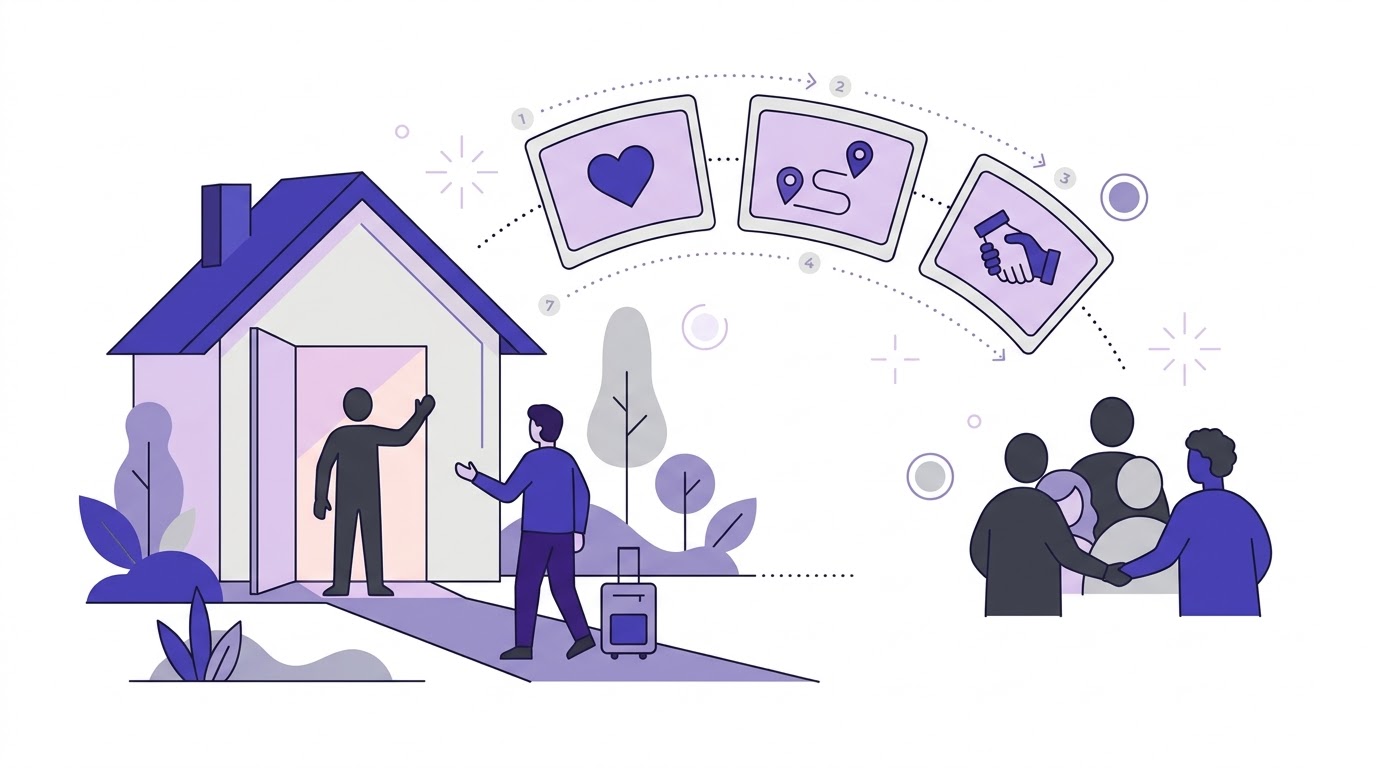
Here’s a detail that tells you a lot about how the founders think. Early on, Chesky and Gebbia hired a former Pixar animator to storyboard the entire Airbnb experience, frame by frame, from a guest deciding to book to the host waving goodbye. They treated a booking like a movie plot, with highs, lows, and moments where something could go wrong. It’s a design school habit, and it paid off.
Chesky later talked about what he calls the eleven-star experience. A five-star stay means you arrived and everything worked. He asks teams to imagine six stars, seven stars, all the way up to eleven, which is absurd on purpose, then scale it back to something doable. The exercise forces people to think about emotional details nobody puts in a spec, like a handwritten note, a welcome snack, or a host who remembers you like jazz.
Those emotional moments turn into content. A guest posts a photo of the note. A host tells the story in an interview. A campaign recreates it. If you want to try this, draw eight boxes on a sheet of paper and sketch your customer’s journey from first Google search to a month after purchase. Mark the box where they feel the most anxious and the box where they feel the happiest. Content belongs in both places.
Super Bowl, We Accept, and Taking a Stance
In February 2017, Airbnb ran its first Super Bowl ad, called We Accept. It showed a series of faces from different backgrounds and a message about belonging and acceptance, and it came just after a heated debate in the United States over travel restrictions. Around that time Chesky also offered free housing to refugees and people stuck at airports. The ad wasn’t a random brand moment. It matched a statement the company had already acted on.
That match is why it worked. Brands that post a heartfelt message with nothing behind it get torn apart online in about an hour. Airbnb had a real network of hosts it could actually point to, and a hosting platform that could make good on the promise. Some people hated the ad and some people cheered, and it got huge attention either way. Honestly, a stance is a risky kind of content, because half of your audience will notice it.
For a small business, taking a stance doesn’t need a Super Bowl budget. It can be a plain, honest post about how you treat staff, where your materials come from, or what you won’t sell. Do it only if you’d do the same thing with no camera on. Customers can smell fake values from a mile away, and a single contradicting review can wipe out months of careful messaging.
Why Emotion Beat Features Every Time
Travel sites in the late 2000s mostly fought on price and availability: dates, filters, deals. Airbnb sold something else. Its campaigns around the idea of living like a local, including the Live There push in 2016, told people to stop being tourists and start staying in a neighborhood. Nobody has to compare square footage when the pitch is “wake up to the smell of a Parisian bakery.”
There’s also a practical mechanism here. A feature makes someone think. A feeling makes someone remember. Remembered feelings turn into word of mouth, and word of mouth turns into direct traffic, where people type the brand name straight into a browser or app. Direct traffic costs nothing per visit. That’s the quiet reason brand storytelling pays off, even though no spreadsheet can trace one story to one sale.
So here’s an uncomfortable question for your own content: if you swapped your logo for a competitor’s, could a reader tell the difference? If the answer is no, you’re writing about features, not feelings. Try rewriting your three most important pages so the first line is about what the customer will feel or be able to do. Then compare the new versions to the old ones in your analytics after a month.
Airbnb SEO, Social Media, and PR: How the Content Got Found
Good content that nobody finds is a diary. Airbnb solved discovery in three ways: search engines, social feeds, and press coverage. Each channel fed the others, and together they brought in a stream of visitors that Airbnb didn’t have to buy click by click.
City and Location Pages That Never Stop Ranking
Try searching Google for any big city plus the word Airbnb, like Lisbon Airbnb or Tokyo Airbnb. You’ll often see Airbnb’s city and neighborhood pages near the top. These are built from a template, but filled with real data: actual listings, photos, prices, reviews, and local details. SEO people call this programmatic SEO, which just means building many similar pages from structured data instead of writing each one by hand.
Why does it work? Each page matches what someone is searching, such as stays in a specific place, and it has fresh, unique content because hosts keep adding listings and guests keep writing reviews. The pages improve on their own. Airbnb has told investors that the large majority of its traffic arrives through direct or unpaid channels, and executives have put the share at around 90 percent. That’s not all organic search, but search is a big part of it.
If you want to try a small version, open the free SEO tutorials first so the terms make sense, then build five location or category pages with real details, not copy-pasted text. Use Google Search Console to see which queries bring people in and which pages never get impressions. The mistake most people make is publishing hundreds of thin pages. Google ignores them, and it can drag down the good ones.
Instagram: A Travel Photo Feed Disguised as a Brand Account
Airbnb’s Instagram account has millions of followers, and if you scroll through it, you’ll notice something odd. It rarely looks like advertising. It looks like a travel magazine mixed with a friend’s camera roll: a cabin in the snow, a courtyard in Marrakech, a family in front of a yurt. A lot of the images come from hosts and guests, shared with permission and credited.
This is user-generated content, which means pictures and posts made by customers rather than the brand. It works because it’s cheap, it’s varied, and people trust it more than polished ad photos. Airbnb also built hashtags and community pages that gave guests a reason to post their trips. Every guest photo is both content and a quiet endorsement, and that’s a hard thing for a competitor to match.
To copy this, pick one hashtag unique to your business and ask happy customers to use it. Repost the best photos, tag the creator, and always ask permission first. If you need ideas on formats and scheduling, the social media guides on our hub cover content calendars in plain language. Post three times a week for ten weeks before judging results, because social takes longer than you’d like.
Airbnb Magazine, the Newsroom, and the Engineering Blog
Airbnb also published its own stuff. In 2016 it launched Airbnb Magazine, a print title made with publisher Hearst, filled with travel stories, host features, and recommendations. Print for a tech company seems backwards, yet it fit: a magazine feels permanent, and it lands on coffee tables where people dream about trips. It also gave the brand a way to talk about places without sounding like a sales page.
There’s a newsroom too, where the company posts announcements, data, policy updates, and stories, and journalists use it as a source. And there’s the Airbnb Engineering blog, which publishes technical write-ups, and open-source projects like Apache Airflow, a workflow tool Airbnb engineers released in 2015. That one is content for a different audience. It shows engineers that Airbnb solves hard problems, which helps hiring.
The lesson is that one company can have several content audiences: customers, press, and future employees. Small teams can start with one. If you’re a solo founder, a monthly newsletter or behind-the-scenes post often does all three jobs at a tiny scale. Write what you learned this month, what broke, and what you’d do differently. People who like honest posts apply, buy, and refer others.
Big Stunts and PR: From the Great Wall to the Up House
Airbnb never really stopped doing stunts after the cereal. In 2016 it ran a contest called A Night at the Great Wall of China, giving winners a stay on a restored section of the wall, and the story spread across global media. In 2024 it launched a category called Icons, with one-off stays like the house from the film Up and Prince’s Purple Rain house in Minneapolis. Each one was a story that journalists wanted to cover.
The structure is always similar: pick a place or object people already adore, make a small number of stays available, add a contest or limited window, and let the press do the rest. The stay itself is nearly beside the point. The coverage reaches millions who never book, and it reminds everyone that Airbnb is the kind of company that does fun things. That’s brand awareness without a media buy.
You can run a tiny version. Find something local people love, like a landmark, a team, or a festival, and tie your product to it for a week with a clear, limited offer. Email three local reporters and bloggers with a two-line pitch and a photo. Don’t expect national press. A local feature that sends 300 people to your site is a very good Tuesday.
What You Can Copy From How Airbnb Grew to a Billion-Dollar Brand
Airbnb’s story is fun to read, but reading doesn’t grow anything. This section turns the story into steps you can run on a small budget, with a realistic month-one plan, a list of mistakes to dodge, and a way to measure whether any of it is working. You don’t need a marketplace to use these ideas.
A Step-by-Step Content Playbook for a Small Business
The simplest way to use the Airbnb pattern is to run it in order. Start small, publish something real every week, and let each piece feed the next. Here’s the sequence, built from the moves covered above, with the reason each one works and the mistake people usually make while doing it.
- Write down your first-customer story. Who bought first, what problem did they have, and what happened afterward? This is your origin content. The usual mistake is making it sound like a press release. Write it the way you’d tell a friend over tea, including the awkward parts.
- Fix the pages people already visit. Look at your top five pages in Google Analytics and replace weak photos, vague headlines, and stock images. This is the camera experiment in miniature. People skip this step because it feels boring, and it’s usually the highest-return hour of the month.
- Collect three customer stories. Ask for a short call, record it with permission, and publish a one-page story with the person’s real name and a number. Don’t polish away the quirks. Real phrases are what make readers believe you.
- Start a review loop. Email buyers a few days after purchase with one simple question and put the answers on your pages. Reply to every review, good or bad. Skipping replies tells new visitors nobody is home.
- Build five useful location or topic pages. Use real details, local knowledge, and original photos. Don’t clone the same text with a different city name. That’s the thin-content trap, and Google handles it badly.
- Run one small stunt. Tie your product to a local event, a holiday, or a debate people are having, and pitch it to a few local reporters with a two-line email and one strong picture. Expect modest results the first time.
- Repeat and keep a log. Write down what you published, what got traffic, and what got replies. After ten weeks you’ll know which format fits your audience, which beats any generic advice online.
That list looks long, but most of it takes an hour or two. The biggest enemy isn’t effort, it’s skipping ahead to step six because stunts feel more exciting than fixing photos. Airbnb’s founders did the boring stuff, like knocking on doors with a camera, long before the famous stuff worked.
A 30-Day Starter Plan You Can Actually Finish
Plans fall apart when they’re too ambitious, so this one is deliberately small. It needs about four hours a week and no budget beyond maybe a monthly email tool, which can be free. If you miss a week, don’t panic. Just pick up where you left off, because consistency over a few months matters more than a perfect month one.
In week one, do the audit. List your ten most visited pages, check the first image and first sentence on each, and rewrite or replace the weakest three. Take fresh photos with a phone near a window. Write your one-sentence feeling statement, the line that describes what customers will feel or be able to do after buying from you. This week is about cleaning the foundation so new content has something solid to point to.
In week two, collect stories. Contact five happy customers, book three short calls, and publish one story page by Friday. Week three is for reviews and local content: set up the review email, answer every existing review, and publish one local guide or topic page with real details. In week four, pitch one small stunt or partnership, share your best customer photos on social media with permission, and review what you’ve learned.
At the end of day thirty, write a one-page summary. What got the most views? What got the most replies? Which customer story got shared? Don’t judge business results yet, since SEO and word of mouth usually need ninety days or more to show a clear effect. Judge whether you built the habit, and whether you now have at least five new pieces of content that didn’t exist a month ago.
Mistakes to Avoid When You Copy Airbnb
The first mistake is thinking content can fix a weak product. It can’t. In 2016, researchers at Harvard Business School published a study finding that guests with distinctively African American names were about 16 percent less likely to be accepted by hosts, and the hashtag AirbnbWhileBlack spread widely. No amount of warm storytelling could cover that up. Airbnb had to change policies, bring in outside advisers, and rebuild trust the hard way. If your service has a real problem, fix that first.
The second mistake is chasing the stunt and ignoring the system. The cereal boxes made a good story, but if there’d been no product behind it, nothing would have come from the press. Stunts are fireworks. Reviews, photos, and location pages are the lights that stay on. Plenty of brands run one clever campaign, get a spike, and then go quiet. The spike isn’t a strategy.
The third mistake is copying the polish instead of the honesty. Some small businesses see Airbnb’s glossy photography and spend thousands on a shoot while their product pages still contain a broken checkout. Start with truthful, clear, well-lit images and plain language. Polish can come later. Also, watch out for fake testimonials and invented reviews, which can get you into legal trouble and destroy trust the second someone notices.
One more thing: don’t ignore the downside of growth. Airbnb’s rise also brought real fights with cities over housing and short-term rental rules, and places like New York and Barcelona have tightened regulations. A brand can grow faster than the world is ready for. If your growth will affect neighbors, regulators, or partners, talk to them early and be honest about what you’re doing.
How to Measure Whether Your Content Is Working
Start with three simple numbers: organic search visits, direct visits, and conversions, like purchases, inquiries, or signups. In Google Analytics 4, open the Traffic acquisition report and look at the rows labeled Organic Search and Direct. In Google Search Console, open the Performance report and watch total clicks and impressions. Write them in a spreadsheet each Monday. That’s a five-minute habit and it reveals trends nobody notices day to day.
Then add a brand signal: how many people search for your business name. In Search Console, filter queries containing your brand and watch that line over time. Airbnb’s real payoff from storytelling was direct and branded traffic, people who showed up because they already knew the name. If more people each month type your name into Google or visit your site directly, your content is doing its job, even if no single post gets credit.
For a bigger picture on how these numbers fit into a full strategy, the digital marketing guides cover funnels, ad platforms, and measurement basics for beginners. Be patient with the data. A blog post can take two to six months to rank, a customer story might convert slowly for weeks, and an Instagram habit might need ten weeks before engagement moves. Check monthly, not hourly.
Finally, track a few human signals that spreadsheets miss. How many customers mention a specific story or photo when they contact you? Did a reporter reply? Did a reader forward your email to a friend? Airbnb’s founders noticed things like this in New York living rooms long before they had dashboards. Keep a notes file called Proof and drop every comment, screenshot, and reply into it.
Which Parts of the Airbnb Story Don’t Transfer
Being honest means saying that some of Airbnb’s advantages are hard to copy. It’s a marketplace, which means hosts and guests both create content for the platform, over and over, without being paid. A local bakery or a freelance designer doesn’t have thousands of volunteers writing about them. Network effects also gave Airbnb a snowball: more listings attracted more guests, and more guests attracted more hosts. That’s a structural advantage you can’t write your way into.
Timing helped too. In 2008 and 2009, travelers were short on cash after the financial crisis, hosts needed extra income, and social media was growing fast but wasn’t yet crowded with brands. A cereal stunt today competes with millions of other posts. Press attention is harder to win, and platforms push paid reach more than they did then. So expect to work harder for smaller returns than the early Airbnb story suggests.
Still, the core ideas hold up anywhere. People trust other people more than brands. Honest pictures beat polished ones when the stakes feel personal. Local detail is hard for big competitors to fake. And a clear feeling sticks in a memory longer than a list of features. Use those four ideas, ignore the parts that rely on marketplace scale, and you’ll still end up with a content library that does real work for your business.
What the Playbook Looks Like for Three Everyday Businesses
Ideas get clearer with examples, so here are three made-up but realistic cases. None of these are real clients, they’re sketches of how the same pattern bends to fit different businesses. Notice that none of them needs a big budget. Each one starts with a real person, a real photo, and a real detail that a competitor can’t copy by lunchtime.
Take a neighborhood bakery. Step one is the origin story: why the owner left an office job to bake sourdough, with a photo of the first oven. Step two is better pictures, taken at 7 a.m. when the light is soft and the loaves are still warm. Step three is a short guide called Where to walk after you buy bread, with a map of three parks within ten minutes. It’s local, specific, and hard for a chain to match.
Now a freelance designer. The story page covers one client who came in with a messy logo and left with a brand they’re proud of, including the before and after images and one sentence from the client, used with permission. The review loop is an email a week after delivery. The stunt is a free logo makeover for a local nonprofit, announced to two local newsletters. Each piece shows the work instead of describing it.
Last, a coaching business. Here the content is mostly client stories, told with consent, and short posts about what went wrong that month. The brand feeling is something like calm progress without hype. The review loop becomes a monthly check-in question, with the best answers published. The common thread across all three is that the content proves something. It doesn’t just claim it.
The Airbnb Content Loop, Explained in Plain Words
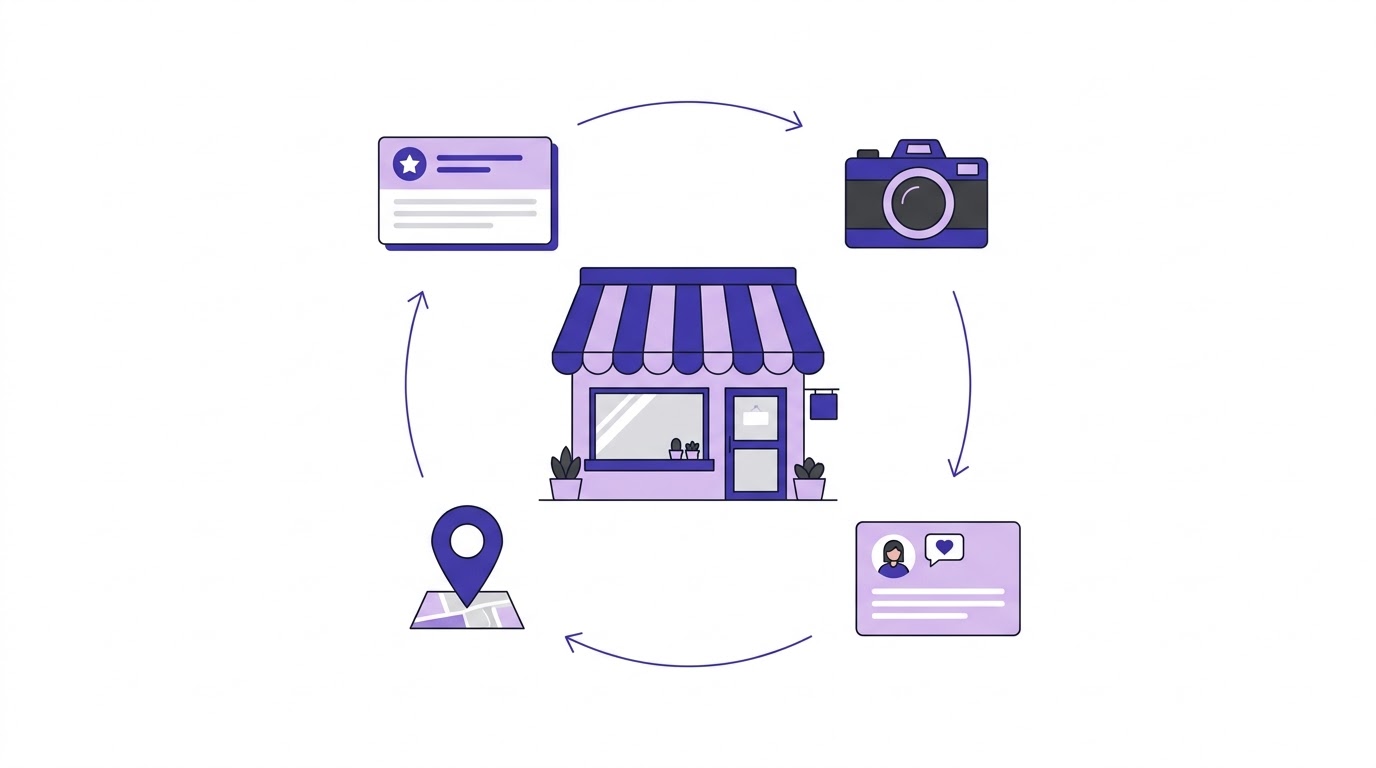
If you boil everything above down to one picture, it’s a loop. A host or guest creates something real, like a photo, a review, or a story. That content makes the next stranger feel safe enough to book. The booking creates a new stay, which creates a new review or photo, and the cycle repeats. Airbnb’s job was to make each lap of the loop easier and more trustworthy than the last.
See how little of it depends on paying for attention? Ads can make a loop start faster, but they don’t power it. What powers it is the supply of honest material coming from real experiences. That’s why Airbnb put so much effort into making hosts better at photos and descriptions, and into designing a review system that people trust. Those aren’t side projects. They’re the engine.
Your business can have a smaller version of this loop. Customer buys, gets asked for a story or review, you publish it with permission, and the next visitor feels a little safer buying. Add one local guide and one honest photo and the loop is running. It won’t be fast in week one, but loops get stronger as they spin, and after six months you’ll notice that new customers mention stuff they read on your site before they even ask a question.
Conclusion
The real answer to how Airbnb grew to a billion-dollar brand isn’t one clever trick. It’s a stack of small, honest habits: tell a real story, show real photos, let customers talk, publish useful local detail, and say what the brand stands for. The cereal got people to look. The photos, reviews, and city pages kept them there. The Belong Anywhere idea gave all of it a reason to exist.
Your next step is small. Pick the page on your website that gets the most visits, fix the first photo and the first sentence, and ask one happy customer for a short story this week.
Frequently Asked Questions
These are the questions people ask most often about Airbnb’s rise, its content strategy, and whether the approach works for smaller businesses. Each answer stands on its own, so you can jump straight to whichever one you need without rereading the guide.
How did Airbnb grow so fast?
Airbnb grew fast because it combined a product with real demand and a steady supply of trustworthy content. Photos, reviews, host profiles, and city pages made strangers comfortable booking each other’s homes. Press-friendly stunts, like the 2008 cereal boxes, brought early attention. Investor funding, including a $112 million round in 2011, helped the team scale once the pattern was working.
What was Airbnb’s first marketing campaign?
The first widely noticed campaign was the Obama O’s and Cap’n McCain’s cereal boxes, sold around the 2008 Democratic National Convention. The founders sold about 800 boxes at $40 each and made around $30,000. The stunt also got coverage from national media, which introduced Airbnb to people who had never heard of it.
Did Airbnb use paid advertising at all?
Yes. Airbnb spent heavily on paid channels as it grew, and its sales and marketing costs have run to more than a billion dollars a year in recent periods. The early growth, though, leaned on earned press, content, and community. The company has said most of its traffic now comes through direct or unpaid routes, which shows how much brand and content work built up before the ad spending.
What is Airbnb’s content marketing strategy?
Airbnb’s strategy is built on user and host content, professional photography, a two-way review system, neighborhood and city pages, and brand storytelling. It also publishes through social media, a newsroom, and occasional magazines and stunts. The common thread is that most pieces feel like they come from real people and real places, not from an ad agency.
How does Airbnb use user-generated content?
Guests write reviews, hosts write descriptions and guidebooks, and travelers share photos on social media that Airbnb sometimes reposts with credit. All of that is user-generated content, meaning content created by customers instead of the company. It builds trust and keeps pages fresh, and it costs far less than producing everything in-house.
How did professional photography help Airbnb grow?
In 2009 the founders noticed that listings in New York had poor photos, so they rented a camera and shot better ones. As they tell it, revenue from those listings doubled within a week. Airbnb later ran a professional photography program for hosts. Better images made listings look safer and more appealing, which led to more bookings.
What is the Belong Anywhere campaign?
Belong Anywhere is the tagline Airbnb introduced in July 2014 alongside its Bélo logo. It shifted the brand’s message from cheap rooms to the feeling of being at home anywhere in the world. The idea gave later content, including photos, host stories, and ads, a clear emotional theme to follow.
How does Airbnb get so much organic traffic?
Airbnb builds a large number of city, neighborhood, and listing pages filled with real data like prices, photos, and reviews. Each page matches what a person searches for, and the content refreshes as hosts and guests add more. Add strong brand recognition and direct visits, and the company attracts a huge amount of traffic without paying per click.
Can a small business copy Airbnb’s content strategy?
Most of it, yes. Real customer stories, better photos, a review loop, local guides, and a clear brand feeling all work at a small scale. What you can’t copy is marketplace scale, where thousands of hosts and guests create content for you. Start with one customer story and one fixed page, then build a weekly habit.
How much money did Airbnb raise before reaching a billion-dollar valuation?
Airbnb raised a small seed amount through Y Combinator in 2009, roughly $600,000 from Sequoia that year, about $7.2 million in a 2010 round led by Greylock, and $112 million in July 2011. That last round valued the company at about $1 billion. Exact figures vary slightly by source, so check Airbnb’s own history if you need them for a report.
Is content marketing better than paid ads?
Neither is better across the board. Paid ads bring fast traffic but stop the moment you stop paying, while content takes longer and keeps working for months or years. For a small business with limited money, content usually gives a better return over a year or more. Many strong brands, Airbnb included, use both.
What mistakes did Airbnb make along the way?
Airbnb faced backlash over its 2014 logo, criticism for discrimination on the platform, and long fights with cities over short-term rental rules. The 2016 discrimination controversy forced policy changes. The takeaway for other brands is that good storytelling can’t replace a trustworthy product, and fast growth brings problems you have to face honestly.
How long does content marketing take to work?
Plan on about three to six months before you see a clear effect from blog posts and location pages, and ten weeks or more for social media habits. Customer stories and photo fixes on existing pages can help sooner, sometimes within weeks. Track organic visits, direct visits, and branded searches monthly so you can see slow progress.