
You publish a solid guide. It’s better than what’s ranking. You wait three months, and it sits on page four while some thin post from 2021 holds the top spot because a few hundred sites link to it. That’s the part of SEO nobody enjoys, and it’s why most people either give up on links or end up buying junk packages that do nothing. The other problem is the advice itself. Most articles about link building strategies are either stuck in 2015 (submit to directories, comment on blogs) or written for people who already know what a referring domain is.
So this guide does both jobs. It starts with the basics, so a beginner can follow every step, and then gets into the 10 approaches that are earning real links right now. Each one comes with a plain explanation, a step-by-step process, tools, and the mistakes that waste the most time.
There’s also a 2026 twist worth knowing up front. Links still move Google rankings, sure. But the same signals now shape which brands get mentioned when someone asks ChatGPT, Perplexity, or Google’s AI Overviews for a recommendation. Google said in May 2026 that AI Overviews reach 2.5 billion users a month. That’s a lot of answers being built from other people’s websites, and links and mentions decide whose websites.
What Is Link Building?
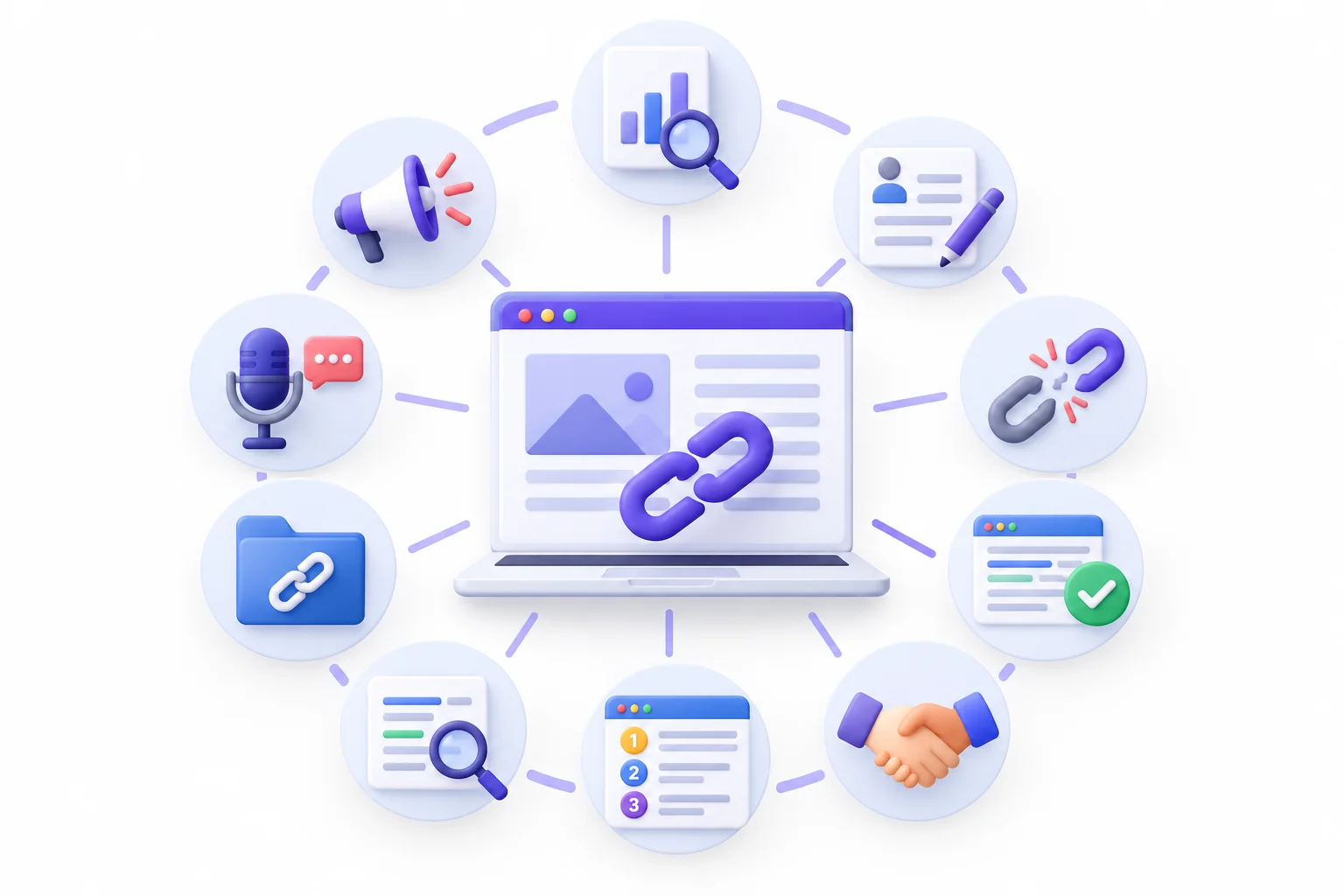
Link building is getting other websites to link to your pages. That’s it. When a food blog links to your recipe calculator, or a news site links to your survey results, you’ve earned a backlink.
The old way to explain it was “every link is a vote.” Google counts the votes, more votes means higher rankings. That analogy is fine for day one, but it falls apart fast. A single link from a respected site in your industry can do more than a hundred links from random sites nobody reads. So it’s less like an election and more like references on a job application. Who vouches for you matters way more than how many people do.
Here’s how the three main link types differ:
- Backlink: another website links to yours. A travel blog linking to your hotel booking guide.
- Internal link: one of your pages links to another of your pages. Your blog post about running shoes linking to your shoe product page.
- Outbound link: you link to someone else. Your article citing a government health study.
All three matter, but in different ways.
Types of Links at a Glance
| Link Type | What It Is | Example | SEO Value |
|---|---|---|---|
| Backlink | Another site linking to you | A news site citing your study | High |
| Internal link | Your page linking to your page | Blog post linking to service page | Distributes authority |
| Outbound link | You linking out | Citing a source | Trust and context |
Why Links Still Matter in 2026 (Google and AI Search)
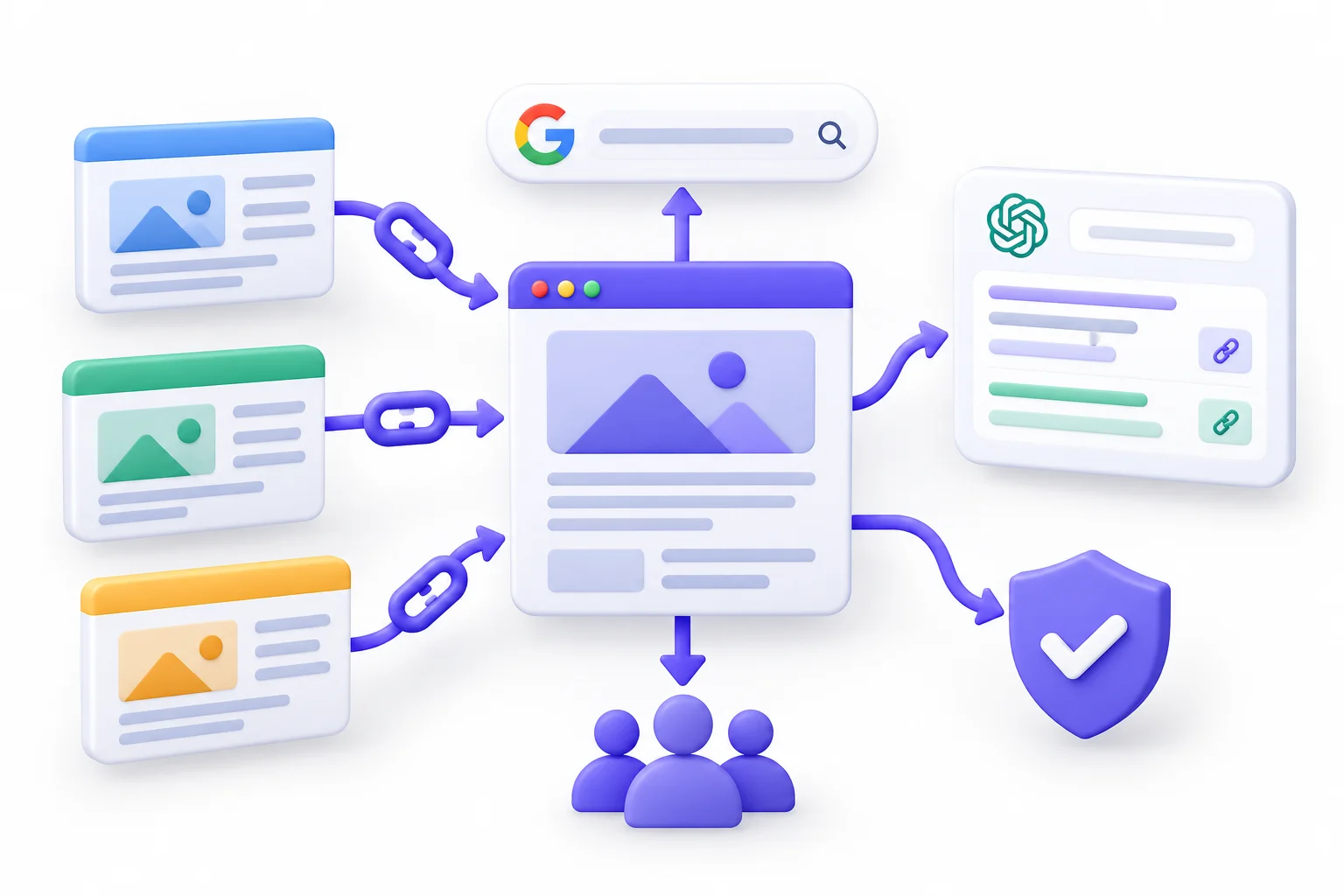
Every year someone announces that links are dead. Nope. Google’s systems still lean on links to find pages, decide what they’re about, and judge how much to trust them. What changed is that links now feed a second system too: AI search.
Links as a ranking signal
Google discovers most new pages by following links. If nothing links to a page, Google might not find it for a while. Once it does find a page, links help it figure out two things. What is this page about (from the context and anchor text around the link)? And how much should it be trusted (from who’s linking)? A page about mortgage rates linked from a few established finance sites looks very different to Google than the same page with zero links.
Links and AI visibility
This is the newer part. AI tools don’t invent their sources. They pull answers from pages that are already ranking and already trusted, and they notice which brands keep showing up across the web.
Look at what Seer Interactive found when it matched 500 ChatGPT search citations: 87% of them tracked Bing’s top results. So the pages AI quotes are mostly the pages that already rank well in traditional search. And what makes pages rank? Links, in large part. Old-school authority is still the entry ticket for AI visibility.
There’s also the mention side. When your brand name shows up again and again in trusted places, AI systems start to connect your name with your topic. That’s often called entity recognition, and it builds even from mentions without a link.
Links as a referral traffic and trust channel
People forget that links get clicked. A link from the right industry newsletter or a popular comparison article sends actual visitors, and often visitors who are already halfway to buying. A link on a page with real readers is a sales channel. A link on a page with no readers is, honestly, just a number in a tool.
Key Insight: Try this test on any link. If Google stopped counting it tomorrow, would it still be worth having because of the traffic and credibility it brings? If yes, it’s a good link. If no, think hard about why you want it.
Anatomy of a High-Quality Backlink
Not all links are equal, and beginners waste the most money by treating them like they are. A good backlink usually checks five boxes.
Relevance
The linking site and the linking page should have something to do with your topic. A link to your accounting software from a small business blog makes sense. A link from a fishing gear review site doesn’t. Relevance is also what makes a link look natural, because real people link to things related to what they’re writing about.
Authority
You’ll see metrics like DR (Domain Rating, from Ahrefs) and DA (Domain Authority, from Moz). These scores estimate how strong a site’s link profile is. Useful? Yeah, for quick sorting. But they’re third-party estimates, not Google metrics. Google doesn’t use DR or DA. Plenty of people sell links on high-DR sites that got their score through spam, so treat these numbers as a first filter, never as proof of quality.
Placement
Where the link sits on the page matters. A link inside the main body of an article, surrounded by relevant text, is what editors give when they actually mean it. Links in footers, sidebars, and author bios usually carry less weight because they’re sitewide or templated, not editorial choices.
Anchor text
Anchor text is the clickable text of a link. Google uses it as a clue about what the linked page covers. The trap is overdoing it. If 40 sites link to you with the exact phrase “best running shoes,” that doesn’t look like 40 people independently choosing words. It looks like someone arranged it. Natural link profiles are messy: mostly brand names and URLs, with some descriptive phrases mixed in.
Real traffic on the linking site
Here’s a quick sanity check. If a site has a DR of 70 but almost no organic traffic in Ahrefs or Semrush, something’s off. Usually it means the site’s authority was built artificially, or Google has stopped trusting it. Real sites with real authority tend to have real readers.
Anchor Text Types
| Anchor Type | Example | When to Use | Risk Level |
|---|---|---|---|
| Branded | Brightline Analytics | Most of your profile | Low |
| Naked URL | brightlineanalytics.com | Citations, directories | Low |
| Partial match | guide to link building tactics | Editorial links | Low to Medium |
| Exact match | link building guide | Sparingly | High if overused |
| Generic | click here, this guide | Natural mix | Low |
Dofollow, Nofollow, Sponsored and UGC Links Explained
Every link can carry a “rel” attribute in its HTML code that tells Google something about the relationship between the two sites. Beginners get confused by this, so here’s the plain version.
- Dofollow (no attribute): a normal link. There’s no actual “dofollow” tag. It just means the link has no restriction, so it can pass ranking value.
- Nofollow (rel=”nofollow”): the site is saying “we’re linking, but we don’t want to vouch for this.” Since 2020, Google treats nofollow as a hint rather than a strict rule, so it may still count some of these.
- Sponsored (rel=”sponsored”): for paid links, ads, and affiliate links. Google’s guidelines say paid placements should be marked this way.
- UGC (rel=”ugc”): user-generated content, like forum posts and blog comments.
So are nofollow links useless? No. A nofollow link from a major news site still sends traffic, still puts your brand in front of readers, still counts as a brand mention for AI purposes. And a profile with zero nofollow links looks strange, because normal websites get a mix.
Link Attributes
| Attribute | Meaning | Passes Ranking Value? | Typical Source |
|---|---|---|---|
| None (dofollow) | Standard editorial link | Yes | Articles, blogs, resource pages |
| nofollow | Linking without endorsement | Treated as a hint | News sites, social profiles |
| sponsored | Paid or affiliate relationship | Treated as a hint, should not be bought for ranking | Ads, sponsored posts, affiliates |
| ugc | Content created by users | Treated as a hint | Forums, comments, community sites |
What Makes Link Building Strategies Work in 2026
Before the list, one distinction that most guides skip. A strategy is the plan. A tactic is how you carry out that plan.
“Send 200 guest post pitches” is a tactic. “Get our pricing guide cited by B2B finance blogs so it ranks for commercial terms, using guest posts and original data” is a strategy. It has a goal, a target page, an asset, and a way to reach people. Most failed campaigns are just tactics with no plan behind them. Somebody sends outreach emails for six months, gets 30 links pointing at random blog posts, and the money pages never move.
The link building strategies that hold up in 2026 all share three things:
- Something worth linking to. Data, a tool, a guide that’s clearly better, an expert opinion. No asset, no links. Simple as that.
- The right people to reach. Writers, editors, and site owners who actually cover your topic and have a reason to care.
- A real reason for them to link. It helps their readers, fixes a broken page, backs up a claim they’re making, or credits something they already used.
Then there’s the “linkable page first” rule. Links work best when they point at pages that deserve to rank. If your target page is thin, slow, or doesn’t answer the search, links will only push it so far before Google notices people bouncing off it.
Beginner Tip: Fix your internal linking before you chase backlinks. Authority you earn on a blog post won’t reach your service pages if nothing connects them. Five minutes adding links from your most-linked posts to your money pages is the cheapest SEO work there is.
THE 10 STRATEGIES
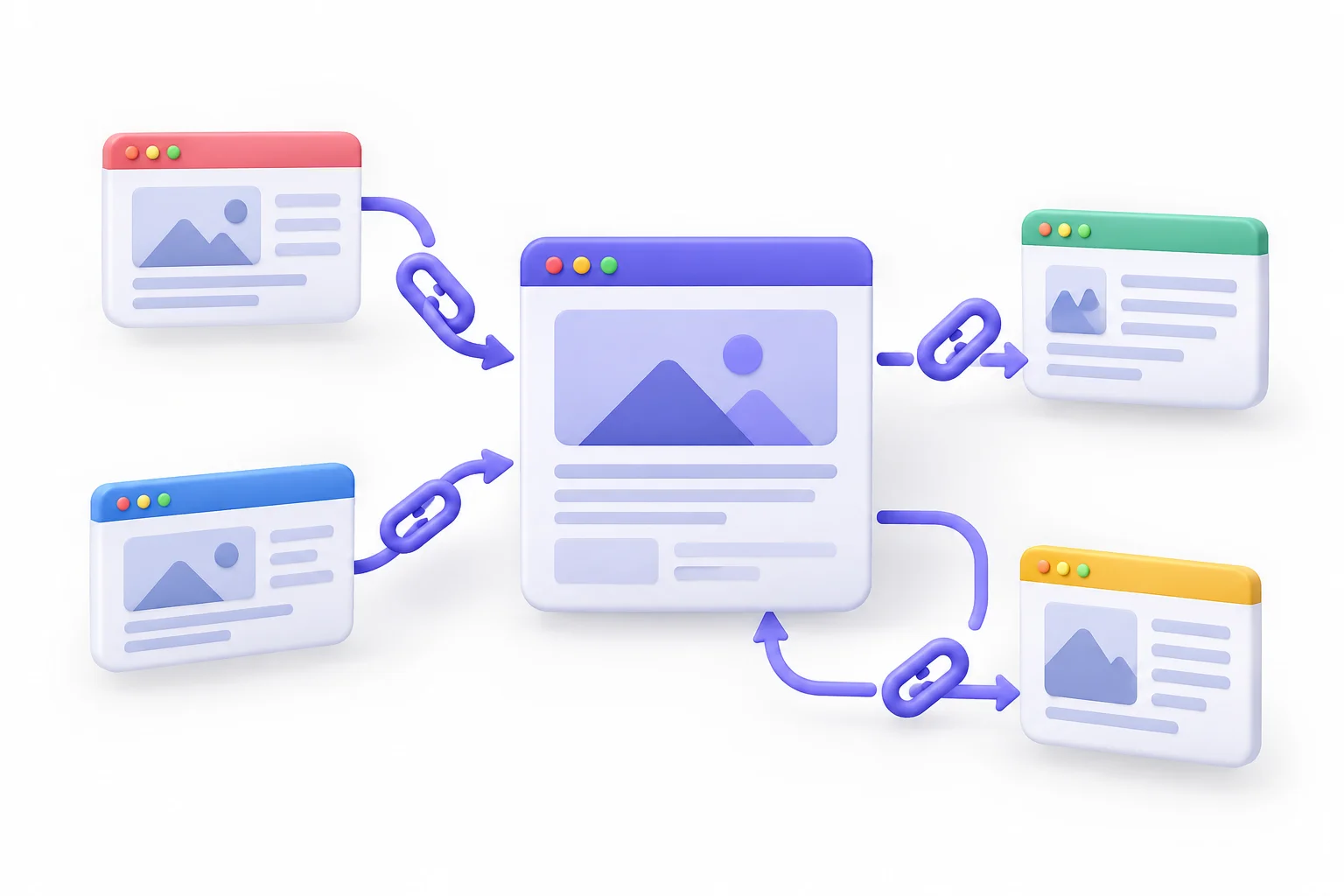
Below are the 10 approaches, ranked roughly by how much authority they can bring in. Not every one fits every site, and Part 4 helps you pick. These link building strategies vary a lot in effort, so check the table before you commit to one.
The time ranges here are rough expectations, not promises. Your niche, your current authority, and how good your asset is will change them.
| # | Strategy | Difficulty | Time to Results | Link Quality | Best For |
|---|---|---|---|---|---|
| 1 | Original research and data assets | High | 2-6 months | Very high | Brands with data or budget |
| 2 | Digital PR | High | 1-4 months | Very high | Brands with newsworthy angles |
| 3 | Expert guest posting | Medium | 1-3 months | Medium to High | B2B, services, SaaS |
| 4 | Journalist request platforms | Low to Medium | Weeks | High | Founders and subject experts |
| 5 | Broken link building | Medium | 1-3 months | Medium to High | Sites with strong content |
| 6 | Resource page link building | Low to Medium | 1-2 months | Medium | Guides, tools, educational content |
| 7 | Unlinked mention reclamation | Low | Weeks | High | Established brands |
| 8 | Competitor link gap analysis | Medium | Ongoing | Varies | Every site |
| 9 | Getting listed where AI looks (listicles and comparisons) | Medium | 1-3 months | High for AI visibility | SaaS, products, agencies |
| 10 | Partnerships, associations and podcasts | Low to Medium | Ongoing | High relevance | Local and B2B businesses |
1. Create Original Research and Linkable Data Assets
A linkable asset is something people link to because it’s useful as a source. Surveys, industry studies, statistics pages, benchmark reports, free tools, calculators. The idea is simple. Writers need to back up their claims, and if you’re the only place with the number they need, they link to you.
Why this works in 2026
Think about how articles get written. A journalist writing about remote work needs a stat on how many people work from home. A blogger writing about small business costs needs an average figure. They search, they find a source, they link. If you own the source, you get the link, and you keep getting it every time someone new writes about that topic. That’s why a good data asset can keep collecting links for years without more outreach.
There’s an AI angle too. AI tools love citing specific numbers. A page that clearly states “X% of small businesses do Y” with a method behind it is exactly the kind of thing that gets pulled into answers.
Types of linkable assets
| Asset Type | Effort | Link Potential | Example |
|---|---|---|---|
| Original survey | High | Very high | Survey of 1,000 freelancers on rates |
| Industry benchmark report | High | Very high | Average email open rates by industry |
| Statistics roundup page | Low to Medium | High | 75 remote work stats with sources |
| Free tool or calculator | Medium to High | High | Loan EMI calculator |
| Internal data study | Medium | Very high | Analysis of your own anonymized platform data |
| Templates and checklists | Low | Medium | Downloadable content brief template |
How to create one, step by step
- Find the questions people cite stats for. Search your topic plus “statistics” or “survey” and see what comes up. Look at which data pages already have hundreds of linking domains in Ahrefs or Semrush. That’s proof of demand.
- Check what data already exists. If the top stats page uses numbers from 2019, there’s your gap. Fresh data on an old question is a strong angle.
- Collect your own data. Options include running a survey with Google Forms, Typeform, or a paid panel like Pollfish; analyzing your own anonymized customer or platform data; or digging into public datasets and Google Trends to find a new story in existing numbers.
- Package it properly. Put the headline stats at the top. Add simple charts (Datawrapper and Canva both work). Explain your method: sample size, dates, how you asked. Writers won’t cite data they can’t explain to their editor.
- Promote it. A data study nobody knows about earns nothing. Pitch it to journalists (see Strategy 2), share it with people who’ve written about the topic, and update old posts on your own site to link to it.
The “statistics page” shortcut
No budget for a survey? Build a statistics roundup. Collect 50 to 100 current, sourced stats on your topic, organize them by subtopic, cite every one clearly, and keep it updated. It’s not original data, but it saves writers time, and that’s often enough to earn links. Just keep it honest and fresh. A stats page full of dead sources becomes useless fast.
- Tools: Google Forms, Typeform, Pollfish, Google Trends, Datawrapper, Canva
- Mistakes: skipping the methodology, burying the best stat in paragraph nine, and publishing without promoting it
Strategy Tip: Lead every data asset with 5 to 10 quotable one-line stats near the top. Writers skim for a number to cite. Make it easy to find, and make it easy to copy.
2. Run Digital PR Campaigns
Digital PR means pitching stories, data, and expert commentary to journalists so they cover you and link to you. It sits somewhere between old-school press relations and SEO. The difference from traditional PR is the goal: you want coverage on websites that link back, not just a mention in print.
Why this works
The numbers here are pretty clear. In Editorial.link’s survey of 518 SEO professionals, 48.6% rated digital PR as the most effective link-building tactic. Guest posting came second at 16%, and linkable assets third at 12%. That’s not a close race.
BuzzStream’s State of Digital PR 2026 survey of over 150 practitioners found backlinks were the top use of digital PR at 85.8%, and 83.1% said AI has made digital PR more important. Only around 40% had a repeatable process for earning AI citations, though, which tells you most people are still figuring it out.
And here’s the stat that should make you rethink where your content lives. Agility PR found a median 239% lift in AI search visibility when the same content ran through third-party news outlets instead of sitting only on the brand’s own site. Same words, different address, way more AI visibility.
Proactive vs. reactive digital PR
| Type | What It Is | Effort | Timing | Example |
|---|---|---|---|---|
| Proactive | You create a story and pitch it | High | Planned weeks ahead | Launching a survey on Gen Z spending habits |
| Reactive | You comment on news as it breaks | Medium | Within hours | Sending expert commentary when a new tax rule is announced |
Proactive campaigns take longer but can land dozens of links from one story. Reactive is faster and cheaper, but it only works if you move quickly. A comment on yesterday’s news is already old.
Finding a newsworthy angle
This is where most campaigns die. “Company launches new feature” is not news to a journalist. Look for angles like these:
- Data: surprising numbers from your survey or platform
- Trends: something changing that readers care about
- Local angles: the same national data broken down by city or region
- Contrarian takes: a well-backed opinion that goes against common belief
- Seasonal hooks: tax season, festive shopping, back to school, new year budgets
Ask one question: would a reader share this with a friend? If no, a journalist won’t run it.
Building a media list and writing the pitch
Find journalists who’ve written about your topic in the last few months. Not “tech journalists” in general, but the specific person who covered small business software last month. Then write a pitch that respects their time.
- Subject line: the actual story, not a teaser. “New survey: 62% of freelancers raised rates this year” beats “Exciting research opportunity.”
- Hook: one or two sentences on why it matters to their readers.
- Data: the top two or three findings.
- Offer: full data, charts, an expert available for comment.
- Length: short enough to read on a phone in 30 seconds.
- Tools: Google News alerts, Muck Rack or Prowly for journalist databases, BuzzStream for managing outreach, X and LinkedIn for following what journalists are covering
- Mistakes: mass-blasting the same pitch to 500 people, pitching a brand announcement as news, pitching after the story has already moved on
Idea: Turn one data study from Strategy 1 into five pitches: a national angle, a few regional angles, an industry trade angle, and a trend angle. Same asset, five times the reach.
3. Write Expert Guest Posts (the 2026 Way)
Guest posting means writing an article for another website in your industry, usually with a contextual link back to your site. It’s been around forever, and yeah, it got abused badly. But done properly, it still works.
Why it still works, and why it gets sites penalized
The good version: you write a genuinely useful article for a respected site your customers actually read. They get free quality content. You get exposure to their audience, a relevant link, and a byline that builds your credibility as an expert.
The bad version: you pay a “guest post” site that publishes anything for a fee, alongside hundreds of other paid articles on unrelated topics. Google’s spam policies treat buying links that pass ranking credit as a link scheme. These sites are easy to spot, and that means they’re easy for Google to spot too.
The difference isn’t the format. It’s whether a real editor would publish your piece if no money or link were involved.
How to judge a guest post site
| Check | Good Sign | Bad Sign |
|---|---|---|
| Real traffic | Steady organic traffic in Ahrefs or Semrush | High DR, almost no traffic |
| Topical match | Covers your industry consistently | Publishes on every topic imaginable |
| Editorial standards | Edits and rejects submissions | Publishes anything submitted |
| Outbound link patterns | Links to relevant, reputable sources | Every post links to casinos, loans, or CBD |
| Pricing | No price list for posts | “Sponsored post: $150, dofollow guaranteed” |
Finding opportunities
- Search operators: “your topic” + “write for us”, “guest post”, “contribute”, or “become a contributor”
- Competitor bylines: search your competitors’ founders and staff names to see where they’ve written
- Industry publications: the trade sites and blogs your customers actually read, even if they don’t advertise guest posts
That last one gets you the best results. Some of the strongest sites never post a “write for us” page. They just respond to a good pitch.
Pitching and writing
Send two or three specific article ideas, each with a working title and a one-line angle. Show you’ve read their site by mentioning a recent post and how your idea fits next to it. When they say yes, write something better than their average article. Not just okay. Better. Include one natural link to a relevant page on your site, using descriptive or branded anchor text.
- Mistakes: chasing DR instead of relevance, using exact-match anchors, sending the same recycled article to five sites
Red Flag: If a site publishes posts on crypto, pet food, and home loans in the same week, it’s selling links, not publishing content. Walk away.
4. Use Journalist Request Platforms for Expert Quotes
Journalist request platforms connect reporters who need expert sources with people who can give them quotes. A journalist posts a request like “Looking for a financial planner to comment on retirement savings mistakes.” You reply with a useful quote. If they use it, you often get a link and a credit.
Why this works
It’s fast, it puts you on high-authority news and media sites, and it builds the personal authority of whoever’s quoted. Those journalist-written pages are also the kind of pages AI tools pull from, so a single quote can help both your rankings and your AI visibility.
How the platforms work, and which to try
This space got shaken up. HARO (Help a Reporter Out) was the big one for years, then it was folded into Connectively, which shut down in December 2024. Since then, a few platforms have filled the gap:
- Source of Sources (SOS): started by Peter Shankman, the original HARO founder. Free, email-based, and closest to how HARO used to work.
- HARO (relaunched): Featured.com bought the HARO brand and relaunched it in April 2025.
- Featured.com: an expert Q&A model with a free tier and paid plans, with paid plans starting around $49 a month.
- Qwoted: has a free tier, and Qwoted Pro runs around $99 a month.
- Help a B2B Writer and SourceBottle: free options, with SourceBottle useful for requests outside the US.
- #journorequest on X and Bluesky: journalists post requests directly on social media. Free and fast.
A practical setup: use SOS for free volume, Qwoted or Featured for higher-authority outlets, and keep an eye on #journorequest for speed.
Writing responses that get picked
Here’s the catch in 2026. AI made pitching basically free, so journalists now get flooded with fluent, generic responses for every request. Generic loses. What wins:
- Answer fast. Many requests have deadlines within hours.
- Answer the exact question. Not a related question, not a pitch for your company.
- Include credentials. Your name, title, company, and why you’re qualified to answer.
- Make it quotable. Two to four sentences they can paste straight into the article.
- Bring something they can’t get elsewhere. A specific number from your experience, a real example, your own data.
- Mistakes: generic responses, answering outside your expertise, replying the next day
Pro Tip: Keep a document with pre-written bios, credentials, and headshot links so you can reply within an hour. Speed wins a lot of these.
5. Find and Fix Broken Links on Other Sites
Broken link building is finding dead links on relevant websites and offering your page as a replacement. Websites link out all the time, and over time those pages disappear. The site owner usually has no idea their page now sends readers to a 404 error.
Why this works
You’re not just asking for a favor. You’re pointing out a problem on their site and handing them a fix. That makes the email a lot easier to say yes to.
Step by step
- Find dead pages in your niche. In Ahrefs, use the Best by Links report on competitor sites and filter for 404 pages. Or check industry resource pages with the Check My Links Chrome extension, which marks broken links in red.
- See who links to them. Put the dead URL into a backlink checker. Every site still linking to it is a potential prospect.
- Create or match a replacement. Use the Wayback Machine to see what the dead page covered. If you already have a page that covers the same thing, great. If not, decide whether the link count justifies creating one.
- Reach out. Tell the site owner exactly which link is broken, where it is on their page, and why your page is a fair replacement.
The “dead competitor” variation
Businesses close. Tools get shut down. Resources get retired. When a competitor or a well-known resource in your space goes offline, all the sites linking to it now have broken links. Find out who linked to them, and you’ve got a ready-made outreach list with an obvious reason to contact every single person on it.
- Tools: Ahrefs Broken Backlinks report, Semrush, Check My Links extension, Wayback Machine
- Mistakes: offering a page that doesn’t actually replace what the dead link covered. If the dead page was a stats roundup and you offer a product page, you’ll get ignored.
Example outreach flow
| Day | Action | What to Say |
|---|---|---|
| Day 1 | First email | Point out the broken link and its location, offer your replacement |
| Day 5 | Follow-up | Short reminder, one or two lines |
| Day 12 | Final note | Polite last check, then move on |
6. Get Listed on Resource Pages
Resource pages are pages that collect useful links on a topic. A university’s “career resources for students” page. A nonprofit’s “tools for small business owners” page. A blogger’s “best resources for learning photography” list.
Why this works
These pages exist to link out. That’s their whole job. You’re not convincing someone to add a link they didn’t plan to add. You’re just showing them something that belongs on a list they already keep.
Finding resource pages with search operators
| Search Operator | What It Finds |
|---|---|
| keyword intitle:resources | Pages with “resources” in the title |
| keyword inurl:links | Pages with “links” in the URL |
| keyword “useful resources” | Pages using that exact phrase |
| keyword “helpful links” | Curated link collections |
| keyword “further reading” | Articles with reading lists |
| site:.edu keyword resources | University resource pages |
Replace “keyword” with your topic, like “personal finance” or “email marketing.”
What content gets accepted
Educational stuff. Guides, free tools, checklists, templates, glossaries. Resource page owners want to help their readers, so a free mortgage calculator has a real shot. Your “Book a demo” page has none.
- Mistakes: pitching sales pages, and pitching pages that haven’t been updated in years (if the owner stopped maintaining it, nobody’s going to add your link)
7. Turn Unlinked Brand Mentions Into Links
Sometimes sites mention your brand, your founder, or your data without linking to you. Unlinked mention reclamation is finding those mentions and politely asking for the link.
Why it’s the easiest win
Think about it. The writer already knows you. They already like you enough to mention you. You’re not asking them to add anything new to their article, just to turn your name into a link. That’s a tiny edit, and it’s why this method has some of the best reply rates around.
Finding unlinked mentions
- Google Alerts: set alerts for your brand name, product names, and founder’s name
- Ahrefs or Semrush brand monitoring: both can track mentions across the web
- Search operators: “your brand name” -site:yourdomain.com shows pages mentioning you outside your own site
Then check each page to see if it actually links to you. Many won’t.
Link reclamation
There’s a second part to this. Over time, your own pages break. You redesign the site, change URLs, delete old posts. If those pages had backlinks, those links now point at a 404 page and pass nothing. Check your site for broken pages that still have backlinks (Ahrefs and Semrush both show this), and set up 301 redirects to the most relevant live page. You get the value back without sending a single email.
Why unlinked mentions still matter for AI
Even if you never get the link, the mention itself does something. Semrush found that 61.7% of AI citations are “ghost citations,” where your page gets linked as a source but your brand name never appears in the answer. Flip that around: brand mentions are what get your name into the conversation. So a mention without a link isn’t worthless. It’s half the job done.
Quick Win: Search your brand name, your founder’s name, and your most-cited statistic. Most established businesses find a handful of unlinked mentions in the first hour.
8. Reverse-Engineer Your Competitors’ Backlinks
Your competitors have already done a lot of the research for you. Competitor link gap analysis means looking at who links to them, figuring out why, and going after the same or similar opportunities.
Running a link gap analysis step by step
- Pick three to five real search competitors. Not your business rivals, necessarily. The sites ranking for the keywords you want. A local bakery might be competing in search with a recipe blog, not the bakery down the road.
- Pull their referring domains. Use Ahrefs Link Intersect, Semrush Backlink Gap, or Moz Link Explorer.
- Find sites linking to two or more competitors but not you. These are your warmest prospects. If a site links to three of your competitors, it clearly covers your topic and clearly links out to businesses like yours.
Sorting the opportunities
| Link Type Found | How to Replicate It |
|---|---|
| Guest post on industry blog | Pitch your own guest post (Strategy 3) |
| Listed on resource page | Request inclusion (Strategy 6) |
| Quoted in news article | Use journalist platforms or digital PR (Strategies 2 and 4) |
| Included in “best of” list | Pitch the list owner (Strategy 9) |
| Partner or supplier link | Look for similar relationships (Strategy 10) |
| Cited for data | Build a better data asset (Strategy 1) |
Learning from competitors’ top-linked pages
Check the “Best by Links” report for each competitor. Which of their pages earned the most links? Was it a stats page, a free tool, a big guide, a survey? That tells you what format earns links in your niche. If three competitors each got their most links from a calculator, maybe you need a calculator.
- Tools: Ahrefs Link Intersect, Semrush Backlink Gap, Moz Link Explorer
- Mistakes: copying spammy links your competitors got away with. Just because they have 200 links from a private network doesn’t mean you should, and it doesn’t mean those links are helping them.
9. Get Your Brand Into the Pages AI Tools Cite
This is the newest one on the list. It means earning placements in “best X” lists, comparison articles, and review pages that rank in Google and get pulled into AI answers.
Why it’s new in 2026
Ask ChatGPT for “the best project management tool for small teams” and look at where the answer comes from. Mostly from listicles, review sites, comparison articles, and community discussions. If you’re not on those pages, you’re not in the answer, no matter how good your product is.
The industry noticed fast. Tools like ListBrew now exist specifically to find pages that already rank in Google and appear in LLM answers so brands can work on getting listed there. So yeah, this isn’t a theory anymore. It’s a whole category of work.
Finding the pages AI already cites
Start manually. Write down 10 to 20 questions your buyers would actually ask. “Best accounting software for freelancers.” “Top CRM for real estate agents.” Then:
- Ask each question in ChatGPT, Perplexity, and Google AI Mode.
- Note every source each tool cites.
- Look for patterns. The same few listicles and review sites usually show up again and again.
- Check whether you’re on those pages. If not, that’s your target list.
Pitching listicle and review site owners
Don’t just ask to be added. Give them a reason. Offer free product access so they can actually test it. Share data or a feature they’re missing in their comparison. Point out where their list is outdated (a tool that shut down, pricing that changed) and show where you fit. Owners of these pages want them to stay accurate because accurate pages keep ranking.
Reviews, directories and community presence
AI recommendations also lean on review platforms and community discussions. For software and agencies, that means review platforms like G2 and Clutch. For lots of businesses, it means YouTube and Reddit, where real users talk. Ahrefs research in 2026 found YouTube mentions were among the strongest signals for AI visibility.
The rule here is simple: real presence only. Ask genuine customers for reviews. Answer questions on Reddit as a person who knows the topic, not as an ad. Fake reviews and spam comments get caught, and they hurt the brand more than they help.
Strategy Note: Be careful with paid listicle placements. Some link vendors now openly sell spots on “best of” lists aimed at AI citations. A clearly disclosed sponsorship is fine. An undisclosed paid ranking dressed up as an honest review puts both sites at risk, and it misleads the people reading it.
10. Build Links Through Partnerships, Associations and Podcasts
This last group is relationship-based. These links come from people and organizations you already work with, or could easily start working with. They’re often overlooked because they’re not flashy, but they tend to be highly relevant and very hard for competitors to copy.
Partner and supplier links
Think about every business you have a relationship with. Suppliers, distributors, software integrations, clients. Many of them have “partners,” “where to buy,” “integrations,” or “customer stories” pages. If you’re a stockist for a brand, ask to be listed on their store locator. If your software integrates with another tool, ask to be listed in their integrations directory.
Industry associations and local organizations
Trade bodies, chambers of commerce, and professional associations usually have member directories with links. Sponsoring a local event, a charity run, or a college fest often comes with a link on the event’s site. These links are relevant and trusted, and for local businesses they’re gold. A plumber listed on the local trade association’s site and the neighborhood business council’s page sends exactly the right signals for local search.
Podcast guesting
Podcasts almost always publish show notes with links to their guests’ websites. Plus you get a real audience hearing you talk about your expertise for 30 to 60 minutes. To pitch a host, listen to a couple of episodes first, then suggest a specific topic their audience would find useful and explain why you’re the person to cover it. Smaller, niche podcasts are easier to get on and usually have more focused audiences anyway.
Co-created content
Team up with a non-competing business that serves the same audience. A joint webinar, a co-authored report, a shared survey. Both sides promote it, both sides link to it, and you both get access to each other’s audiences. An accounting firm and a payroll software company, for example, serve the same small business owners without competing.
- Mistakes: excessive reciprocal “link swaps” that exist only for SEO. A few natural partner links are normal. A web of “you link to us, we link to you” deals across dozens of unrelated sites is a link scheme.
Idea: Offer a written testimonial to every tool and vendor you genuinely use. Many publish testimonials with a link to the reviewer’s site.
How to Write Outreach Emails That Get Responses
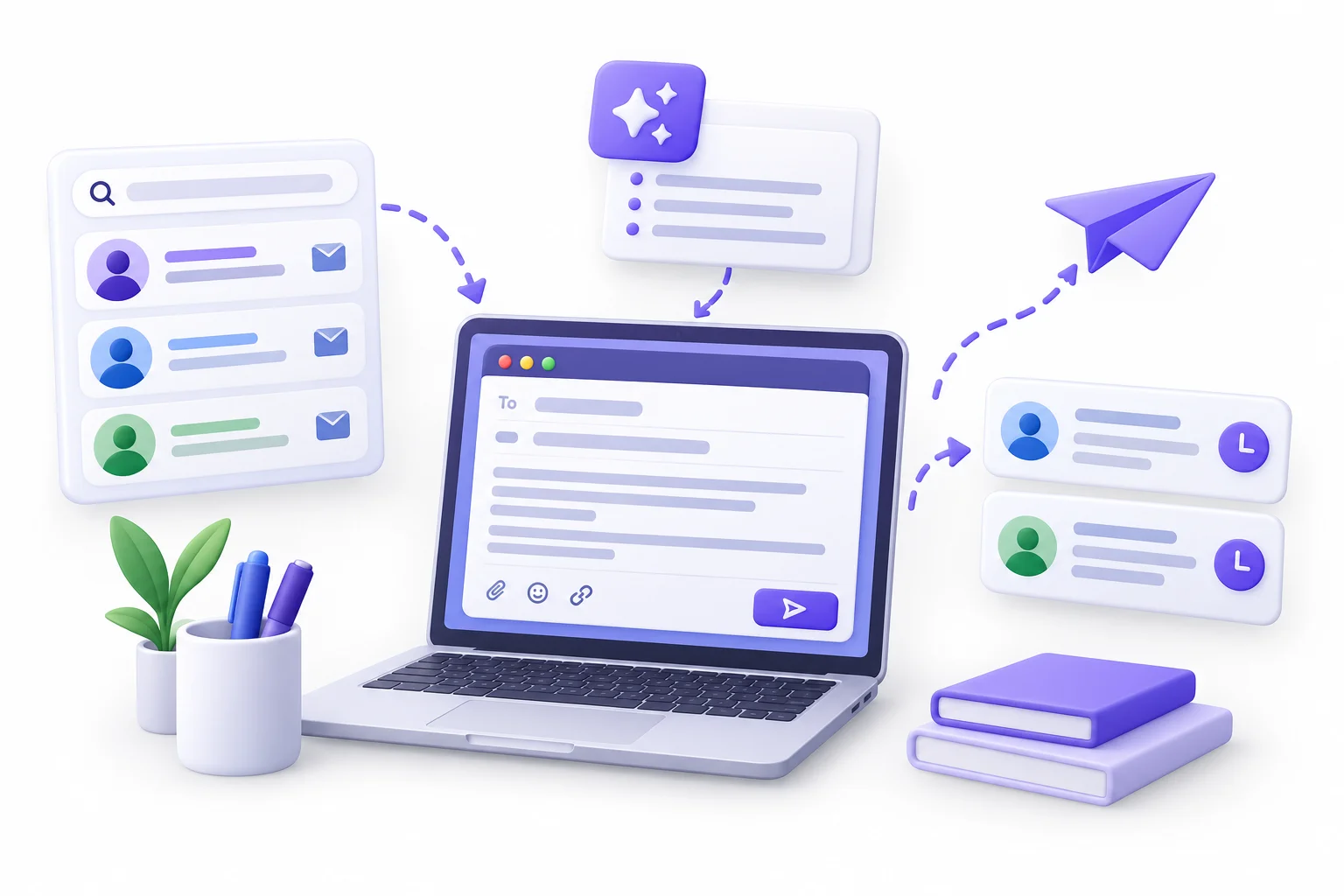
Most of the strategies above end in an email. And most outreach emails get ignored. Not because the idea is bad, but because the email looks like the 40 others that arrived that morning. So here’s how to write one that gets read.
Finding the right contact
Who you email matters as much as what you write. For a blog article, the author is often best, since they wrote it and care about it. For news sites, it’s the specific journalist or section editor. For small sites, it’s usually the owner. Tools like Hunter.io and Apollo help find email addresses. Many sites also list contact details on author pages or LinkedIn.
Anatomy of a good outreach email
| Part | Good Example | Bad Example |
|---|---|---|
| Subject line | Broken link on your remote work tools page | Collaboration opportunity!!! |
| Personal opener | Your piece on onboarding remote hires had a great point about async check-ins | Hope this email finds you well |
| Value | The Trello guide you link to now returns a 404. Ours covers the same setup, updated for this year | We have amazing content your readers will love |
| Ask | Would it be worth swapping in? | Please add our link ASAP |
| Sign-off | Name, role, company, one link | Long signature with six social icons |
Follow-up timing
Send one or two follow-ups, then stop. A short follow-up four or five days after the first email is fine. People are busy and emails get buried. A final note a week later is the limit. After that, move on. Chasing someone five times doesn’t get you a link. It gets you blocked.
Using AI for outreach without sounding like a bot
AI is useful here, but in a specific way. It’s great for research: summarizing a prospect’s recent articles, finding angles, drafting a first version you then rewrite. What it’s terrible at is “mass personalization,” where a tool generates 500 emails that all open with a vague compliment about the person’s “insightful content.” Editors can smell those from a mile away. Use AI to do the homework, then write the email like a person.
Here are three starting templates. Personalize every one of them. Seriously, sending these word for word defeats the point.
Broken link template
Subject: Broken link on your [page topic] page
Hi [Name],
Was reading your guide to [topic] and noticed the link to [dead resource] in the [section name] section now goes to a 404 page.
We have a guide that covers the same thing, updated for this year: [URL]. Could be a fair replacement if it’s useful.
Either way, thought you’d want to know about the broken link.
[Name, role, company]
Unlinked mention template
Subject: Thanks for the mention in [article title]
Hi [Name],
Just saw your article on [topic], and thanks for including [your brand] in it. Really appreciated the point about [specific detail].
Small request: would you be open to linking our name to [URL]? Makes it easier for readers who want to check us out.
Thanks either way.
[Name, role, company]
Guest post pitch template
Subject: Article idea for [site name]: [working title]
Hi [Name],
Your recent post on [topic] got a lot of discussion. A follow-up angle your readers might like:
- [Working title 1]: [one-line angle]
- [Working title 2]: [one-line angle]
- [Working title 3]: [one-line angle]
Our team works on [relevant expertise] daily, so these would come with real examples. Samples: [link 1], [link 2].
[Name, role, company]
Pro Tip: Personalize the first line, not just the name. Reference a specific article they published and why yours fits next to it. “Hi [Name]” with nothing else personal is still a template, and everyone can tell.
How to Choose the Right Link Building Strategies for Your Website
Trying all 10 at once is a fast way to do all 10 badly. Pick two or three that suit your situation, get good at them, then add more. The right link building strategies for a brand-new local business look nothing like the right ones for an established software company.
| Your Situation | Start With | Add Later |
|---|---|---|
| New site, small budget | Partnerships, resource pages, unlinked mentions | Guest posting |
| Local business | Associations, local partners, citations | Local digital PR |
| B2B / SaaS | Guest posts, listicle inclusion, expert quotes | Original research |
| Ecommerce | Digital PR, gift guides, supplier links | Data assets |
| Established brand | Unlinked mentions, digital PR | Research studies |
A few notes on reading this. If you’re new, start with relationship links and easy wins, because big digital PR campaigns need a credible brand and an asset to pitch. If you’re established, you probably already have mentions sitting out there waiting to be turned into links. Go get those first.
Effort, Cost and Timeline Comparison
Costs vary wildly depending on whether you do it yourself, hire a freelancer, or use an agency, so the table below uses relative levels instead of made-up price tags. For reference on the high end, GrowthMentor’s 2026 roundup of link building agencies put digital PR and editorial agencies at roughly $5,000 to $15,000+ a month.
| Strategy | In-House Hours Per Month | Cost (DIY vs. Agency) | Time to First Link |
|---|---|---|---|
| Original research | High | Medium DIY / High agency | Weeks to months |
| Digital PR | High | Low DIY / High agency | Weeks |
| Expert guest posting | Medium | Low DIY / Medium agency | Weeks |
| Journalist request platforms | Low to Medium | Free to Low | Days to weeks |
| Broken link building | Medium | Low DIY / Medium agency | Weeks |
| Resource pages | Low to Medium | Low | Weeks |
| Unlinked mentions | Low | Free to Low | Days |
| Competitor gap analysis | Medium | Tool cost only | Depends on follow-through |
| AI citation listicles | Medium | Low DIY / Medium to High agency | Weeks |
| Partnerships and podcasts | Low to Medium | Free to Low | Weeks |
Notice that the free and cheap options aren’t the weak ones. Unlinked mentions and partnerships cost almost nothing and bring some of the most relevant links you’ll get.
A 90-Day Link Building Roadmap for Beginners
Here’s a realistic first quarter for someone starting from scratch.
| Phase | Weeks | Focus | Output |
|---|---|---|---|
| Foundation | 1-2 | Audit backlinks, fix internal links, set targets | Target page list, baseline metrics |
| Quick wins | 3-5 | Unlinked mentions, partners, resource pages | First links |
| Asset build | 6-9 | Create one linkable asset | Published asset |
| Promotion | 10-13 | Digital PR, guest posts, outreach | Coverage and links |
Weeks 1-2: Pull your current backlinks in Ahrefs, Semrush, or Google Search Console. Pick the five to ten pages you most want to rank. Fix internal links so your strongest pages point at those targets. Write down your current rankings and referring domain count so you can measure progress later.
Weeks 3-5: Go after the easy stuff. Reclaim unlinked mentions, redirect broken pages that still have backlinks, ask partners and suppliers for listings, and pitch a few resource pages. These early links also build momentum, which helps when motivation drops.
Weeks 6-9: Build one linkable asset. Just one. A stats page, a small survey, a calculator. Make it good.
Weeks 10-13: Promote it. Pitch journalists, use it as the hook for guest posts, send it to people who’ve written about the topic. Then check your numbers against week one.
Link Building Tactics That Can Hurt You in 2026
Some tactics still get sold every day, mostly because they’re cheap and fast. That’s exactly the problem. Google’s spam policies specifically call out link schemes, including buying or selling links that pass ranking credit, excessive link exchanges, and automated link creation. Plenty of link building strategies sold online are built on these, so know what to watch for.
| Tactic | Why People Use It | Why It Fails | Risk |
|---|---|---|---|
| Private blog networks (PBNs) | Control, speed | Footprints, manual actions | High |
| Bulk paid links without disclosure | Fast | Violates Google’s spam policies | High |
| Automated directory/forum/comment links | Cheap | Low value, spam signals | Medium to High |
| Excessive link exchanges | Easy | Unnatural pattern | Medium |
| Fiverr-style “1,000 backlinks” packages | Cheap | Junk domains | High |
| Exact-match anchor stuffing | Old ranking trick | Over-optimization | High |
Look, some people will tell you PBNs still work. And sometimes they do, for a while. The issue is what happens when they stop working. A manual action can wipe out traffic a business spent years building, and cleaning it up takes months. If you’re building a real business on your website, that’s a bad bet.
What to do if you’ve been hit
First, figure out what actually happened. Open Google Search Console and check the Manual Actions report. If there’s a manual action for unnatural links, Google will say so there.
If you do have one:
- Find the bad links. Export your backlinks from Search Console and a tool like Ahrefs or Semrush.
- Try to get them removed. Contact site owners where possible, especially for links you paid for.
- Disavow what you can’t remove. Use Google’s disavow tool for links you built or bought and couldn’t get taken down.
- Submit a reconsideration request. Explain what happened and what you cleaned up.
When is the disavow tool actually needed? Google’s own guidance says most sites don’t need it. It’s mainly for when you have a manual action, or you know there are lots of spammy links you or someone you hired built. Random spammy links that show up on their own are something Google generally ignores.
Warning: Not every dip after a link campaign means a penalty. Rankings move for lots of reasons, including core updates and competitors improving their pages. Check Search Console’s Manual Actions report before you start disavowing links.
How to Measure Link Building Success
“We got 50 links this month” sounds great in a report. But did anything actually change? Measuring the right things tells you whether your effort is paying off or whether you’re just collecting numbers.
| Metric | What It Tells You | Where to Track |
|---|---|---|
| Referring domains (quality, not count) | Authority growth | Ahrefs, Semrush, GSC |
| Rankings for target pages | Direct SEO impact | GSC, rank tracker |
| Referral traffic | Real audience value | GA4 |
| Organic traffic to linked pages | Compound effect | GA4, GSC |
| Brand mentions | Visibility beyond links | Brand monitoring tools |
| AI citations and mentions | AI search visibility | Manual prompt checks, AI visibility tools |
A few things worth saying about this table. Referring domains matter more than total backlinks, because 100 links from one site is still one site vouching for you. Rankings for target pages matter more than rankings in general, because that’s where the business value is. And referral traffic is the most honest metric of all. If a link sends people, it’s working, whatever Google decides.
Tracking AI citations
Most teams aren’t doing this yet, which makes it an easy edge. Here’s a simple method anyone can run in a spreadsheet:
- List 15 to 25 questions your buyers ask, the same ones from Strategy 9.
- Once a month, ask each question in ChatGPT, Perplexity, and Google AI Mode.
- Record three things per answer: is your brand mentioned, is your site cited as a source, and which competitors appear.
- Track the trend over months, not individual answers. AI responses vary from one try to the next, so a single check means little. The pattern over three to six months tells you something.
Paid AI visibility tools can automate this if you outgrow the spreadsheet, but the manual version is enough to start.
Setting realistic expectations
Links take time to show impact. Google needs to crawl the linking page, process the link, and reassess your page, and that can take weeks or longer. Bigger shifts usually come from links adding up over months, not from a single link. So if you land three great links in month one and rankings haven’t moved by week two, that’s normal. Keep going, keep measuring, and judge results over quarters.
Conclusion
Every approach in this guide comes down to one thing. The links that work in 2026 are links someone chose to give, because you gave them a reason: a number they needed, a broken page you helped fix, a quote that made their article better, a product that genuinely belonged on their list. The shortcuts still get sold, and they still get sites in trouble.
Don’t try to run all of these at once. Pick two or three link building strategies that fit where your site is right now, do them properly for a full quarter, and measure what actually moved. A new site might start with partners and resource pages. An established brand might start with unlinked mentions and a data study. Either way, consistency beats intensity.
And keep the bigger picture in mind. Links aren’t just about Google rankings anymore. They decide which brands show up when someone asks an AI tool for a recommendation, and that audience is only getting bigger. The work is the same. Earn trust in the places your audience reads, and both search engines and AI answers will follow. If you’d rather have help building that kind of link profile, our SEO team is a message away.
Frequently Asked Questions
How many backlinks does a page need to rank?
There’s no fixed number. It depends on how competitive the keyword is and how strong the pages already ranking are. The practical way to find out is to check the referring domains of the pages in the top five for your keyword. That gives you a rough target. Also remember that quality and relevance beat count. Ten relevant links from real sites can beat a hundred weak ones.
How long does link building take to show results?
Usually weeks to months. Google has to find and process the new links, and the effect builds as links accumulate. Easy wins like unlinked mentions can land links within days, but ranking changes tend to show up over a few months. Plan in quarters, not weeks.
Is buying backlinks ever safe?
Buying links that pass ranking credit goes against Google’s spam policies. Paying for a sponsored placement is fine as long as the link is marked with rel=”sponsored” or rel=”nofollow.” That kind of link can still bring traffic and brand exposure, it just isn’t meant to boost rankings. Buying undisclosed links to manipulate rankings risks a manual action.
Are nofollow links worth building?
Yes, in many cases. Since 2020, Google treats nofollow as a hint and may still count some of them. Beyond that, a nofollow link from a major site still sends traffic, puts your brand in front of readers, and counts as a brand mention that AI tools can pick up. A natural link profile also includes a mix of both types.
Is guest posting still effective in 2026?
Yes, if it’s done properly. In Editorial.link’s survey of 518 SEO professionals, guest posting was the second most popular tactic after digital PR. The key is writing for relevant, real sites with actual readers and editors, not paying “write for us” sites that publish anything for a fee.
Do backlinks help with AI search and ChatGPT visibility?
They do, mostly indirectly. AI tools tend to cite pages that already rank well. Seer Interactive found 87% of the ChatGPT search citations it studied matched Bing’s top results. Links help pages rank, and ranking pages get cited. Brand mentions across trusted sites also help AI tools connect your name with your topic.
What’s the difference between digital PR and link building?
Link building is the broad goal: getting other sites to link to yours. Digital PR is one way to do it, by earning coverage from journalists and media sites through stories, data, and expert comments. All digital PR can build links, but not all link building is digital PR. Broken link building and resource page outreach, for example, involve no journalists at all.
Can link building be done without an agency?
Absolutely. Unlinked mentions, partner links, resource pages, journalist request platforms, and guest posting can all be done in-house with a few hours a week and a backlink tool. Agencies help most with large digital PR campaigns, where media relationships and scale matter. Plenty of businesses start in-house, learn what works, and only bring in help later.
Should the disavow tool be used?
Most sites don’t need it. Google’s guidance is that the disavow tool is mainly for sites with a manual action for unnatural links, or sites that know a lot of spammy links were built on purpose. Random spam links that show up on their own are generally ignored by Google. Using the tool carelessly can remove value from links that were actually helping.