
Picture a business owner who posts every single day for three months. Reels, carousels, festival greetings, the works. Followers crawl up, a few people like the posts, and the phone stays silent. Then one evening they hit “Boost” on a post, spend a small amount, and get hundreds of likes from people who will never buy anything. Now they’re confused and a bit angry at both approaches. This confusion sits right at the center of the Social Media Advertising vs Organic Social Media debate, and it’s the reason so many small budgets get burned.
Here’s the thing. Neither approach is broken. They do different jobs, they run on different engines, and they pay back on different timelines. Mixing up those jobs is what hurts people. This guide breaks down what each one actually is, what each really costs, how to measure them without fooling yourself, and how to sequence them over the first 90 days. By the end, you’ll know which one to start with, when to add the other, and how to stop wasting money on the wrong one.
The short version: it isn’t a fight. It’s a sequencing and role-assignment problem.
Quick Answer Organic social builds trust, community, and a library of content that keeps working. Paid social buys speed, control, and measurable leads or sales. Most beginners should start with organic basics plus tracking, then add small, focused ad tests once there’s an offer and content that people respond to. Use organic to find what works, and ads to push what works to more of the right people.
Social Media Advertising vs Organic Social Media: The Core Differences at a Glance
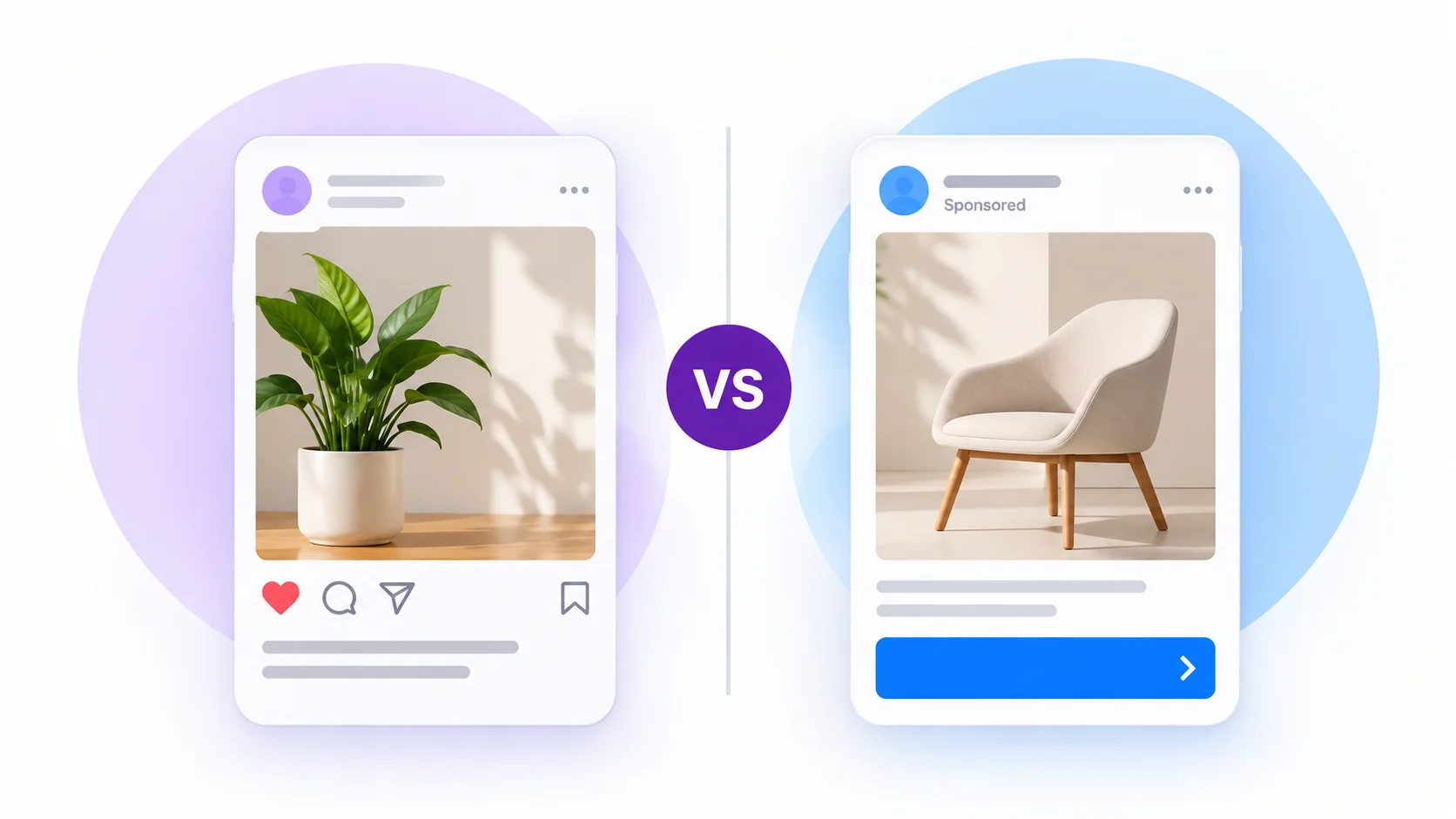
Start with the plain-language version. Organic social media is attention you earn and own: you post, people see it because the platform decides it’s worth showing, and nobody sends a bill for that distribution. Social media advertising is attention you buy: you pay the platform to put a message in front of a chosen group of people. That’s the whole split. Everything else in the Social Media Advertising vs Organic Social Media conversation comes out of that one difference, earned versus bought.
Notice what that does to everything downstream. Earned attention is slow, uncertain, and cheap in cash but expensive in time. Bought attention is fast, controllable, and expensive in cash but easier to measure. One compounds. The other switches off the moment the budget does.
Quick comparison
| Factor | Organic Social Media | Social Media Advertising |
|---|---|---|
| Cost model | Time, talent, tools | Ad spend plus creative plus management |
| Speed of results | Slow, compounding | Fast, stops when budget stops |
| Reach control | Algorithm decides | You decide via targeting and budget |
| Targeting | Limited, indirect | Granular, behavioural and demographic |
| Trust level | Higher (community, social proof) | Lower at first, builds with retargeting |
| Measurement | Engagement-led, harder to attribute | Conversion-led, trackable |
| Longevity | Content can resurface for months | Ends when spend ends |
| Best for | Brand, community, authority | Leads, sales, launches, testing |
Don’t stop at the table, though. It tells you what differs but not why, and the why is what lets you make good calls when your situation doesn’t match a textbook example. The next sections go through the mechanics, then the costs, then how to combine both.
What Is Organic Social Media?
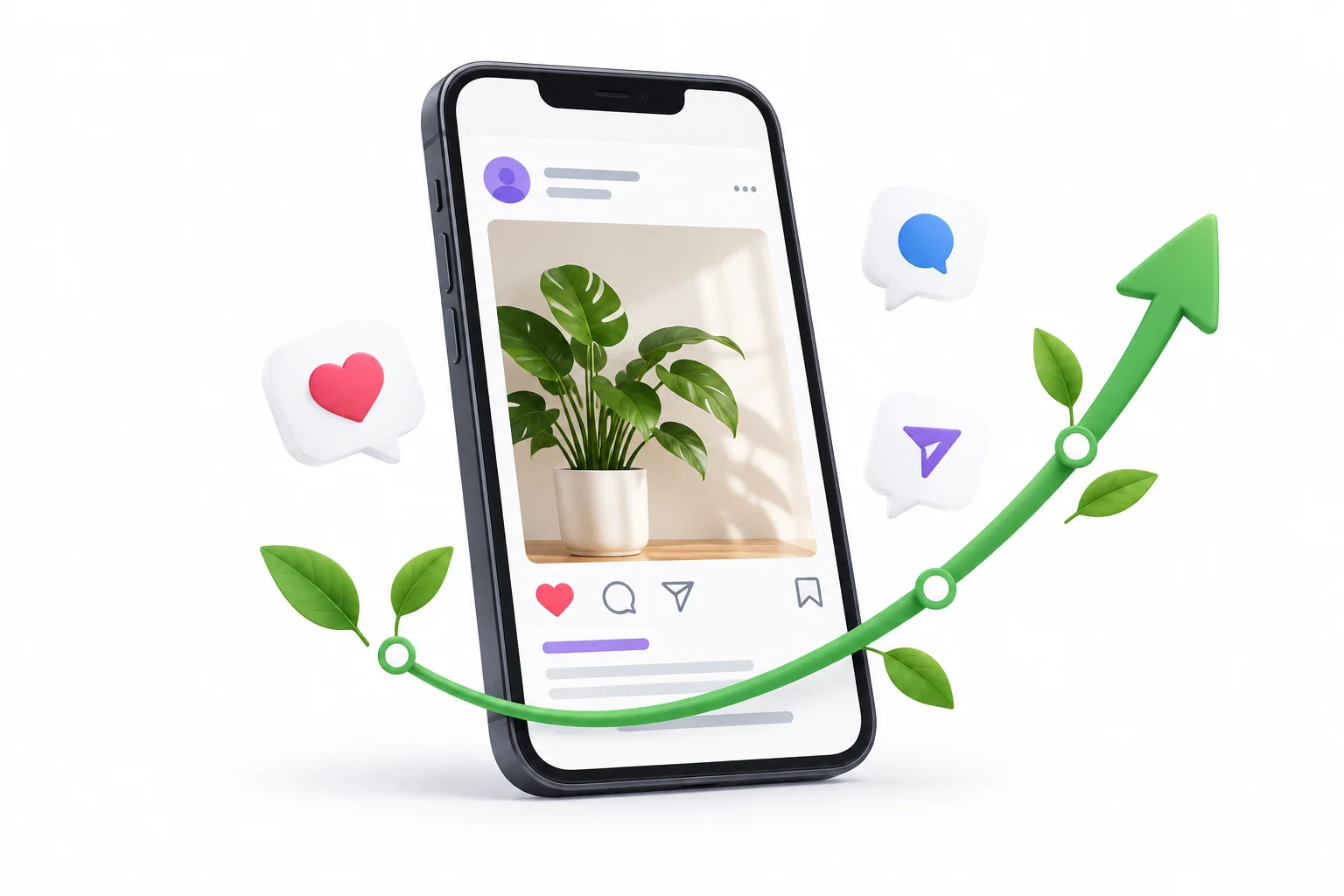
Organic social media means everything you post and do on social platforms without paying to push it. Your profile, your posts, Reels, Stories, comments, replies, live sessions, community posts. The word “organic” confuses people because it sounds like “natural” or “free.” It just means unpaid distribution. The platform shows your content to people based on its own ranking logic, and you didn’t buy that exposure.
Organic content does three jobs, and most people only think about the first:
- Reach: getting seen by people who don’t know you yet
- Relationship: giving people a reason to keep watching, replying, and trusting you
- Conversion support: answering doubts before a sales conversation even starts, so the buyer shows up warmer
The formats vary by platform: short video, carousels, static images, Stories, Lives, community posts, and text-first posts (LinkedIn leans heavily on these). The format matters less than whether the content solves a problem or earns a reaction.
How organic distribution actually works
Platforms don’t show your post to all your followers at once. They show it to a small test group first. If that group watches, saves, shares, or replies, the platform expands the audience. If they scroll past, the post stalls. That’s the mechanism, and it’s why a post can flop with a thousand followers and fly with ten thousand strangers.
Two ideas help here. The follower graph is the old way: people you follow show up in your feed. The interest graph is what dominates now: the platform shows you content it predicts you’ll like, whether or not you follow the creator. Interest-graph distribution is why a small account can occasionally get a huge reach, and why a big account can get ignored.
The signals that tend to matter most are watch time, saves, shares, and meaningful replies. Likes alone are the weakest signal of the bunch, which is why chasing likes is a bad habit.
One more edge case worth stating: a big follower count doesn’t guarantee reach. Followers you bought, followers from giveaways, or followers from three years ago who stopped caring all drag down your engagement rate, and the platform reads that as a sign your content isn’t good.
The hidden cost of “free”
Organic costs you real money, just not on an ad invoice. Someone has to plan, shoot, edit, write, design, post, and reply. That’s a salary, a freelancer’s fees, or your own hours that could go to something else. Add design tools, editing software, and sometimes a scheduler. If a person earning a decent monthly salary spends half their week on content, that cost is real, even if no platform ever charges you.
Who does organic well
Authority-led brands, educators, creators, consultants, and local service businesses tend to win with organic, mainly because trust and expertise are what they sell. A trainer who explains things clearly on video builds credibility one post at a time. That kind of trust is slow to build and hard to copy.
Tip: Organic isn’t free. It’s paid for in time and consistency instead of money. If you can’t commit to a rhythm for at least a few months, don’t treat it as a plan.
What Is Social Media Advertising?
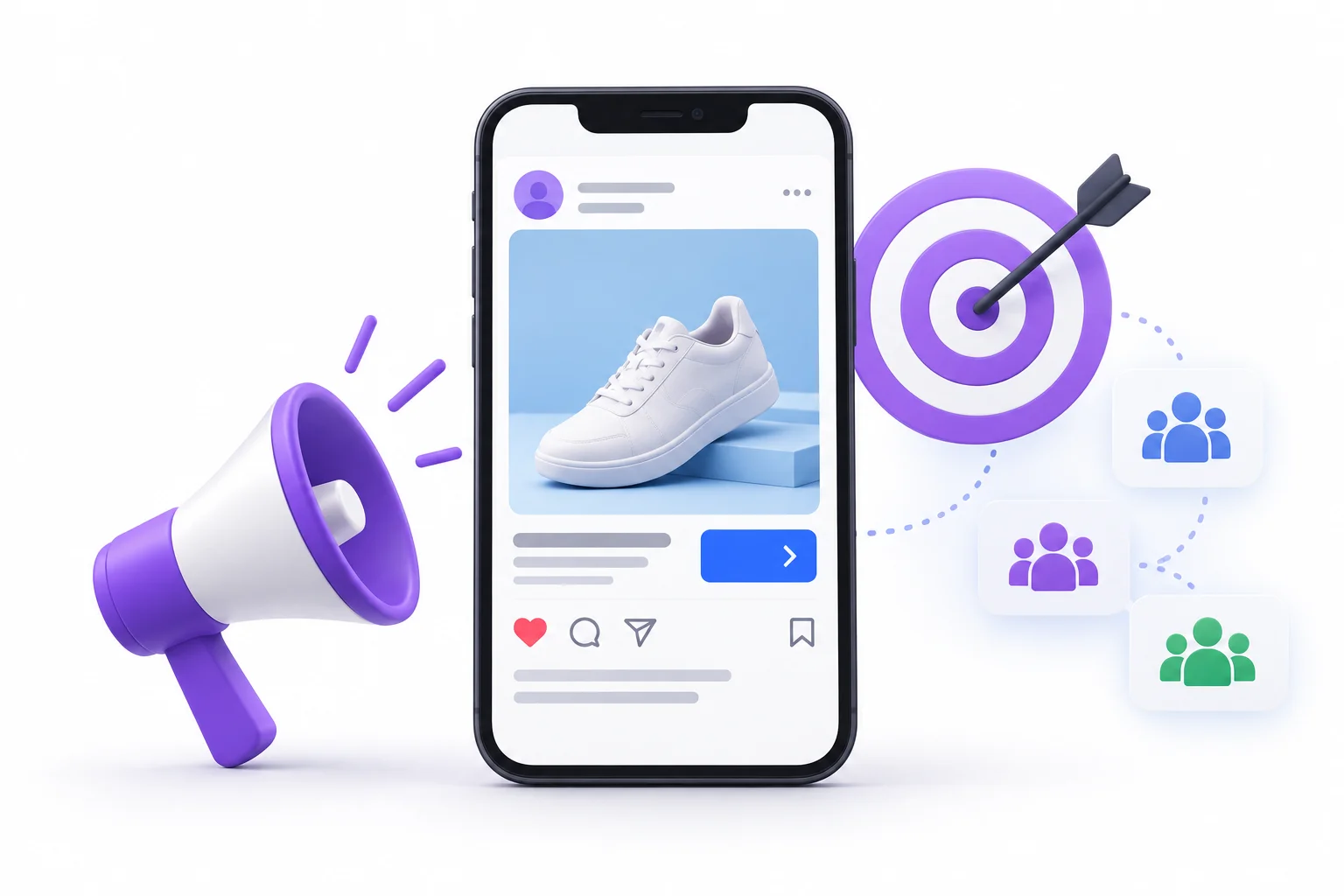
Social media advertising is paid placement inside social platforms. You choose who should see your message, set a budget, and the platform delivers your ad to those people in their feeds, Stories, Reels, in-stream video slots, or search inside the app. You pay for specific outcomes like impressions, clicks, views, leads, or purchases, depending on how you set up the campaign.
The structure of an ad account
Most platforms organise ads in three layers, and understanding them early saves a lot of confusion:
- Campaign: where you pick the objective (what you want people to do)
- Ad set (or ad group): where you set the audience, budget, schedule, and placements
- Ad: the actual creative, meaning the image or video, the text, the headline, and the button
Campaign objectives mapped to business goals
| Objective | What it tries to get | Good fit for | Watch out for |
|---|---|---|---|
| Awareness | Reach and impressions | New brand, new launch, local presence | Cheap reach from people who’ll never buy |
| Traffic | Clicks to a page | Blog, landing page, product page | Clicks that bounce in two seconds |
| Engagement | Reactions, comments, messages | Social proof, post warm-up | Likes that don’t lead anywhere |
| Leads | Form fills or enquiries | Courses, services, clinics, B2B | Low-quality leads if the form is too easy |
| Sales | Purchases or high-intent actions | E-commerce, product launches | Needs good tracking and a decent site |
| App installs | Downloads | Apps | Installs without real usage |
Targeting layers
Ad platforms let you aim your message in layers:
- Demographic: age, gender, location, language
- Interest: topics and pages people engage with
- Behavioural: past actions like purchase behaviour or device use
- Custom audiences: people who already visited your site, watched your videos, or are on your customer list
- Lookalikes: people who resemble your best existing customers
- Retargeting: showing ads to people who already interacted with you
- Broad targeting: letting the platform find buyers with little restriction, leaning on creative to do the targeting
That last one surprises beginners. Over the years, many advertisers have found that very narrow interest stacks work worse than broad audiences paired with strong creative. The reason is simple: the platform’s own prediction engine is often better at finding buyers than your manual guesses. That’s not a rule, it’s a test worth running.
Billing models
You’ll run into these abbreviations constantly:
- CPM: cost per thousand impressions
- CPC: cost per click
- CPV: cost per video view
- CPL: cost per lead
- CPA: cost per acquisition (a sale, signup, or similar)
For a small budget, the model matters because it decides what you can afford to learn. If a click costs a few rupees but only a tiny fraction of clickers become leads, your real cost per lead is much higher than the click price suggests. Always trace the cost down to the outcome you actually care about.
Tracking infrastructure
Before spending, set up tracking. That usually means the platform’s pixel on your website, a server-side connection (often called a conversions API) so events still get reported when browsers block some tracking, and UTM tags on your links so your analytics tool knows where traffic came from. You also need to decide between lead forms inside the platform (easy for people to fill, but often lower intent) and your own landing page (more friction, usually better-qualified leads).
Boosting vs a proper campaign
This is where beginners trip up most. A boosted post is a shortcut button: pick a post, pick a rough audience, pay. You get limited objectives, limited controls, and often engagement from people who like things but never buy. A proper campaign built in the ad manager lets you pick a real objective, set up conversion tracking, test creatives, and control placements. Boosting isn’t evil, but it’s the training-wheels version.
Tip: Boosting is a shortcut button. The ad manager is the control room. Move to the control room as early as you can.
How Distribution Works: Algorithms vs Auctions
Both organic and paid content reach people through the same feeds, but the decision logic behind each is completely different. Knowing the difference stops a lot of bad assumptions.
The mechanism behind organic
Organic runs on a ranking system. The platform scores your post for each person based on predicted interest: how likely they are to watch, save, share, or reply, based on their history. A small test group sees it first. Strong early response means wider distribution, weak response means the post fades. You can’t pay to change that score directly. You can only earn it with better content, better hooks, and better timing.
The mechanism behind paid
Paid runs on an auction. Every time a person opens their feed, the platform runs an auction among the advertisers who want to reach that person. The winner isn’t just the highest bidder. Platforms like Meta have described the auction as considering the advertiser’s bid, the estimated action rate (how likely the person is to take the action you want), and ad quality or relevance. So a well-made ad that people respond to can beat a higher bid from a sloppy one.
That point matters more than people realise. Good creative lowers your cost in the auction, because the platform sees people reacting well and rewards you with cheaper delivery. Bad creative costs you more for the same reach. The money you spend on a better video or a sharper hook often pays for itself in lower media costs.
Where paid and organic interact, and where they don’t
Paying for ads doesn’t directly raise your organic reach. Running ads won’t “unlock” organic distribution, and it won’t punish it either. But the two do affect each other indirectly. Strong engagement on a post can make a stronger ad creative later. Social proof from comments helps ads convert. And people who see an ad often click through to your profile to check you out, so the state of that profile feeds back into your ad results.
Think of the flow like this. Organic: you post, a test audience reacts, the platform expands or stops. Paid: you set a budget and audience, the auction runs, and delivery follows the winners. Same feed, completely different gatekeepers.
Paid vs Organic Social: Head-to-Head Comparison Across 10 Factors
Time to put the two side by side. Each factor below gets a short explanation of the mechanism and where it trips people up.
1. Cost. Organic costs time, talent, and tools. Ads cost media spend, creative production, and often a manager’s fee. People underestimate both. They think organic is free and ads are a bottomless pit. In practice, a weak organic effort can quietly burn more money in staff hours than a tight ad test.
2. Speed. Ads can put your offer in front of thousands of people within hours of approval. Organic needs weeks or months of consistent posting before it builds anything meaningful. If you have a launch date next week, organic alone won’t get you there.
3. Reach. Organic reach is capped by what the platform decides to show, and it can swing wildly from post to post. Paid reach is whatever your budget and audience size allow. You can predict paid reach reasonably well. You can’t predict organic reach at all.
4. Targeting precision. Ads let you choose location, age, interests, behaviours, and retargeting groups. Organic targeting is indirect: you shape who sees your content mostly through topic and style. If you sell something only relevant to people within a certain radius, ads win this round hands down.
5. Control and predictability. With ads, you control budget, timing, audience, and message, and you can pause instantly. With organic, a great post can fall flat and a throwaway can explode. That unpredictability is frustrating if you need steady lead flow.
6. Trust and credibility. Organic content builds trust slowly through consistency and visible community. Ads start colder because people know they’re ads. But ads that borrow social proof, like testimonials or comments, can build trust faster than you’d expect.
7. Scalability. Ads scale with budget, until the audience saturates or costs climb. Organic scales with effort, and effort has a ceiling: one person can only make so much good content. Scaling organic usually means hiring.
8. Measurement and attribution. Ads give direct numbers: cost per lead, cost per sale, return on spend. Organic’s impact is often indirect. People see your posts for weeks, then search your name and buy, and your analytics may label that as “direct” or “search,” not “social.”
9. Longevity and compounding. A strong organic post can keep pulling views and profile visits long after publishing, and your content library keeps working as a catalogue. Ad results stop the day spend stops. This is organic’s biggest edge and the reason it’s worth building even when ads are doing the heavy lifting.
10. Risk. Organic risk is algorithm change: a format that worked suddenly doesn’t. Paid risk is policy rejections, disapproved ads, and account restrictions, plus rising costs when competition rises. Neither is safe. Both need a plan B.
Scorecard
| Factor | Organic | Ads | Why |
|---|---|---|---|
| Cost in cash | Strong | Weak | Organic has no media bill |
| Speed | Weak | Strong | Ads deliver within hours |
| Predictable reach | Weak | Strong | Budget buys known reach |
| Targeting | Weak | Strong | Ads offer layered audience controls |
| Trust building | Strong | Moderate | Community beats a cold ad |
| Scalability | Moderate | Strong | Budget scales faster than effort |
| Measurement | Moderate | Strong | Ads tie spend to outcomes |
| Longevity | Strong | Weak | Content stays, ads stop |
| Control | Weak | Strong | You steer paid delivery |
| Risk exposure | Moderate | Moderate | Algorithm changes vs policy and cost swings |
Count the Strongs and you’d think ads win. Don’t. The scorecard doesn’t weigh your situation. A brand with no trust and no content needs organic first. A brand with a launch and a deadline needs ads first. The scorecard just tells you what each tool is good at.
Cost Reality: What Each Approach Actually Costs in India
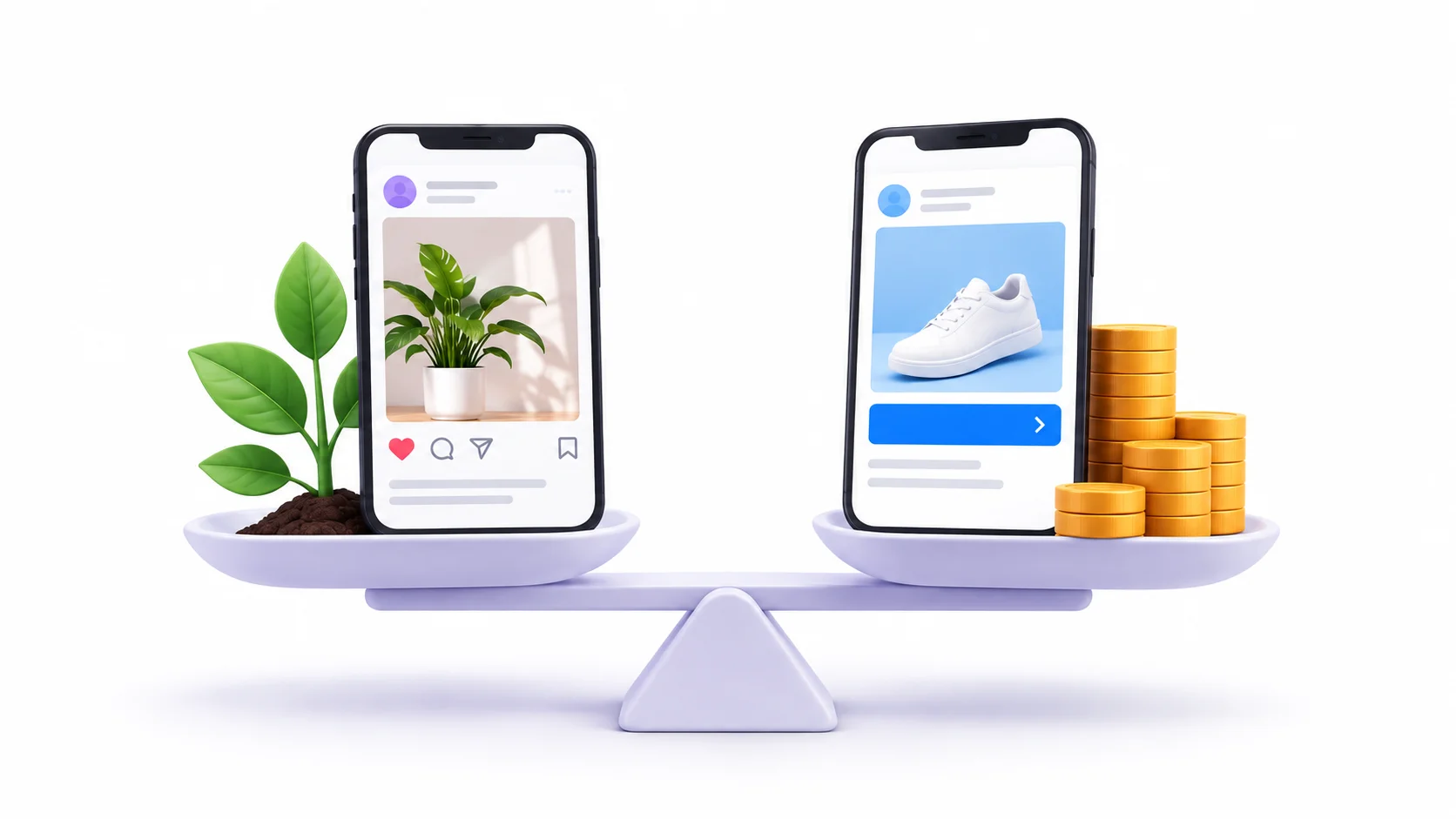
Money talks, so let’s get honest about it.
The true cost of organic
Add up what it takes to run organic properly:
- Salary or freelancer fees for someone who plans, shoots, edits, and posts
- Design and editing software
- Equipment, even if it’s just a decent phone and lighting
- Time from you or your team for ideas, approvals, and replies
- Opportunity cost of what that time could have produced elsewhere
A solo founder doing it all themselves isn’t spending cash, but they’re spending hours, and hours aren’t free.
The true cost of ads
On the paid side, the bill includes:
- Media spend (what the platform charges)
- Creative production (videos, images, copy)
- Agency or manager fees, if you hire one
- Testing waste: money spent on ads that don’t work, which is normal and unavoidable
Testing waste is the line item nobody budgets for. Plan for it. Early campaigns always burn some money while you learn what works.
Illustrative monthly budget tiers in rupees
These are example structures to show how money and time split across approaches, not benchmarks. Real numbers depend on industry, city, competition, and offer.
| Tier | Organic effort | Example ad spend | Where the focus goes |
|---|---|---|---|
| Starter | One person, a few hours a week | ₹0 to ₹10,000 | Profile, content pillars, tracking, one small ad test |
| Growth | Part-time content person or freelancer | ₹15,000 to ₹50,000 | Regular content, steady lead campaign, retargeting |
| Scale | Small team with designer and editor | ₹75,000 and above | Multiple campaigns, creative testing, reporting |
Cost per result, not cost per click
The cheapest click isn’t the cheapest customer. If one campaign gets clicks for a few rupees but almost nobody enquires, and another costs more per click but fills the inbox with serious enquiries, the second one is cheaper where it counts. Always trace costs down to leads, then to customers.
Break-even thinking
Here’s a simple way to figure out how much you can afford to spend. Take what a customer is worth to you, apply your margin, and that gives your maximum cost to acquire one customer.
Say a short course sells for ₹20,000 and your margin after delivery costs is 50 percent. That’s ₹10,000 of room per customer. If about 1 in 10 leads turns into a student, you can afford up to ₹1,000 per lead before you start losing money. Those figures are just an example, but the logic works for any business: customer value times margin gives the ceiling on cost per customer, and conversion rate turns that ceiling into a cost per lead.
Strategy: Work backwards from your customer value before setting any ad budget. A budget with no target cost per acquisition is just a guess with a payment attached.
Reach, Targeting, and Control
Organic reach: capped and unpredictable
Organic reach is limited by what the platform chooses to show. A post can reach a fraction of your followers or many times more, depending on how people respond. Shares matter a lot here, because a share puts your content in front of people outside your following. If your content never gets shared, your ceiling stays low.
Paid reach: frequency, saturation, trade-offs
With ads, you can reach roughly as many people as your budget and audience size allow. But there’s a catch. Show the same ad to the same people too often and they get annoyed or tune out. That’s frequency, the average number of times each person sees your ad. A small audience with a big budget saturates quickly. Meanwhile, a huge audience with a tiny budget barely makes a dent. Matching audience size to budget is part of the job.
Targeting precision and the privacy shift
Targeting isn’t as sharp as it used to be. When Apple introduced stricter tracking permissions on iPhones, advertisers lost visibility into some user behaviour, and platforms had to rely more on modelled data. The practical effect: highly granular targeting got less reliable, and broad targeting with strong creative became a more common approach. That’s a big shift for anyone who learned ads in the old days.
Local targeting example
Take a clinic or a salon in a mid-sized Indian city. Organic content can build a reputation, but only a slice of your followers might live within reach of your door. With radius targeting, you can show an ad only to people within a few kilometres of the shop, which makes sure your money isn’t spent on people who’d have to travel hours to visit. For location-bound businesses, that one feature often justifies running ads at all.
Trust, Engagement, and Community Building
Why organic builds trust
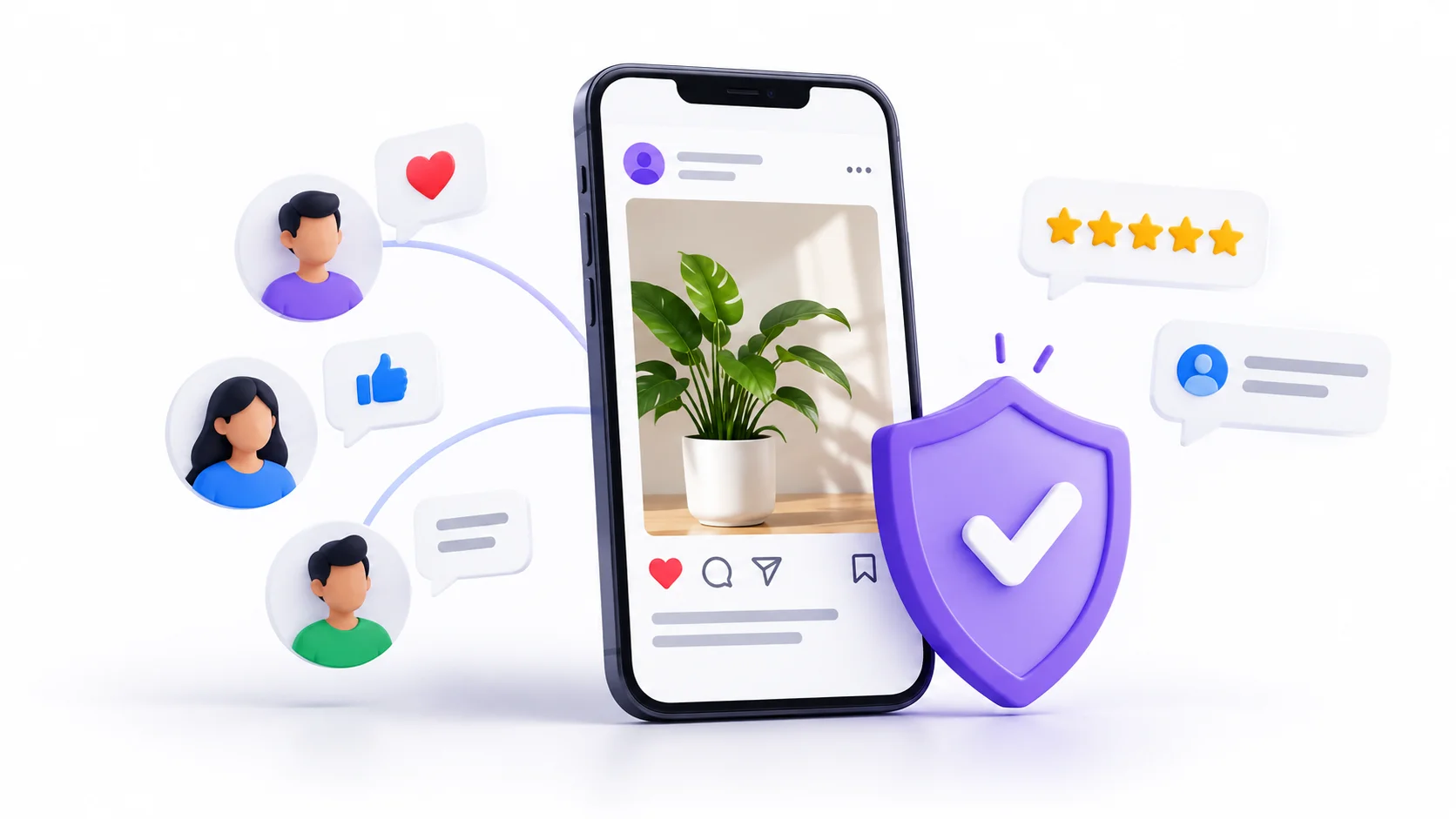
People trust what they see repeatedly. A brand that posts useful stuff, answers comments, shows the people behind the work, and admits mistakes feels real. Founder-led content is especially strong because a human face is easier to trust than a logo. Over weeks, that familiarity does something no ad can do in a single impression.
How ads borrow trust
Ads start with a handicap: people know they’re being sold to. But you can narrow that gap. Testimonial ads, user-generated-style videos, and ads that show real comments and reviews carry social proof into the paid space. Using content that already performed well organically as the base for an ad is one of the simplest ways to do this.
Comments on ads
Comments under your ads are visible to everyone who sees them, and people read them before they click. A question left unanswered or a complaint left hanging can quietly kill conversions. Reply fast. Hide spam and abuse, but don’t delete honest criticism, because a brand that only shows praise looks fake.
The credibility gap
Here’s a common failure. An ad looks sharp, the offer is good, someone clicks through to the brand’s profile to check it out, and finds an empty grid, three posts from last year, and no comments. They leave. The ad did its job and the profile undid it. Before spending on ads, make sure the profile you’re sending people to looks alive.
Measurement, Metrics, and Attribution
You can’t judge either approach without agreeing on what success looks like. And vanity metrics are the biggest trap.
Metrics by funnel stage and approach
| Funnel stage | Organic metrics | Paid metrics |
|---|---|---|
| Awareness | Reach, impressions, follower growth, profile visits | Reach, impressions, CPM, frequency |
| Consideration | Saves, shares, watch time, engagement rate | CTR, CPC, landing page views, video view rate |
| Conversion | Link clicks, DMs, enquiries from social | CPL, CPA, conversion rate |
| Revenue | Assisted conversions, referral-tagged sales | ROAS, revenue, cost per customer |
Vanity metrics vs business metrics
A vanity metric looks good but doesn’t connect to money. Likes, follower count, and raw impressions are classic examples. A business metric ties to revenue: leads, qualified enquiries, sales, cost per customer. Don’t ignore the vanity numbers entirely, since they give early signals, but never report them alone. A post with thousands of likes and zero enquiries is a nice feeling, not a result.
Attribution basics
Last click gives credit to the final thing someone clicked before converting. View-through gives some credit to ads someone saw but didn’t click. Organic often shows up as an assist, not the closer. A person sees your posts for a month, then searches your brand name on Google and buys. Your report says “organic search.” Social did the work and got none of the credit. That’s why organic looks weaker in last-click reports than it really is.
Dark social
A lot of sharing happens where tracking can’t see it: WhatsApp forwards, direct messages, word of mouth after seeing a post. Those conversions often land in analytics as “direct traffic.” If your direct traffic rises when your social activity rises, that’s a hint, not proof, that social is working in ways your tools can’t capture.
A UTM convention you can copy
Tag every link you post or promote with three basics: source (the platform, like instagram), medium (the type, like organic or paid_social), and campaign (a short name, like diwali_offer). Keep them lowercase and consistent. Mixing “Instagram,” “instagram,” and “insta” splits your data into three buckets and makes your reports useless.
Consent and tracking in India
India’s Digital Personal Data Protection Act, 2023 puts weight on consent and clear purpose when handling personal data. For marketers, the practical takeaway is to be upfront about what data you collect through lead forms, why you’re collecting it, and how it’ll be used, and to avoid uploading customer lists to ad platforms without proper consent. Rules and timelines are still being rolled out, so check current requirements with a qualified legal advisor before building your data practices.
Which Platform Favours Which Approach
Platforms aren’t interchangeable. Each has a personality, and your choice of approach should match it.
Platform comparison
| Platform | Organic strength | Ad strength | Best for | Common beginner mistake |
|---|---|---|---|---|
| Strong for visual and short video | Strong, shares Meta’s ad system | B2C, local, D2C, education | Posting pretty images with no offer | |
| Moderate, community and groups | Strong, wide reach and local targeting | Local businesses, older audiences, events | Treating it as dead and ignoring it | |
| Strong for authority and text posts | Strong for B2B targeting, often costlier | B2B, services, hiring, SaaS | Posting corporate announcements nobody wants | |
| YouTube | Strong for search-driven, long-lived video | Strong for video and intent-based reach | Education, product demos, how-tos | Uploading with no thought for search |
| X | Moderate, news and conversation | Moderate | News-driven brands, tech, creators | Broadcasting instead of joining conversations |
| WhatsApp Business | Not a feed, a conversation channel | Click-to-chat ads feed it | Sales conversations, support, catalogues | Spamming broadcast lists |
How the approach shifts by platform
LinkedIn is where organic works for authority and for B2B relationships. A founder or specialist who posts useful thinking every week can earn inbound enquiries over time. Paid on LinkedIn is typically used when you need to reach specific job titles or company types, and it’s often more expensive per click than other platforms, so the targeting precision has to earn that premium.
Instagram and Facebook share the same ad system, which means one setup can run on both. They’re strong for local businesses, D2C brands, and anyone selling to consumers. Organic builds the brand feel, and ads handle the heavy delivery for offers and launches.
YouTube behaves differently because people search on it. A good how-to video can keep getting views for a long time, which makes organic YouTube a long-term library. Ads on YouTube work well for demos and awareness when you want people to watch a message in full.
X is mostly about conversation and timing. It works better for brands that have something to say about what’s happening right now than for brands that just want to run ads.
WhatsApp: the India-specific bridge
In India, a lot of sales actually close on WhatsApp. That’s why click-to-WhatsApp ads, which open a chat with your business straight from an ad, can work well: they skip the form and put the customer in a live conversation. The WhatsApp Business app also offers a product catalogue, quick replies, and broadcast lists. One caution: people generally need to have your number saved to receive broadcasts, and spamming drives them to block you. Use it for helpful follow-ups, not blasts.
When to Use Organic, When to Use Ads, and When to Use Both
There’s no universal answer to Social Media Advertising vs Organic Social Media. There’s only an answer for your stage, goal, and budget. This matrix is a starting point.
Decision matrix
| Situation | Lean toward | Why |
|---|---|---|
| Brand new, no content, no audience | Organic first, tracking set up | You need proof and assets before paying to amplify |
| Tight deadline, launch or sale | Ads first, with organic support | Organic can’t deliver in days |
| Long sales cycle, high trust needed | Organic heavy, ads for retargeting | Trust builds over many touchpoints |
| Short sales cycle, impulse buy | Ads heavy, organic for proof | Quick decisions respond to direct offers |
| Very small budget | Organic plus one small focused ad test | Spread thin and both fail |
| Established brand with proven offer | Both, with ads scaling what works | You have data to scale on |
Four scenarios
A coaching or training institute with several branches. Organic content from teachers, student results, and short lessons builds credibility. Local ads with radius targeting around each branch pull enquiries, and click-to-WhatsApp keeps conversations moving. Enrolment seasons call for heavier ad spend.
A D2C brand before a festive sale. Organic shows the product in use, builds anticipation, and collects social proof. Ads handle the sale window itself, with retargeting aimed at people who already visited the product pages. Start testing creatives well before the festival, because costs usually rise as the date approaches.
A B2B SaaS or service company selling through LinkedIn. Organic founder or expert posts build authority and trust. Ads target specific roles and company types with a clear, specific offer. The sales cycle is long, so retargeting and follow-up content do a lot of the work.
A local clinic, salon, or restaurant in a Tier-2 city. People find these through location and word of mouth. Organic shows the space, the work, and happy customers. A small, tightly targeted local ad budget plus a visible rating profile usually beats a big, vague campaign.
Red flags: do not start ads yet
- No clear offer, so you can’t explain in one line why someone should pick you
- No landing page or a page that loads slowly or confuses people
- No tracking, so you can’t see what’s working
- No content proof, meaning an empty or messy profile
Red flags: organic alone is holding you back
- Months of consistent posting with little growth or no enquiries
- A launch or sale date you can’t hit with organic reach
- Strong content that’s getting views but not reaching the right people
- A competitor visibly winning attention with paid support
Mapping Both Approaches to the Marketing Funnel
The funnel is a simple idea: people go from not knowing you, to considering you, to buying. Each approach plays a different role at each stage.
- Top of funnel (TOFU): people don’t know you yet
- Middle of funnel (MOFU): people know you and are weighing options
- Bottom of funnel (BOFU): people are ready to decide
Funnel stage, roles, and examples
| Stage | Organic role | Ads role | Example content | KPI |
|---|---|---|---|---|
| TOFU | Get discovered through useful, shareable content | Reach new relevant audiences at scale | Short educational video, myth-busting post | Reach, video views, profile visits |
| MOFU | Build trust, answer doubts | Retarget people who engaged | Case study, behind-the-scenes, comparison post | Saves, shares, CTR, engaged viewers |
| BOFU | Social proof, FAQs, direct replies | Push offers to warm audiences | Testimonials, limited offer, demo booking | CPL, CPA, conversion rate |
Retargeting as the bridge
This is where the two approaches connect most directly. When someone watches your video, visits your profile, or opens your lead form, platforms let you build an audience from those people. Show them a follow-up ad. That’s how organic viewers turn into paid audiences, and it’s usually cheaper than cold targeting because these people already know you exist.
The Integrated Playbook: How to Make Organic and Paid Work Together
If there’s one honest summary of the Social Media Advertising vs Organic Social Media question, it’s this: the strongest setups don’t pick a side. They let each approach feed the other. Here’s how that works in practice.
The test-and-scale loop
Use organic as a cheap testing lab. Post different hooks, topics, and formats and watch what gets saved, shared, and replied to. Then take the posts that clearly resonated and put budget behind them. You’re not guessing what to advertise anymore. Your audience already told you.
Boost vs dedicated ad creative
Boosting a winning post is fine as a first step. But a creative built specifically for ads usually performs better, because you can write the hook, offer, and call to action for someone who’s never heard of you. Boost to learn. Build proper ads to scale.
Retargeting engaged viewers
Build custom audiences from people who watched a good portion of your videos, engaged with posts, or visited your profile. Run a clear, specific offer to them. That’s cheaper than cold prospecting and tends to convert better.
Mining organic for ad copy
Your best organic comments and the questions people keep asking in DMs are free copywriting research. If ten people ask “is this suitable for beginners?”, that’s your headline. Use their language, not your own.
Creator and partnership content
Working with creators can add trust, and platforms offer ways to run ads through a creator’s account (often called partnership ads or whitelisting). Disclose paid partnerships clearly, as covered in the compliance section below.
Using ad data to inform organic
Ads teach you things for free (well, for the price of the test). Which audience segments respond, which angles convert, which objections show up in the comments. Feed that back into your organic content plan.
The integration failure
Here’s the most common mistake: organic says one thing, ads say another. The feed talks about quality and craftsmanship, the ads scream discounts. Visitors click through confused. Keep your message, offer, and look consistent across both.
Common trap: Running ads that promise something your profile and landing page don’t back up. People notice the mismatch in about three seconds.
Strategy: Treat organic as your free testing lab and ads as your amplifier.
A Step-by-Step 90-Day Plan for Beginners
Here’s a rough plan for the first three months. It’s a structure, not a rule book, so adjust it to your business.
Days 1 to 30: Foundation
- Optimise your profile: clear name, a bio that says what you do and for whom, a link, and a pinned post or highlight that proves you’re real
- Pick three or four content pillars, meaning recurring topics you’ll talk about
- Set a posting rhythm you can actually keep, even if it’s modest
- Set up tracking: analytics, pixel, UTM convention
- Define one core offer and a place to send interested people
Days 31 to 60: Test
- Run first small ad tests with a clear objective, such as leads
- Test one variable at a time: audience, creative, or offer
- Watch which organic posts get saves, shares, and replies
- Reply to every comment and message promptly
- Collect testimonials and early results
Days 61 to 90: Scale
- Put more budget behind what worked, and cut what didn’t
- Start retargeting engaged viewers and site visitors
- Refresh creatives that are getting stale
- Build a simple monthly report
- Decide the next quarter’s direction
90-day checklist
| Task | Owner | Success signal |
|---|---|---|
| Profile optimised | Social lead | Clear bio, link, proof visible |
| Content pillars chosen | Social lead | 3 to 4 topics documented |
| Tracking set up | Marketer or developer | Events firing, UTMs consistent |
| First organic batch posted | Content creator | Steady rhythm held for a month |
| First ad test launched | Ad manager | Spend reaching target audience, leads arriving |
| Retargeting audience built | Ad manager | Audience size large enough to deliver |
| Month-end report | Marketer | Spend, leads, cost per lead, next action |
| Day 90 review | Everyone | Clear decision to scale, hold, or pause |
Scale, hold, or pause?
At day 90, ask three questions. Are leads coming in at a cost you can afford? Is the quality of those leads good enough to turn into customers? Are you learning something each month? If yes to all three, scale carefully. If results are mixed, hold and fix the weakest link, whether that’s the offer, the creative, or the landing page. If costs are well above your break-even number and you can’t see why, pause and diagnose before spending more.
Budget Allocation and Festive Calendar Planning
Allocation logic
Nobody can give you a universal split, and anyone who does is guessing. Think in stages:
- Early stage: heavier on organic, because you need content, proof, and an audience to build on, with a small amount of paid for testing
- Middle stage: more balanced, with ads running steady lead campaigns while organic keeps feeding trust
- Launch or peak periods: heavier on paid for a short burst, with organic supporting the story
The ratios shift with your business, so use your own cost-per-lead data to decide, not a rule from a blog.
Festive buying cycles in India
India’s shopping calendar has real peaks: Diwali, wedding season, and regional festivals all change buyer behaviour. Advertisers pile in during those windows, and ad costs often climb. That means planning matters more than reacting. Start testing creatives and building retargeting audiences before the peak, so you enter the busy period with proven ads and warm audiences instead of burning budget on first drafts at inflated prices.
Reserve budget for the right things
Keep a slice of your budget aside for retargeting, since it often converts best, and for creative refreshes, because even good ads wear out. Spending your entire budget on prospecting leaves nothing to follow up with.
Advanced Concepts: Learning Phase, Creative Fatigue, and Automation
Learning phase
When you launch an ad set, the platform needs to gather results to figure out who’s most likely to take your desired action. That’s the learning phase, and delivery tends to be less stable during it. Small budgets struggle here because they generate too few results for the system to learn from. If your budget is tiny, choose a simpler objective or fewer ad sets so what you do spend gets concentrated.
Frequency and creative fatigue
As the same people see the same ad again and again, response drops. Signs include rising cost per result, falling click-through rate, and a climbing frequency number. The cure is new creative: a new hook, a different format, a fresh angle. Plan a refresh cadence ahead of time instead of waiting for performance to crash.
Automated campaign formats
Platforms now push automated campaign types where the system picks placements, audiences, and sometimes creative combinations. These can work well, especially with decent data and strong creative inputs. They also take control away from you. A sensible approach is to test automated formats alongside a manual setup and compare results, rather than trusting or rejecting them on principle.
Incrementality in plain language
Here’s a question worth asking: are your ads creating sales, or just claiming sales that would have happened anyway? If you’re advertising to people who were already about to buy, the reported return looks great but the real contribution is smaller. Testing this properly can involve pausing ads in a region or for a group and comparing results. It’s an advanced move, but it’s worth knowing the question exists.
AI for creative variations
AI tools can help produce more copy and visual variations quickly, which feeds testing. The risk is sameness and a voice that doesn’t sound like your brand. Use AI to draft options and speed up variations, but keep a human making the final call on tone and claims.
Compliance, Disclosure, and Brand Safety
Platform ad policies
Every platform has rules about what ads can say and show. Restricted categories, health and financial claims, before-and-after imagery, and sensitive topics often face extra scrutiny. Ads get rejected, and repeated violations can restrict your account. Read the current policies for your category before you build, since they change.
Influencer and partnership disclosure
If you pay a creator or give them free product in exchange for content, say so clearly. India’s advertising self-regulatory body, ASCI, has published guidelines on influencer advertising that expect clear disclosure. Check the latest version before running creator campaigns, because details get updated.
Data and consent
Lead forms and retargeting lists involve personal data. Be clear with people about what you collect and why, only use data in ways they’ve agreed to, and follow the DPDP Act requirements that apply to you. A legal advisor can confirm what applies to your situation.
Brand safety and comment moderation
Brand safety means keeping your brand away from content you don’t want to be associated with, and keeping your own channels clean. Set moderation rules for spam and abuse, respond to real complaints, and have a plan for when a post or ad attracts attention you didn’t expect.
Tools You Need to Run Both Approaches
You don’t need all of these on day one. Start with what solves your biggest bottleneck.
Tools by job
| Job | What it does | Examples of tool types | Free or paid |
|---|---|---|---|
| Scheduling | Plans and publishes posts | Native platform schedulers, third-party schedulers | Both exist |
| Design | Creates graphics and short video | Online design and video editors | Both exist |
| Analytics | Tracks site and social performance | Web analytics, native platform insights | Mostly free options available |
| Ad management | Builds and manages campaigns | Native ad managers | Free to use, you pay for ad spend |
| Link tracking | Builds tagged links | UTM builders | Free options available |
| Social listening | Monitors mentions and comments | Listening tools, native search | Both exist |
| CRM | Tracks leads and follow-up | Spreadsheet to full CRM | Both exist |
Start simple. A spreadsheet to track leads beats an expensive CRM nobody opens.
Myths About Paid and Organic Social, Busted
“Organic is dead.” Nope. Organic reach is harder than it used to be, but people still follow, share, and buy because of content they saw for free. What died is lazy organic: posting for the sake of posting.
“Ads are a waste for small business.” Not if you know your numbers. Small businesses with a clear offer and local focus can do well with modest, targeted spend. Ads are a waste when there’s no offer, no tracking, and no plan.
“More followers means more sales.” Followers are an audience, not a revenue line. A small, engaged following of the right people beats a large, passive one.
“Ads kill organic reach.” There’s no mechanism for that. Running ads doesn’t reduce how your organic posts are distributed. If organic reach dropped after you started ads, look at your content, posting rhythm, and audience engagement instead.
How to Report Results to a Client or Boss
A good report answers four questions: what did we spend, what did we get, what worked, and what happens next.
Simple monthly report template
| Item | What to include |
|---|---|
| Objective | The goal for the month, such as leads or enquiries |
| Spend | Total ad spend and any other costs |
| Reach | Reach and impressions, organic and paid |
| Leads | Number of leads or enquiries, by source |
| Cost per lead | Spend divided by leads |
| Best creative | The post or ad that performed best, and why |
| Next action | What you’ll change, test, or stop next month |
Tell the story behind the numbers
Numbers alone don’t explain themselves. “Cost per lead dropped because we switched to a testimonial video” is a story. “CPL: ₹X” is just a number. Always add one or two lines about why something moved and what you’ll do about it. People remember the story and act on it.
Glossary of Key Terms
| Term | Meaning |
|---|---|
| Organic reach | People who see your content without paid promotion |
| Impressions | Total number of times your content was shown |
| Reach | Number of unique people who saw your content |
| CPM | Cost per thousand impressions |
| CPC | Cost per click |
| CTR | Click-through rate, clicks divided by impressions |
| CPL | Cost per lead |
| CPA | Cost per acquisition |
| ROAS | Return on ad spend, revenue divided by ad spend |
| Retargeting | Showing ads to people who already interacted with you |
| Lookalike audience | A group resembling your existing customers |
| Custom audience | A group built from your own data or past interactions |
| Frequency | Average number of times a person saw your ad |
| Creative fatigue | Drop in ad performance from overexposure |
| UGC | User-generated content, made by customers or fans |
| UTM | Tags added to links to track traffic sources |
| Pixel | Code on your site that reports visitor actions to an ad platform |
| Conversions API | A server-side way to send conversion events to an ad platform |
| Learning phase | The period when an ad system gathers data to optimise delivery |
| Attribution | Deciding which touchpoint gets credit for a conversion |
Conclusion
Look at it again from the top. Organic builds the trust, the content library, and the community. Ads buy speed, control, and numbers you can act on. When people treat Social Media Advertising vs Organic Social Media as a fight, they end up picking one, getting frustrated when it doesn’t do the other’s job, and blaming the platform. When they treat it as sequencing, they start to see what each tool is actually for.
So here’s the default. If you’re brand new, start with a profile that looks alive, a few content pillars, and tracking that works. Add a small, focused ad test once there’s a clear offer and somewhere decent to send people. Let organic show you what resonates, then put money behind it. Scale what earns its keep, cut what doesn’t, and review everything every month.
Your next step is simple and doesn’t cost anything. This week, audit your profile and your tracking. Check that your bio makes sense, your links are tagged, and your offer is clear. Then pick one test to run for the next 30 days, and let the numbers tell you what to do next.
Frequently Asked Questions
1. Is social media advertising better than organic social media?
Neither is better in general. Ads are better for speed, control, and measurable leads. Organic is better for trust, community, and long-term content value. The right choice depends on your goal, timeline, and budget. Most businesses end up using both for different jobs.
2. Can I grow on social media without paying for ads?
Yes, many accounts do. It takes consistent, useful content, patience, and a willingness to learn what your audience responds to. Growth tends to be slower and less predictable than with ads. If you have time but little money, organic is a reasonable place to start.
3. How much should a small business spend on social media ads in India?
There’s no single number. Work backwards from what a customer is worth and how many leads turn into customers, as shown in the cost section. Start with a modest test budget, learn what your cost per lead looks like, and scale only after you see results.
4. Do ads help organic reach?
Not directly. Running ads doesn’t unlock extra organic distribution. Indirectly, ads can bring people to your profile, and some of them may follow or engage, which can help. But the main benefit of ads is paid reach, not an organic boost.
5. How long does organic social media take to work?
It varies by niche, consistency, and content quality. Expect weeks to see early signals and months to see steady results. If you’re posting well and nothing moves after several months, review your content, audience, and offer instead of just posting more.
6. Should I start with organic or paid?
If you have no content, no proof, and no tracking, start with organic basics and set up tracking. If you have a clear offer, a landing page, and a deadline, ads can go first. A small ad test alongside organic is a good middle path.
7. What is the difference between boosting and running ads?
Boosting is a simplified way to promote an existing post with limited options. Running ads through the ad manager gives you full control over objectives, audiences, placements, creatives, and tracking. Boosting suits quick experiments. Ad manager campaigns suit real lead or sales goals.
8. Which platform is best for paid ads for a local business?
Instagram and Facebook are usually the practical starting point because radius targeting and click-to-WhatsApp options suit local businesses. The right choice depends on where your customers spend time, so test with a small budget and see where enquiries come from.
9. How do I measure ROI on organic social media?
Tag your links with UTMs, track leads from social, and ask new customers how they found you. Count assisted conversions, not just last clicks. Then compare the value of customers won against the time and tool costs of running organic.
10. Can I run both at the same time with a small team?
Yes, if you keep the scope small. Post a manageable number of times per week, run one focused ad campaign, and use one simple report to track both. Trying to do everything on every platform with a tiny team is what causes burnout.