

A marketer who ran Google Ads for a mid-size fashion brand in Kolkata told a story at a meetup last month that sums up where things stand right now. His click-through rate went up 40% after switching to Performance Max with AI-generated headlines. His conversion rate also went up. But his understanding of why any single ad was working dropped to almost zero. He couldn’t tell you which headline pulled the sale. Google’s algorithm decided that, tested it against a thousand combinations overnight, and just handed him a result. That’s not a small shift in tools. That’s a shift in what the job of “marketer” even means.
How AI is changing digital marketing isn’t a future conversation anymore. It already happened, and it happened fast, faster than most agencies updated their pricing decks or their onboarding documents. Search behavior changed the moment Google rolled out AI Overviews to Indian users. Ad platforms changed the moment automated bidding got good enough that manual bid adjustments started hurting performance instead of helping it. Content changed the moment a first draft from ChatGPT became faster and, in many cases, cleaner than a junior copywriter’s version.
This guide walks through what changed in content creation, search visibility, paid advertising, customer experience, and the actual jobs people do inside marketing teams. Along the way, there are specific tools worth learning, specific mistakes people are making right now, and a straight answer to the question everyone asks in the comments section of every AI marketing video: is this going to take my job? The short version: parts of it, yes. Most of it, no, but only if the skill set on the human side keeps moving.
There’s also a pattern worth naming upfront, because it repeats in every single section that follows. AI got very good, very fast, at the mechanical, repetitive parts of marketing work: drafting a first version of copy, testing a thousand bid combinations, sorting through browsing behavior data to guess what a shopper wants next. It has not gotten meaningfully better at deciding what a brand should say, who it should say it to, or whether a specific tactic fits a specific business at a specific moment. That’s not a comforting platitude, it’s just what actually shows up when you look closely at how these systems fail. They fail on judgment, not on speed. Keep that distinction in mind while reading, because it’s the thread connecting content, SEO, ads, personalization, and careers.
What You Will Learn in This Guide
- How generative AI tools changed content production speed and where human editing still decides quality.
- Why Google’s AI Overviews and AI Mode cut organic clicks for some queries and how Answer Engine Optimization responds to that.
- How automated bidding systems like Performance Max and Advantage+ changed what a paid media manager actually does all day.
- Where AI-driven personalization genuinely improves customer experience, and where it crosses into behavior that damages trust.
- Which digital marketing jobs are shrinking, which ones are growing, and what skills protect a career either way.
- A working checklist for optimizing content for AI search tools like ChatGPT, Perplexity, and Gemini, not just Google.
How AI Is Changing Digital Marketing Content Creation and Copywriting
Content production used to be the bottleneck in almost every marketing team. A blog post took three days from brief to publish. A set of ten product descriptions took a copywriter an entire afternoon. That bottleneck is mostly gone now, and it disappeared quietly, without a big industry announcement, just through adoption.
Tools like ChatGPT, Claude, and Jasper turned first-draft writing into a five-minute task instead of a five-hour one. Ad copy variations that used to require a brainstorming session now come out in a batch of twenty in under a minute. Product description writing for an e-commerce catalog of 500 SKUs, which used to be outsourced to a team of freelancers over two weeks, now gets a first pass done in an afternoon by one person feeding structured data into a prompt template. The economics of content changed at a fundamental level. Speed stopped being the differentiator. Editing judgment became the differentiator instead.
Look at what actually happens on a typical content team now versus three years ago. Back then, a content calendar for a month might realistically hold eight blog posts, because that’s what the writing capacity allowed. Now the same team can produce thirty drafts in the same window. That sounds like a straightforward win, and it is, but it also exposed a problem nobody planned for: most teams didn’t have thirty posts’ worth of genuinely useful ideas. They had eight good ideas and were about to pad the rest with filler. AI didn’t just remove the writing bottleneck. It revealed that idea generation, not writing speed, was always going to be the real constraint once the writing part got solved.
From Blank Page to Draft: AI Writing Tools in the Workflow
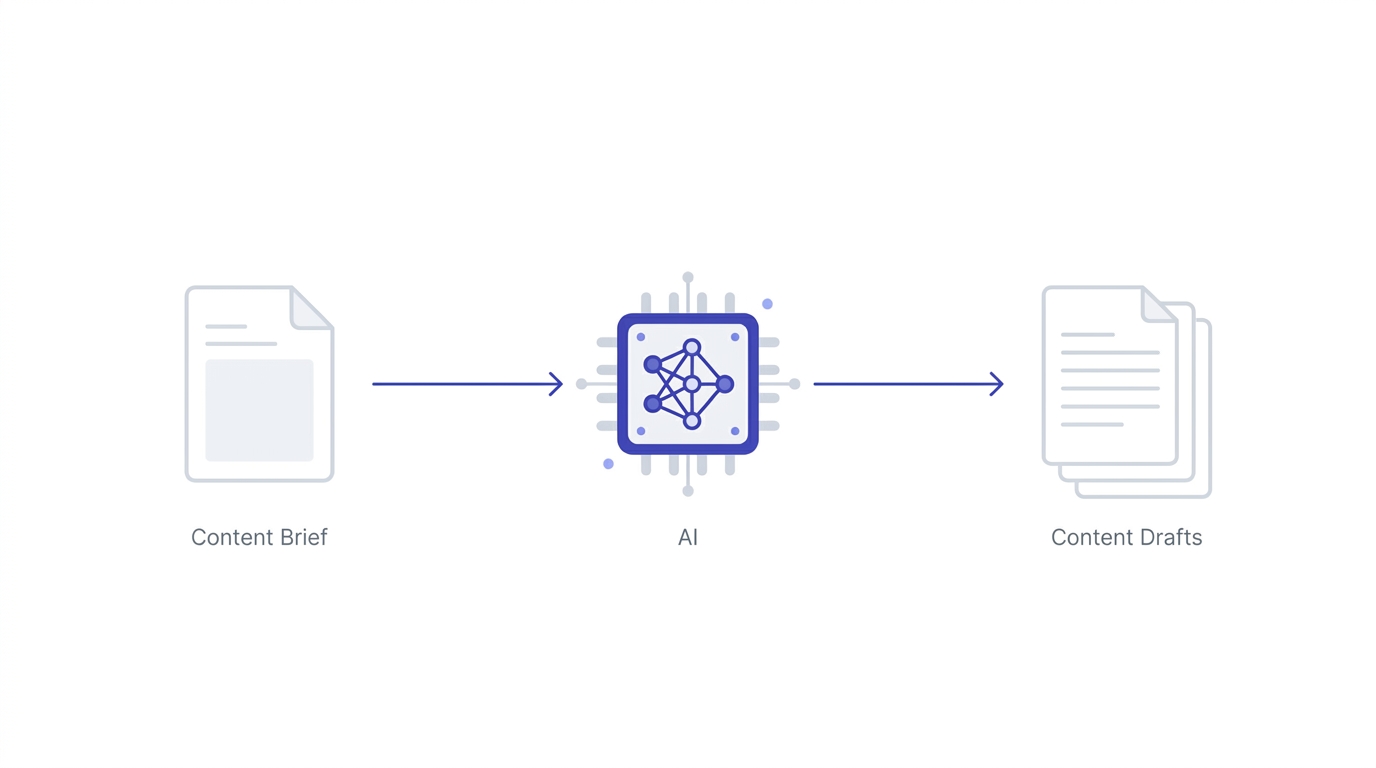
The actual workflow inside most competent marketing teams right now looks like this: a brief goes into an AI tool with specifics (target keyword, audience, tone, length, examples of past top-performing content), a draft comes out in minutes, and a human editor spends the real time on the parts that matter, the hook, the specific claims, the examples, and anything that needs a fact check.
Here’s the thing most guides skip: the quality of the AI output is almost entirely dependent on the quality of the input. A vague prompt like “write a blog about skincare” produces generic, forgettable content that reads exactly like every other AI-generated skincare post online. A prompt that includes the exact audience (say, women aged 25 to 34 dealing with hormonal acne), the tone (empathetic but not preachy), a specific product angle, and two example paragraphs of writing style the brand likes, produces something usable. The gap between those two outputs is enormous, and most people never bother closing it.
The mistake most people make at this step is treating the first output as the final output. AI-generated first drafts are strong on structure and weak on specificity. They tend to make claims without numbers, use generic examples instead of real ones, and default to safe, hedge-everything language. A human pass that adds one real statistic, one named example, and cuts every sentence that doesn’t add new information turns a mediocre AI draft into something that actually ranks and actually converts.
The Rise of AI Video and Image Generation in Campaigns
Visual content moved just as fast as written content, arguably faster in the last year. Tools like Midjourney, Adobe Firefly, and Canva’s Magic Studio replaced a huge chunk of stock photography and basic graphic design work. Runway and Sora-style video generation tools now produce short-form ad creative that would have needed a videographer, a studio booking, and a full day of shooting eighteen months ago.
A D2C skincare brand running Instagram ads doesn’t need to book a model and a photographer for every product variant anymore. AI-generated lifestyle imagery, refined with two or three rounds of prompt adjustment, gets a usable creative asset out the door in an hour. That’s not a small efficiency gain. That’s the difference between testing three ad creatives a month and testing thirty.
But there’s a ceiling here that a lot of brands are running into. AI-generated visuals still struggle with brand consistency across a large campaign, and audiences on platforms like Instagram and TikTok have gotten sharp at spotting the slightly-off quality of fully AI-generated video, the uncanny valley effect on human faces, the weird texture on hands, the lighting that’s technically correct but feels artificial. Brands selling trust-heavy products (skincare, health, finance) are seeing lower engagement on obviously AI-generated visuals compared to real photography, even when the AI version is objectively cleaner.
Honestly, the brands handling this best right now aren’t the ones going all-in on fully synthetic video. They’re using AI generation for the parts nobody scrutinizes closely, background plates, product close-ups, variation testing on a background color or a layout, while keeping real human faces and real product-in-hand shots for anything that needs to build trust. That’s a mixed workflow, not a full replacement, and it’s the version that actually holds up when a customer looks closely instead of scrolling past.
Why Human Editing Still Decides Whether Content Works
Here’s what most people get wrong about AI content: they assume the AI is the writer and the human is just a supervisor. It’s closer to the opposite. The AI is a very fast, very well-read intern. The human is the editor who actually knows the audience, knows what claims are legally defensible, knows which examples will land with this specific reader, and knows when a sentence sounds like it was written by a robot trying to sound human (a phrase like “in today’s fast-paced digital world” is basically a signature at this point).
Google’s helpful content guidance has been consistent on this point for a while now: content quality gets judged on whether it demonstrates real experience and expertise, not on whether a human or a machine typed the words. A 100% unedited AI draft published as-is almost always reads thin. It lacks the specific, first-hand detail that separates content someone can trust from content that’s technically accurate but forgettable.
The teams getting the best results treat AI as a drafting tool, not a publishing tool. The editing pass adds the things AI can’t fabricate honestly: a real number from a real campaign, a specific mistake made and fixed, an opinion that goes against the obvious consensus. That’s also, not coincidentally, exactly what search engines and AI answer engines reward with visibility, which connects directly to the next section.
Mistakes Marketers Make When Outsourcing to AI
The most common mistake is publishing without a fact-check pass. AI models still make up statistics, misattribute quotes, and confidently state outdated information as current fact. A marketing team that publishes an AI-drafted article citing a “recent study” that doesn’t actually exist is one Google penalty or one embarrassing public correction away from a real credibility problem.
The second mistake is style collapse. When five different writers on a team all use the same AI tool with the same default settings, every piece of content starts sounding identical, same sentence rhythm, same transition phrases, same slightly-too-polished tone. Readers notice this even if they can’t articulate why a brand’s blog suddenly feels flat. The fix is building a documented style guide with real example paragraphs and feeding that into every prompt, not relying on the tool’s default voice.
The third mistake, and the most expensive one, is skipping originality entirely. If every competitor in a niche is using the same AI tool with similar prompts, the resulting content converges toward the same structure and the same insights. The content that actually stands out in 2026 is the content that adds something the AI genuinely couldn’t generate on its own: a real case study, a contrarian opinion backed by data, an interview with an actual customer. A structured digital marketing foundation makes it a lot easier to spot where AI drafts need that human layer added, because you actually understand what “good” looks like for the specific channel and audience instead of just accepting whatever the tool hands back.
How AI Is Changing Digital Marketing Through Search Visibility and AI Overviews
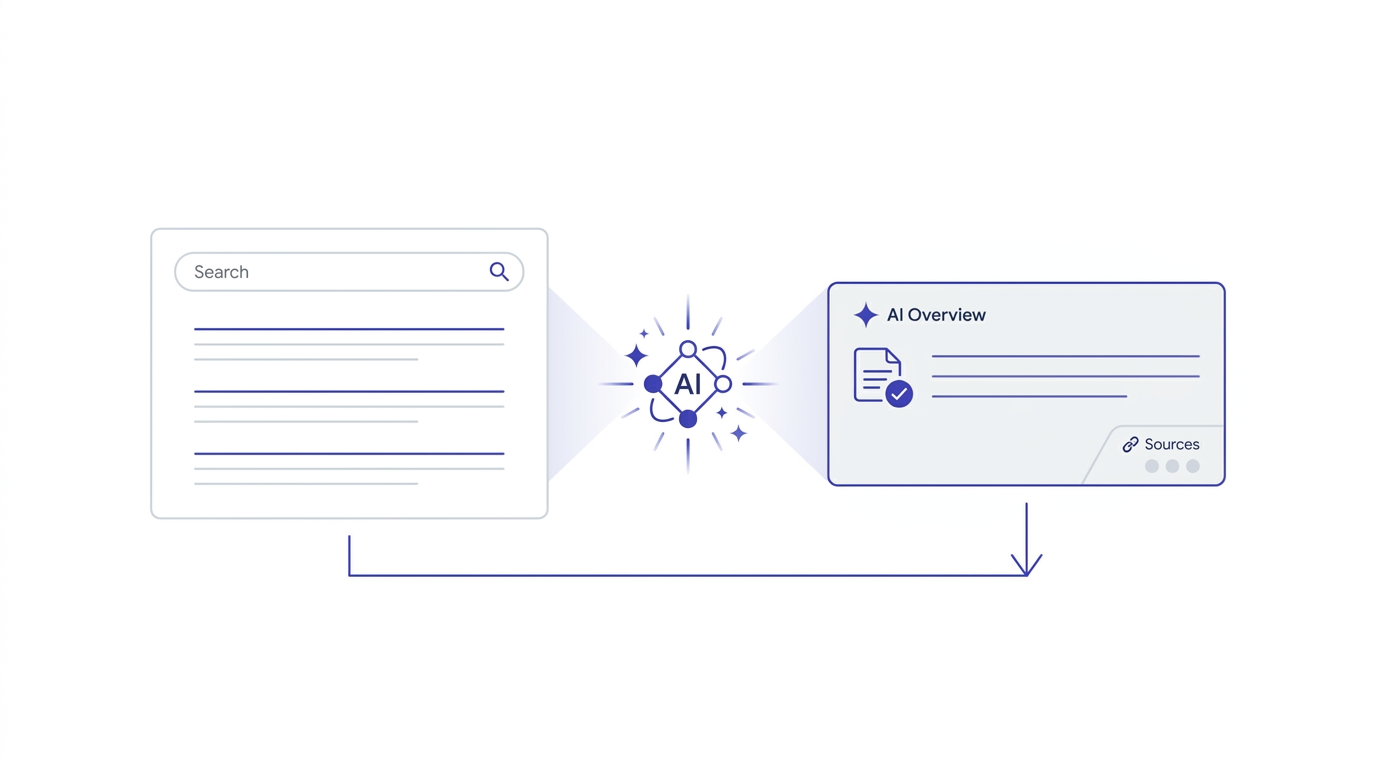
Search changed more in the last eighteen months than in the previous eight years combined, and this is where the phrase “how AI is changing digital marketing” stops being an abstraction and starts costing real traffic. Google’s AI Overviews (the AI-generated summary block that now appears above organic results for a large share of informational queries) answers the user’s question directly on the results page. For a lot of searches, that means the user never clicks through to a website at all.
This is the single biggest shift SEO professionals are dealing with right now, and a large chunk of the industry is still writing content strategies as if 2019-era SEO rules apply. They don’t, not fully, not anymore.
A useful way to think about it: search used to be a directory. You typed a question, Google handed you a ranked list of doors, and you picked one to walk through. Search is turning into an answer desk instead, where the person behind the desk reads through several doors’ worth of information and just tells you what’s behind them, only occasionally pointing you toward a specific door. That’s a genuinely different relationship between a website and the person searching, and treating it like the old directory model is exactly why so many content teams are watching traffic numbers slide without understanding why their rankings look fine on paper.
What AI Overviews and AI Mode Actually Changed in Google Search
AI Overviews pull information from multiple sources, synthesize it into a direct answer, and display it at the top of the page, often with small citation links to the sources used. Google’s own data and multiple third-party studies through 2025 pointed to meaningful click-through rate drops for queries that trigger an AI Overview, particularly for straightforward informational searches like “what is X” or “how does Y work.”
Google’s AI Mode pushed this further, turning search into something closer to a conversation, where a user can ask a follow-up question and get a synthesized answer pulling from several sources without ever seeing a traditional list of ten blue links. For publishers and marketers who built their entire traffic strategy around ranking for informational keywords, this hurts. Top-of-funnel “what is” and “how to” content that used to reliably pull in traffic now often just gets summarized without a click.
The queries that still drive clicks are the ones where the user wants more than a summary: comparison shopping, deep how-to guides with a process to actually follow, opinion and analysis content, and anything transactional where the user needs to actually visit a site to complete an action. Understanding that split matters more right now than almost any other single SEO decision a content team makes.
Answer Engine Optimization: Writing for ChatGPT, Perplexity, and Gemini
This is the part almost nobody was talking about two years ago and everybody is scrambling to learn now: Answer Engine Optimization, or AEO. It’s the practice of structuring content so AI tools like ChatGPT, Perplexity, and Google’s Gemini can extract it cleanly and cite it in their generated answers.
The mechanics are different from traditional SEO in a few specific ways. AI answer engines favor content where the first sentence of a section is a complete, self-contained answer, not a lead-in that requires reading three more sentences to understand the point. They favor pages with clear factual density: named tools, real numbers, dated information, specific frameworks, rather than vague, hedge-everything language. And they favor sites that already have some authority signal, meaning AEO doesn’t replace traditional SEO fundamentals like backlinks and site structure, it sits on top of them.
A practical example: if a page about “email open rate benchmarks” states the actual benchmark number for a specific industry in the first sentence of that section, an AI tool can lift that sentence directly into its answer with a citation. If the same information is buried in the fourth paragraph after two paragraphs of context-setting, the AI tool is far less likely to use it, because it’s harder to extract cleanly. The content that wins in this environment writes the direct answer first and the explanation second, every single time, in every section.
The Traffic Drop Nobody Talks About and What to Do Instead
Here’s the uncomfortable part. For a meaningful chunk of informational content, traffic just isn’t coming back to pre-AI-Overview levels, no matter how well the content is optimized. That’s a real shift, not a temporary dip to wait out.
What most people get wrong is treating this as a reason to abandon content marketing. It’s actually a reason to change what content gets prioritized. Bottom-of-funnel content (product comparisons, buyer’s guides with specific recommendations, pricing breakdowns, case studies) still pulls clicks because users genuinely need to visit the site to make a decision or complete a transaction. Top-of-funnel definitional content is where the traffic erosion hits hardest, because that’s exactly the kind of query an AI Overview answers completely on its own.
The practical response for a small business or a solo marketer isn’t to stop writing “what is” content entirely. It’s to stop expecting it to be a primary traffic driver and start using it as a citation and authority-building play instead. Getting cited inside an AI Overview or a ChatGPT answer, even without a click, still builds brand recognition. Someone who sees a brand name cited three times while researching a purchase decision is more likely to trust that brand when they hit the comparison stage later, where the real traffic and conversions happen. Anyone building a content strategy from scratch right now should start with a solid SEO foundation, because the fundamentals of keyword intent and site structure matter just as much in an AI-search world, they just get applied differently.
A Practical AEO Checklist You Can Apply This Week
- Rewrite the opening sentence of every H2 and H3 section so it answers the heading’s implied question completely on its own, without needing the next two sentences for context.
- Add specific numbers, dates, and named tools wherever a claim is currently vague (“many marketers” becomes “a 2025 survey of 400 marketers found”).
- Structure comparison content in tables where possible; AI tools extract tabular data cleanly and it also wins featured snippets on traditional Google.
- Check what ChatGPT, Perplexity, and Gemini currently say about the topic before writing, and identify the gap or the outdated information in their current answers.
- Keep publishing bottom-of-funnel content (comparisons, reviews, pricing guides) as the priority, since that’s where clicks still convert into actual traffic and revenue.
How AI Is Changing Digital Marketing Advertising and Paid Media Targeting
Paid media is where the shift has been the most disruptive to the actual day-to-day job, and it’s also where the fashion-brand story from the opening of this guide plays out across thousands of ad accounts every single day. Manual bidding, manual audience building, and manual A/B testing, the core skills a paid media manager built a career on for a decade, are being replaced by automated systems that just do it faster and, often, better.
Google Performance Max and Meta Advantage+ Explained Simply
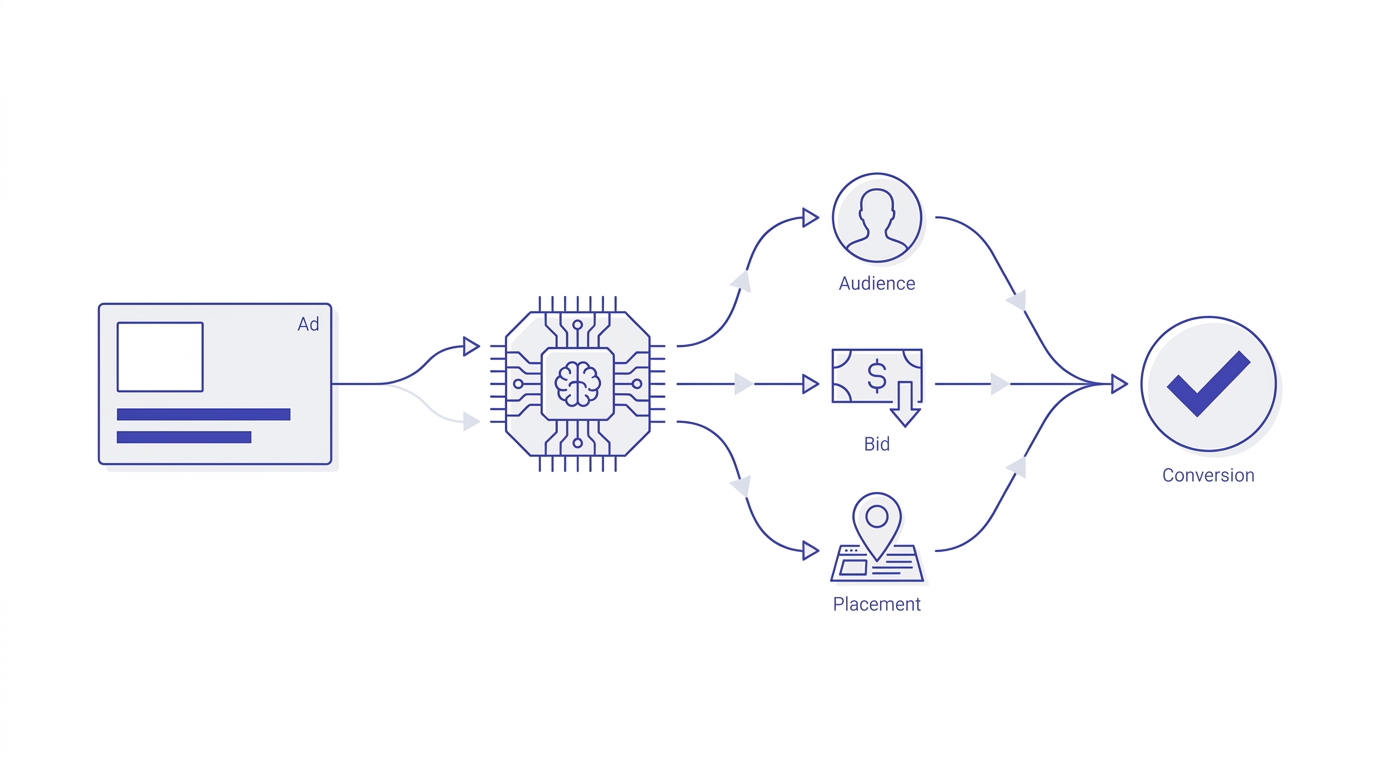
Performance Max is Google’s fully automated campaign type. Instead of building separate campaigns for Search, Display, YouTube, and Shopping, a marketer feeds Performance Max a single set of assets (headlines, images, videos, a budget, and a conversion goal) and Google’s AI decides where to show the ad, to whom, at what bid, across all of its inventory at once.
Meta’s Advantage+ shopping campaigns work on the same basic principle for Facebook and Instagram. Instead of manually building ten different audience segments and testing each one, a marketer uploads a product catalog and a budget, and Meta’s algorithm figures out the audience targeting on its own, adjusting in real time based on what’s actually converting.
For a beginner, the mechanism to understand is this: these systems work by testing thousands of combinations of creative, placement, and audience against real-time conversion signals, something no human team could physically do at that scale or speed. A campaign manager running Performance Max isn’t picking audiences anymore. They’re feeding the machine better inputs (better creative assets, cleaner conversion tracking, a properly configured product feed) and then reading the output to decide what to feed it next.
Predictive Bidding and What It Means for Your Budget
Predictive or automated bidding takes a specified goal, like target cost-per-acquisition or target return on ad spend, and adjusts bids in real time across every single auction the ad participates in, something that happens thousands of times per day for even a mid-size account. This replaced manual bid adjustment almost entirely for accounts spending above a certain threshold, because the AI system reacts to auction-level signals (time of day, device, user intent signals) far faster than a human checking a dashboard once a day ever could.
The catch that trips up a lot of accounts is data volume. Automated bidding needs a meaningful amount of conversion data to actually learn what “success” looks like. An account with fewer than 30 conversions a month feeding into a Performance Max campaign is often giving the algorithm too little signal to optimize properly, and the result is worse performance than a well-run manual campaign would have delivered. This is the part of automated bidding almost nobody explains clearly: the AI isn’t magic, it’s a pattern-matching system that needs enough real conversions to find the pattern in the first place.
The mistake most people make here is turning on automated bidding and then constantly interfering with it, adjusting budgets or pausing the campaign every few days. These systems need a stable learning period, typically one to two weeks, to actually calibrate. Constant manual interference resets that learning process and keeps the campaign in a permanent state of relearning, which tanks performance.
That’s the part that’s genuinely hard for a lot of experienced media buyers to accept, honestly. Someone who spent years getting rewarded for reacting fast, checking the account every morning and making a small tweak, has to unlearn that instinct almost entirely. The new skill is closer to patience than reaction speed: set the inputs up properly, resist the urge to touch it for the first ten to fourteen days, then look at the actual data before making any change. A budget increase during the learning phase, even a well-intentioned one meant to speed up results, is one of the most common ways a promising Performance Max campaign gets sent back to square one.
AI-Generated Ad Creative: What Works and What Falls Flat
Both Google and Meta now generate ad copy variations automatically inside their platforms, testing different headline and description combinations against each other without a human writing every version by hand. This is genuinely useful for volume: a campaign that used to run five headline variations can now run twenty, and the platform finds the winning combination faster.
What falls flat is relying entirely on auto-generated copy without a human review pass for brand voice and accuracy. AI-generated headlines sometimes produce technically correct but tonally off copy, overly salesy language for a brand that’s usually understated, or claims that are directionally true but imprecise enough to cause a compliance issue in regulated industries like finance or healthcare advertising. A pharma or fintech brand running fully automated ad copy without review is taking on real regulatory risk, not just a brand voice inconsistency.
The teams getting the best results treat AI-generated creative the same way they treat AI-generated content: as a fast first pass that a human refines, not a finished product to trust blindly. Feeding the system stronger creative inputs, sharper value propositions, cleaner product images, more specific headline seeds, produces meaningfully better automated output than leaving the defaults untouched.
The New Skill Paid Media Managers Need in an Automated Auction
The job hasn’t disappeared, it moved up a level. A paid media manager in 2026 spends less time in the bid-adjustment weeds and more time on the inputs that actually move the automated systems: conversion tracking accuracy, first-party data quality, creative testing strategy, and cross-channel budget allocation decisions that the AI systems can’t make on their own because they only optimize within their own platform.
This is a genuinely bigger, more strategic version of the old job, not a smaller one. Someone who understands why a conversion tracking setup is misfiring, or why a product feed is missing critical attributes that Performance Max needs to categorize inventory correctly, is worth more to a team than someone who could manually adjust bids well but doesn’t understand the data plumbing underneath the automated systems. This is also where before-and-after results get made or lost. Reading real case studies of accounts that switched to automated bidding, including the ones where it went badly at first, teaches more about the actual mechanics than any platform help doc, because it shows what the input side looked like before performance improved.
How AI Is Changing Digital Marketing Personalization and Customer Experience
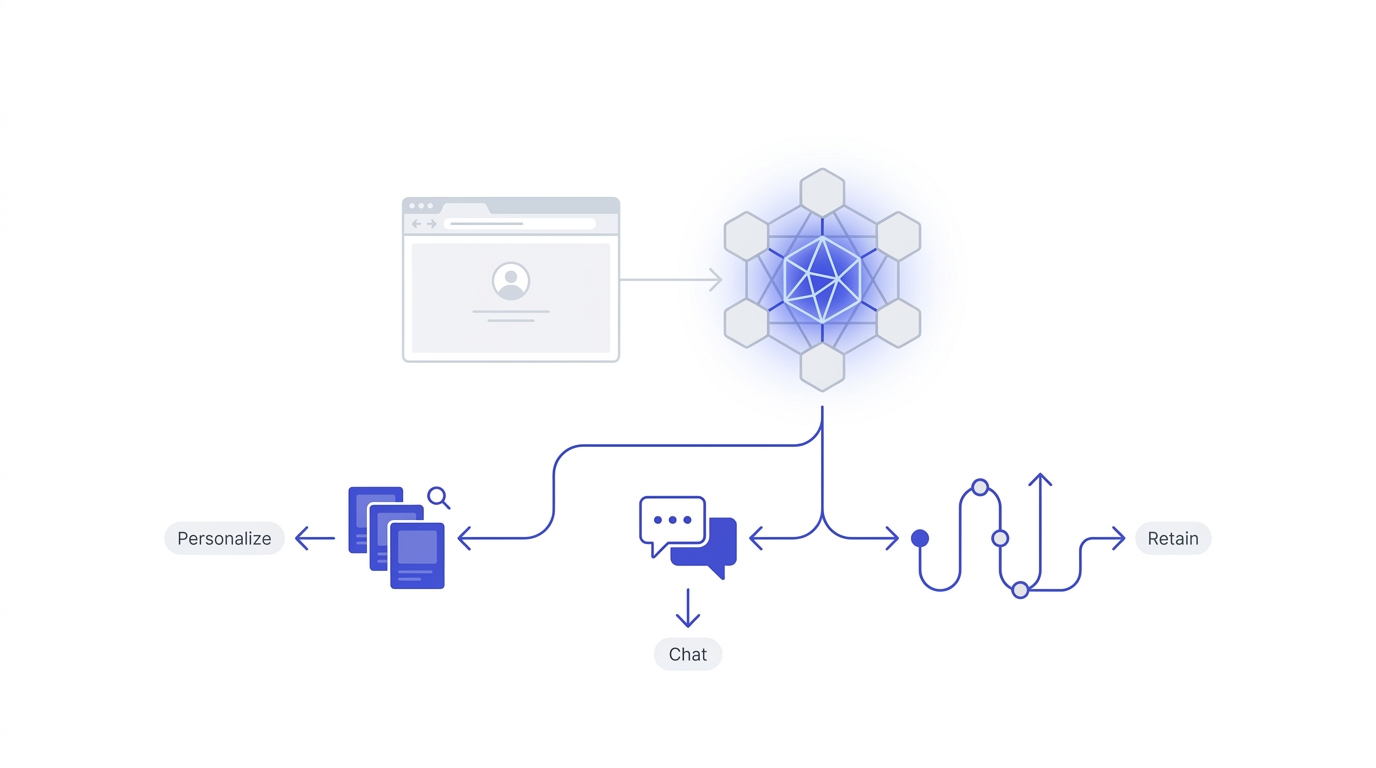
Personalization used to mean inserting a customer’s first name into an email subject line and calling it a day. That’s almost embarrassingly basic compared to what machine learning-driven personalization does now, and the gap between brands doing this well and brands doing it badly has never been wider.
The interesting part is that customers themselves have gotten more sensitive to this, not less. A shopper in 2020 was impressed by a website remembering their name. A shopper today expects a website to remember their size, their preferred payment method, and roughly what they browse for, and gets mildly annoyed when it doesn’t. That rising baseline expectation is exactly why the brands still doing basic, static personalization are starting to feel dated, even if nothing about their actual product changed.
Dynamic Website Personalization Powered by Machine Learning
E-commerce platforms now adjust what a visitor sees in real time based on browsing behavior, purchase history, and even signals like time of day and device type. A returning visitor who abandoned a cart with a specific product sees that product resurface on the homepage. A first-time visitor coming from a Google search for “affordable running shoes” sees a different hero banner than someone who arrived from an Instagram ad for a premium sneaker collection, even on the exact same website, at the exact same moment.
This works because machine learning models process behavioral signals at a scale and speed no rules-based system ever could. A traditional “if visitor did X, show Y” rule engine can handle maybe a dozen conditions. A machine learning model factors in hundreds of signals simultaneously and adjusts the recommendation continuously as new data comes in, which is why product recommendation engines on major e-commerce platforms keep getting more accurate the longer a customer shops on the site.
The mistake brands make here is over-personalizing on thin data. A visitor who looked at one product for eight seconds isn’t giving the system enough signal to build an accurate profile, and aggressive personalization based on weak signals produces recommendations that feel random or, worse, slightly off in a way that damages trust rather than building it. Personalization built on strong first-party data (actual purchase history, repeated behavior patterns) performs dramatically better than personalization guessing from a single page view.
AI Chatbots and Conversational Commerce on WhatsApp and Websites
Customer service and even sales conversations have shifted heavily toward AI-powered chat, and the quality gap between 2020-era chatbots and current systems is enormous. Tools built on large language models handle genuinely complex, multi-turn conversations now, answering product questions, processing simple returns, and even completing sales, especially on WhatsApp, which has become a massive commerce channel across India and Southeast Asia in particular.
A D2C brand running a WhatsApp-based AI assistant can handle order status questions, size and fit recommendations, and basic troubleshooting at a volume that would require a large human support team otherwise, at any hour, in the customer’s preferred language. Platforms like Intercom and Drift built entire product lines around this shift, layering AI response generation on top of existing chat infrastructure that used to rely on scripted decision trees.
The part that separates good implementations from bad ones is knowing when to hand off to a human. A chatbot confidently giving a wrong answer about a return policy, or getting stuck in a loop when a customer asks something outside its training, does more brand damage than not having a chatbot at all. The best setups have a clear, fast escalation path to a human agent the moment the AI hits a query it can’t handle well, rather than forcing the customer to fight through a frustrating loop first.
Predictive Customer Journeys and Churn Prediction
This is one of the less visible but genuinely high-impact applications of AI in marketing right now. Machine learning models trained on historical customer data can predict, with meaningful accuracy, which customers are likely to churn before they actually cancel a subscription or stop purchasing, based on patterns like declining engagement frequency, reduced email open rates, or a drop in average order value.
A subscription business using this well doesn’t wait for a customer to cancel and then send a generic win-back email. It identifies the early warning signals, maybe a customer who used to log in daily now logs in twice a week, and triggers a targeted intervention (a personalized offer, a check-in message, a feature they haven’t tried yet) before the customer disengages completely. Salesforce Einstein and similar platforms built entire product categories around this predictive layer, sitting on top of existing CRM data that most companies already had but weren’t using this way.
The specific mistake companies make is building churn prediction models on too narrow a dataset and then acting on false positives, sending “we miss you” discounts to customers who were never actually at risk of leaving, which trains loyal customers to expect a discount every time they slow down slightly. Good churn prediction needs enough historical data and enough validated signal before it gets tied to automated action, otherwise it creates the exact problem it was built to prevent.
There’s a slower, less exciting version of this that actually works better for most mid-size businesses: start with a simple, transparent set of rules built from your own churn history (a customer who hasn’t opened the app in 21 days plus a drop in order frequency, say) before jumping to a fully automated predictive model. That simpler version is easier to audit, easier to explain to a boss asking why a specific customer got a specific offer, and often catches 80% of the same risk signals a more complex model would, without the false-positive problem that comes from a black-box system nobody on the team fully understands.
Where Personalization Turns Creepy and Loses Trust
Here’s the part almost every AI marketing guide skips, and it matters more every year: there’s a real, measurable line between personalization that feels helpful and personalization that feels invasive, and crossing it costs trust fast. A customer seeing a relevant product recommendation feels helped. A customer seeing an ad for a product they only discussed out loud near their phone, or a retargeting ad that follows them so aggressively it feels like surveillance, feels violated, and that feeling sticks.
Privacy regulation has been tightening globally, and India’s Digital Personal Data Protection Act adds real compliance requirements around how customer data gets collected, stored, and used for exactly this kind of personalization. Brands that treat data collection as a checkbox exercise rather than a trust-building exercise are going to run into both regulatory risk and customer backlash as awareness of these issues grows.
The practical guideline that holds up: personalization should feel like the brand remembered something the customer told it directly or clearly implied through behavior on that brand’s own platform, not something it inferred from a data source the customer never knowingly interacted with. That distinction, obvious in theory, gets crossed constantly in practice because it’s technically easy to combine third-party data sources into a personalization engine without stopping to ask whether it should be done.
How AI Is Changing Digital Marketing Careers, Tools, and the Skills That Matter Now
This is the question underneath every other section in this guide, and it’s the one people actually search for at 1 a.m. when they’re anxious about their career. What does all of this mean for the actual job of being a digital marketer, right now, in practical terms?
Nope, this isn’t going to be a section that dodges the anxiety with a vague “adapt or get left behind” line and moves on. Look at what actually happens inside teams that went through this shift over the last two years. The people who lost roles weren’t the ones who used AI tools. They were the ones whose entire job description was a task an AI tool now does in a fraction of the time, with no strategic layer built on top of it to fall back on. That’s a specific, identifiable risk, not a vague industry-wide threat, and it points to a specific, identifiable fix.
The Jobs That Are Shrinking and the Ones Growing Instead
Roles built entirely around manual, repetitive execution are shrinking fast. Pure content writers who only produce first drafts with no strategic input, junior paid media analysts whose entire job was manual bid adjustment, and basic graphic design roles focused on templated social media graphics are all seeing reduced demand, because AI tools now do the first-draft version of that work faster and cheaper.
Roles growing in demand are the ones sitting on top of the automation layer: marketing strategists who can direct AI tools effectively and edit their output with real judgment, AI-assisted content editors, marketing analysts who understand how to interpret automated system output and feed it better data, and specialists in the newer disciplines like AEO and prompt engineering for marketing use cases. LinkedIn’s own hiring data through 2025 showed consistent growth in job postings mentioning AI tool proficiency as a required skill within marketing roles, even as postings for purely execution-based entry-level roles flattened or declined.
The pattern is consistent across every channel covered in this guide: AI replaced the execution layer, not the strategy and judgment layer. That’s genuinely good news for anyone willing to move up that layer, and genuinely bad news for anyone planning to build a career purely on manual execution skills that AI now does faster.
The New Marketer’s Toolkit: Which AI Tools Are Actually Worth Learning
For content, ChatGPT and Claude handle drafting and research; Jasper and Copy.ai layer marketing-specific templates on top of similar underlying models. For visuals, Midjourney and Adobe Firefly handle image generation, and Canva’s Magic Studio bundles AI features directly into a design workflow most marketers already know. For SEO and AEO, Semrush and Ahrefs both added AI-search visibility tracking features, showing how often a brand gets cited in AI Overviews and ChatGPT answers, which didn’t exist as a trackable metric two years ago.
For paid media, learning the actual mechanics of Google’s Performance Max and Meta’s Advantage+ campaign types matters more than learning any third-party tool, since these are the default automated systems most budgets flow through now. For customer experience, platforms like Intercom, Drift, and Klaviyo (for email and SMS automation with predictive send-time and content optimization built in) cover most of the practical ground a marketer needs.
The mistake to avoid is tool-hopping without building the underlying skill. Knowing which button to click inside ChatGPT or Semrush is not the same as understanding funnel strategy, audience segmentation, or what makes content actually persuasive. Tools change constantly, and the interface that looks unfamiliar today will be outdated in eighteen months anyway. A good habit that costs nothing is keeping a running list, in a plain document or spreadsheet, of which tools actually moved a metric versus which ones just looked impressive in a demo video, because that list becomes more valuable than any single tool subscription over time.
Myths About AI Replacing Marketers That Need to Die
Myth one: AI will fully replace strategists and marketers within a few years. This doesn’t hold up against how these tools actually function. Every AI system covered in this guide, from ChatGPT to Performance Max, requires human-defined goals, human-provided inputs, and human judgment on the output. The tools got dramatically better at execution. They did not get better at deciding what the brand should stand for, what the customer actually values, or which trade-off makes sense for a specific business at a specific moment.
Myth two: using AI tools is basically cheating and produces low-quality work by definition. This confuses the tool with how it’s used. A skilled marketer using AI as a fast first draft and then applying real editorial judgment produces better work, faster, than the same marketer working entirely by hand. An unskilled marketer using AI without judgment produces exactly the generic, forgettable content everyone complains about. The tool isn’t the variable; the skill applying it is.
Myth three: only technical people can work with AI marketing tools. Most of the tools covered here, ChatGPT, Canva’s Magic Studio, Performance Max, are built with plain-language interfaces specifically so non-technical marketers can use them. The actual skill gap isn’t technical, it’s strategic: knowing what to ask for, how to evaluate whether the output is good, and when to override the machine’s suggestion.
How to Future-Proof Your Digital Marketing Career Starting Today
Start by learning to write better prompts, not as a novelty skill but as a genuine competency. The difference between a vague prompt and a specific, well-structured one is the difference between a mediocre AI output and a genuinely useful one, across every tool covered in this guide.
Build a real understanding of the fundamentals that sit underneath every AI tool: funnel strategy, audience psychology, what actually makes content persuasive, how conversion tracking works. These fundamentals are what let a marketer evaluate AI output critically instead of accepting whatever the machine produces. Someone who understands SEO fundamentals deeply can immediately spot when an AI-drafted article is thin on the specificity that actually ranks. Someone who doesn’t just publishes the thin version and wonders why it never ranks.
Get comfortable with the data side, since that’s where AI systems draw their real advantage and where most marketers have the biggest skill gap. Understanding conversion tracking, first-party data collection, and basic reporting isn’t optional anymore, it’s the input layer that determines whether every automated system covered in this guide performs well or badly. A structured path through a proper digital marketing course covers this ground systematically, which matters because piecing it together from scattered YouTube videos tends to leave real gaps in exactly the fundamentals that matter most once the tools do the execution work automatically.
Conclusion
How AI is changing digital marketing comes down to one consistent pattern across every channel covered here: the execution layer got automated, and the strategy and judgment layer became more valuable, not less. Content drafting, ad bidding, basic personalization, and first-line customer support all shifted toward AI-driven automation. Deciding what to say, who to say it to, and whether the machine’s output is actually good, that’s still entirely a human job, and it’s a harder, more valuable job than the manual execution work it replaced.
The marketers struggling right now are the ones who built their entire skill set around manual execution and haven’t moved up the value chain. The ones doing well are treating AI tools as a way to work faster on the parts of the job that were always mechanical, freeing up real time for the strategic thinking that actually separates good marketing from forgettable marketing. That shift isn’t optional at this point. It’s just where the field is.
Frequently Asked Questions
What is the biggest way AI is changing digital marketing right now?
The biggest shift is in search visibility. Google’s AI Overviews now answer many informational queries directly on the results page, reducing organic clicks for that type of content. This pushed marketers toward Answer Engine Optimization, structuring content so AI tools can extract and cite it, alongside traditional SEO rather than instead of it.
Will AI replace digital marketers completely?
No. AI tools automate execution tasks like drafting content, generating ad variations, and adjusting bids, but they still require human-defined strategy, goals, and judgment on the output. Every major AI marketing tool, from ChatGPT to Google’s Performance Max, needs a human to decide what success looks like and to evaluate whether the results are actually good.
What is Answer Engine Optimization (AEO)?
AEO is the practice of structuring web content so AI answer engines like ChatGPT, Perplexity, and Google’s AI Overviews can extract and cite it accurately. It involves writing complete, self-contained answers early in each section, using specific facts and numbers, and maintaining traditional SEO fundamentals like site authority and backlinks.
How is AI changing paid advertising specifically?
AI-driven automated campaign types like Google Performance Max and Meta Advantage+ now handle audience targeting, bid adjustment, and creative testing automatically, based on real-time conversion data. This shifted the paid media manager’s job away from manual bid management toward improving data inputs like conversion tracking accuracy and creative quality that these systems rely on.
Is AI-generated content bad for SEO?
Not inherently. Google has stated it evaluates content quality based on whether it demonstrates real expertise and usefulness, regardless of whether it was drafted with AI assistance. The risk comes from publishing unedited AI drafts that lack specific examples, real data, and fact-checking, which tend to rank poorly because they read as generic.
What AI tools should a beginner marketer learn first?
A beginner should start with ChatGPT or Claude for content drafting and research, Canva’s Magic Studio for basic AI-assisted design, and Google Analytics alongside Google Ads or Meta Ads Manager to understand how automated campaign types actually work. Learning the strategic fundamentals underneath these tools matters more than mastering any single interface.
How does AI-powered personalization actually work on e-commerce sites?
Machine learning models analyze a visitor’s browsing behavior, purchase history, and contextual signals like device type in real time, then adjust product recommendations, homepage content, and even pricing displays to match that specific visitor’s likely intent. This works best with strong first-party data and performs poorly when built on thin, single-visit signals.
What is the difference between Performance Max and a traditional Google Ads campaign?
A traditional campaign requires manually building separate ad groups for Search, Display, and Shopping with defined audiences and manual bids. Performance Max is a single, fully automated campaign type where Google’s AI decides placement, audience, and bid amount across all its ad inventory simultaneously, based on a specified conversion goal and a set of creative assets.
Are AI chatbots actually good for customer service?
They handle high-volume, repetitive queries like order status and basic product questions well, especially on channels like WhatsApp where instant response matters. They perform poorly on complex or emotionally sensitive queries, so the best implementations include a fast, clear handoff to a human agent whenever the AI hits a question it can’t answer confidently.
Why did my website traffic drop even though my SEO rankings stayed the same?
This is usually caused by AI Overviews or AI Mode answering the user’s query directly on the search results page, so users get their answer without clicking through, even if a page still ranks well. This mainly affects informational “what is” and “how to” content, while transactional and comparison content generally retains clicks because users need to visit the site to complete an action.
Is it worth learning digital marketing skills if AI can do most of the work now?
Yes, and arguably it matters more now, not less. AI tools automate the mechanical execution work but require a human who understands strategy, audience psychology, and data to direct them effectively and judge whether the output is actually good. Without that foundation, a marketer just produces generic, unedited AI output that performs poorly across every channel covered in this guide.
What industries are seeing the fastest AI adoption in marketing?
E-commerce and D2C brands adopted AI-driven personalization and automated ad bidding the fastest, since the data volume and clear conversion goals make automated systems learn quickly. SaaS and B2B companies adopted AI content tools and predictive churn modeling fastest, since long sales cycles and subscription models generate the kind of behavioral data these systems need.