

A marketer at a mid-size D2C brand spent six hours writing product descriptions for 40 SKUs last month. Someone on her team ran the same task through an AI tool in under twenty minutes, then spent an hour editing the output into something that actually sounded like the brand. Same result. One-sixth of the time. That gap is the whole reason so many people are typing “what is AI in digital marketing” into Google right now, and honestly, most of the answers out there are either too vague (“AI helps you work smarter”) or too technical (explaining neural networks to someone who just wants to know if they should use ChatGPT for their Instagram captions).
So let’s fix that here. What is AI in digital marketing, in plain terms? It is software that can analyze data, generate content, predict outcomes, and make decisions inside your marketing work, without a human manually doing every single step. That covers a lot of ground: a chatbot answering a customer at 2 AM, an algorithm deciding which of your ad creatives gets shown to which audience, a tool that writes a first draft of an email subject line, or a system that flags which leads are most likely to convert before your sales team even calls them.
None of this is science fiction anymore. It’s sitting inside tools most marketers already use daily, like Google Ads, Meta Ads Manager, HubSpot, and Mailchimp. The tricky part isn’t accessing AI. It’s knowing where it actually helps, where it quietly wastes your time, and how to use it without your content sounding like everyone else’s content, because right now a huge chunk of the internet reads exactly the same because everyone hit “generate” and shipped the first draft.
There’s also a trust problem worth naming upfront. A lot of marketers tried an AI tool once, got a mediocre result because they typed a vague one-line prompt, and wrote off the whole category as overhyped. That’s a bit like trying Excel once without learning a single formula and deciding spreadsheets don’t work. The tools genuinely are useful. The gap is almost always in how specifically someone directs them, how much context they hand over, and whether they edit the output before shipping it. That gap is exactly what this guide is trying to close.
This guide walks through what AI in digital marketing actually is, the specific types of AI tools doing the heavy lifting, how they show up across SEO, ads, email, and social, how personalization is quietly reshaping the customer journey, a step-by-step way to start using AI without breaking your workflow, real tools worth trying, the mistakes that trip up beginners, how to actually measure ROI once a tool is in place, and where this is all heading. No filler, no buzzwords for the sake of buzzwords, just what actually matters if you’re trying to learn this properly.
What You Will Learn in This Guide
- What AI in digital marketing actually means, and how it’s different from basic automation
- The four core types of AI technology powering most marketing tools today
- How AI shows up specifically inside SEO, paid ads, email, and social media
- A four-step framework for adopting AI into your marketing workflow without chaos
- Real tools beginners use right now, including free options and ones to avoid
- The most common mistakes people make with AI in marketing, and how to skip them
- Where AI in digital marketing is heading and which skills are worth learning today
What Is AI in Digital Marketing?
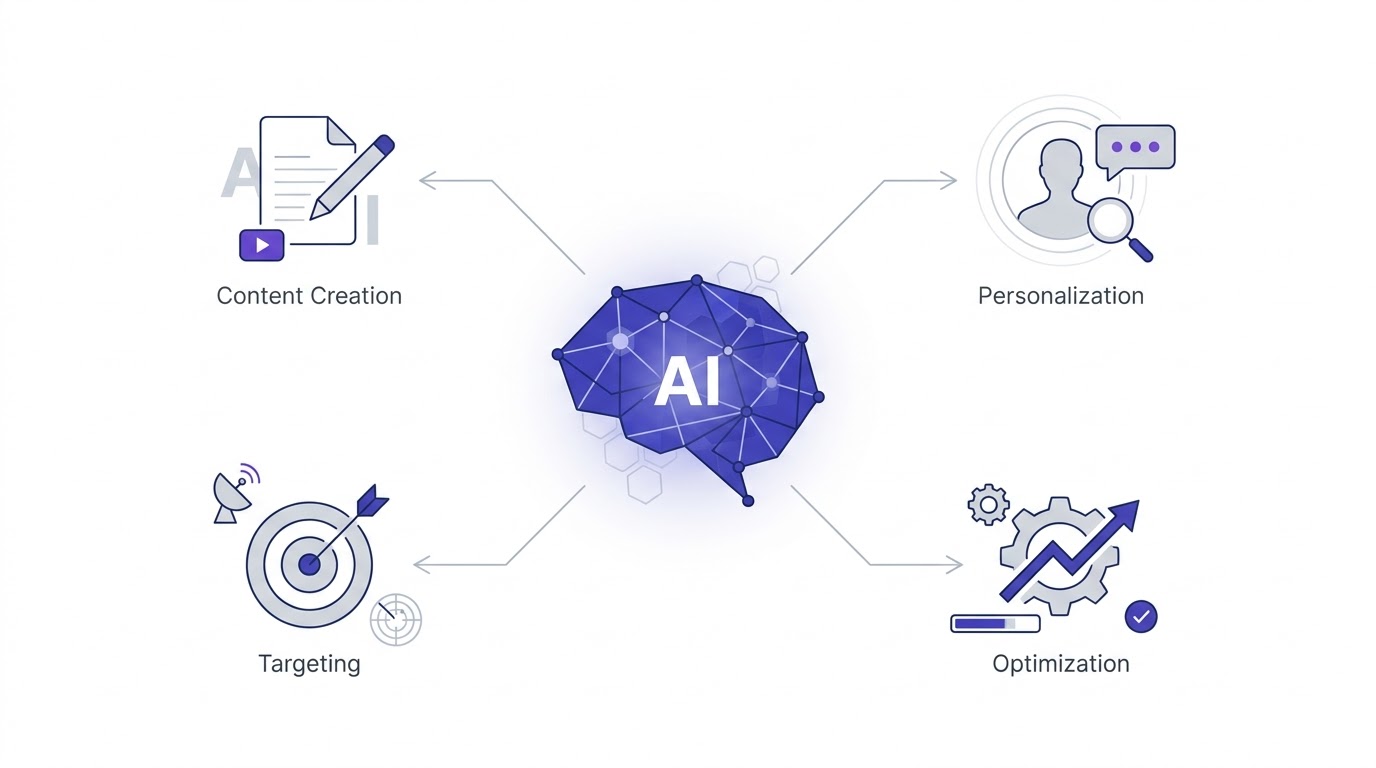
What is AI in digital marketing? It’s the use of machine-based systems, algorithms trained on data rather than hand-coded rules, to perform marketing tasks that used to require a human doing manual analysis or manual creation. That includes writing, designing, targeting, predicting, personalizing, and optimizing, often faster and at a scale no single marketer could manage alone.
Here’s the part beginners usually miss: AI in marketing isn’t one tool or one feature. It’s a layer sitting underneath dozens of platforms you might already be using. When Google Ads automatically adjusts your bids based on likelihood to convert, that’s AI. When Netflix recommends a show, that’s the same underlying technology applied to content instead of ads. When a Shopify store shows “customers also bought” suggestions, an algorithm trained on purchase patterns is making that call in real time.
How AI Actually Works Behind a Marketing Campaign
Most marketing AI runs on pattern recognition. You feed a system a large amount of historical data, past ad performance, past email open rates, past customer purchase behavior, and the system learns which patterns correlate with an outcome you care about, like a click, a purchase, or a signup. Once it has learned those patterns, it applies them to new, unseen data to make a prediction or a decision.
Take Google’s Performance Max campaigns as an example. Feed it your product feed, some creative assets, and a target return on ad spend. The system then tests thousands of combinations of images, headlines, and audiences across Search, YouTube, Display, and Gmail simultaneously, something no human media buyer could physically test manually within the same timeframe. It’s not “smart” in the way a person is smart. It’s fast at spotting statistical patterns across huge datasets, which is a different skill entirely, and one that happens to be extremely useful for advertising.
The Difference Between Automation and AI (People Confuse These Constantly)
This trips up almost every beginner, so it’s worth being precise about it. Automation follows fixed rules: “if a user abandons their cart, send email A three hours later.” That rule never changes unless a human edits it. AI, on the other hand, adjusts its own behavior based on new data: “test five different subject lines for this cart-abandonment email, learn which one gets more opens for which type of customer, and shift the mix automatically without anyone touching the settings.”
A basic email autoresponder is automation. Mailchimp’s Send Time Optimization, which studies when each individual subscriber tends to open emails and delivers to them at that specific time, is AI. Both are useful. But if you’re evaluating a tool and the vendor says “AI-powered” and it’s really just a fixed if-this-then-that rule with no learning involved, that’s marketing spin, not actual AI. Knowing the difference saves you from paying extra for a feature that isn’t doing anything smarter than a basic Zapier workflow would.
Where AI Actually Sits Inside the Tools You Already Use
Here’s something worth sitting with for a second: most marketers have been using AI for years without calling it that. Spam filters in Gmail are AI. The order products appear in on an Amazon search result is AI. The way Facebook decides which of your friends’ posts show up first in your feed is AI. None of that felt like “AI” because nobody marketed it that way at the time.
The same quiet integration is happening across marketing software right now. Log into HubSpot and the “ideal send time” suggestion sitting next to your email draft is a machine learning model. Open Semrush and the content gap analysis flagging topics competitors cover that you don’t is pattern recognition trained on ranking data. Nobody needs to install a separate “AI tool” to start benefiting from this, because it’s already embedded inside the software most teams pay for anyway. The actual skill gap isn’t access to AI. It’s knowing which of these existing features to switch on and trust, and which ones to double-check before relying on them for a real decision.
Why This Question Matters More Right Now Than It Used To
Search interest in “what is AI in digital marketing” has climbed steadily because the tools crossed a threshold in the last two years: they went from “interesting but clunky” to “genuinely faster than doing it manually, most of the time.” ChatGPT, Claude, and Gemini can now produce a usable first draft of ad copy in seconds. Midjourney and other image generators can produce a usable creative concept without a designer. That shift changed who gets to compete. A one-person Etsy shop can now run split-tested ad creative that used to require an agency retainer. That’s the real reason this topic isn’t going away: the barrier to using AI dropped to nearly zero, and the barrier to competing without it just went up.
If you want the broader picture of how this fits into marketing strategy overall, not just AI specifically, the digital marketing fundamentals hub is a good place to build that foundation before layering AI tools on top of it.
The Core Types of AI Used in Digital Marketing Today
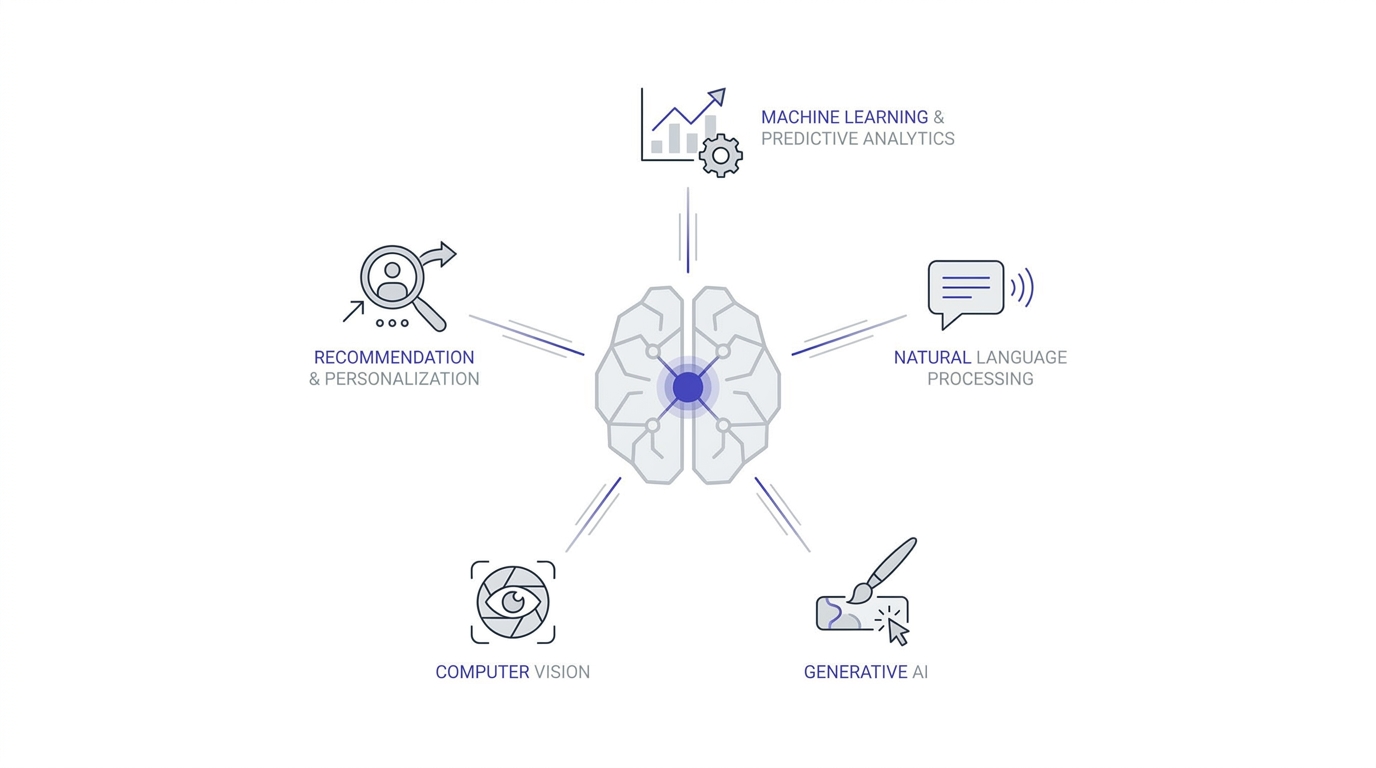
Not all AI is the same technology doing the same job. Marketers throw around “AI” as one umbrella term, but there are four distinct categories worth knowing, because each one solves a different problem and you’ll pick tools differently depending on which one you actually need.
Machine Learning and Predictive Analytics
Machine learning is the branch of AI that studies patterns in numbers: past clicks, past purchases, past churn, past ad spend, and past outcomes. It’s the engine behind lead scoring, churn prediction, and dynamic pricing. HubSpot’s predictive lead scoring, for example, looks at hundreds of data points, like how many pages a visitor viewed, what industry their email domain belongs to, how quickly they replied to a previous email, and assigns a score estimating how likely that lead is to close. Sales teams then prioritize the highest scores first instead of working leads in the order they came in.
The practical use case for a beginner: if you’re running any kind of lead-generation funnel, machine learning-based scoring stops your sales team wasting time on tire-kickers. The mistake most people make here is assuming the score is gospel. It’s a probability based on past patterns, not a guarantee, so treat a high score as “call this one first,” not “this one will definitely buy.”
A B2B SaaS company with a sales team of three reps and a couple hundred inbound leads a month is a good example of where this pays off fastest. Without lead scoring, reps typically work leads in whatever order they arrived, which means a genuinely hot lead from a decision-maker at a mid-size company can sit untouched behind five unqualified sign-ups from students just poking around the product. Turning on even a basic scoring model inside the CRM reorders that queue automatically, and the difference in close rate over a quarter is usually large enough that nobody on the sales team wants to go back to working leads chronologically once they’ve seen it.
Natural Language Processing (Chatbots, Content, and Search)
Natural language processing, or NLP, is what allows a machine to read, understand, and generate human language. It powers three big things in marketing: chatbots that hold a real conversation instead of a rigid decision tree, content generation tools like ChatGPT and Claude, and the way Google itself now interprets search queries through systems like BERT and MUM, understanding the intent behind a phrase rather than just matching keywords.
This last part matters enormously for SEO. Google isn’t matching “best running shoes for flat feet” to a page that repeats that exact phrase fifty times anymore. It’s interpreting the intent (someone with a specific foot condition looking for a recommendation) and ranking pages that actually address that intent with real depth, even if the exact phrase doesn’t appear. That’s part of why keyword stuffing died as a strategy years ago and won’t be coming back.
Generative AI Tools (Content, Copy, and Creative)
Generative AI is the category everyone’s talking about right now: ChatGPT, Claude, Gemini, Midjourney, and tools like Jasper or Copy.ai that are built specifically for marketing copy. These systems don’t retrieve pre-written answers. They generate new text or images token by token, predicting the most statistically likely next word or pixel pattern based on everything they were trained on.
For marketers, this means a first draft of an email sequence, a set of ten headline variations to A/B test, or a rough visual concept for a campaign can be produced in minutes instead of days. The catch, and this is a big one, is that generative AI has no real understanding of your brand voice, your customer, or whether a claim is factually accurate unless you feed it very specific context and then edit its output carefully. Treat it as a fast first-draft machine, not a finished-product machine.
Computer Vision in Ads and Creative
Computer vision lets a system interpret images and video the way NLP interprets text. Meta’s ad platform uses it to automatically identify which elements in your creative (a face, a product, a logo, text overlay) are driving engagement, then recommends creative changes based on that. Pinterest uses computer vision so heavily that you can screenshot an object in a photo and it will find visually similar products for sale. If you’re running visual-heavy campaigns on Instagram or Pinterest, this is the quiet AI layer deciding which of your images even gets shown in the first place.
Recommendation Engines and Personalization Systems
This is the category people interact with the most without realizing it’s AI at all. Amazon’s “customers who bought this also bought,” Netflix’s homepage row order, and Spotify’s Discover Weekly playlist are all built on recommendation engines: models trained on millions of past interactions that predict what a specific individual is likely to want next, based on people with similar behavior patterns.
In marketing, the same underlying technology powers dynamic product recommendations on ecommerce sites and “next best offer” logic inside CRM platforms. Shopify’s Search & Discovery app, for instance, uses this to reorder product listings for each visitor based on their browsing behavior in that session, not a fixed manual order set by the store owner. The reason this matters for a beginner is simple: two people can visit the exact same product page and see a completely different set of recommended items below it, and that difference is measurably moving conversion rate, often by a noticeable margin on stores with enough traffic to generate reliable data. Ignoring this feature because it sounds technical is leaving a fairly easy win on the table.
How AI Shows Up Across Different Digital Marketing Channels
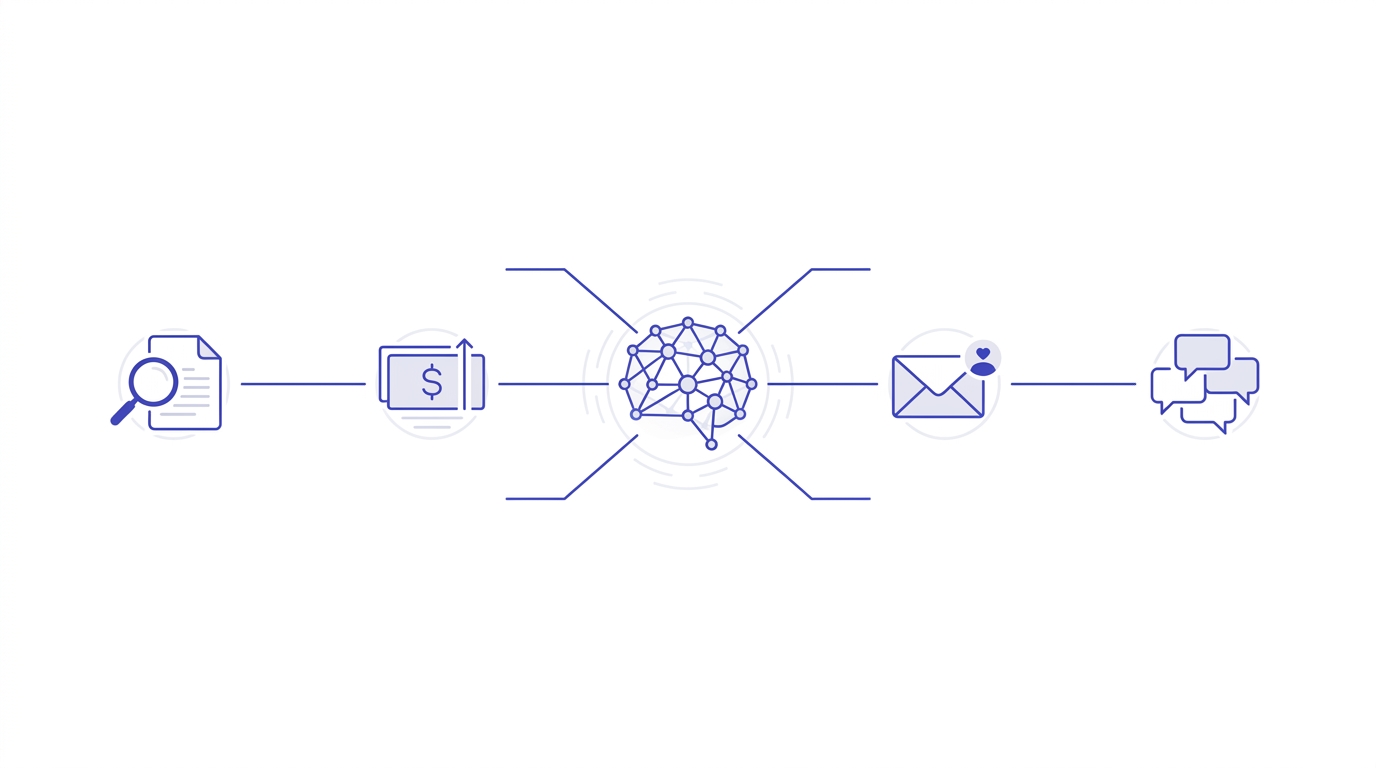
Understanding the categories of AI is one thing. Seeing where they actually plug into day-to-day marketing work is where it gets useful. Here’s the breakdown, channel by channel.
AI in SEO and Content Marketing
SEO tools like Semrush, Ahrefs, and Surfer SEO now use AI to analyze the top-ranking pages for any keyword and tell you what topics, subheadings, and word count the algorithm seems to be rewarding for that specific query. Surfer’s Content Editor, for instance, scores your draft in real time against the top 20 ranking pages and flags missing subtopics as you write.
On the writing side, tools like Claude or ChatGPT can draft outlines, generate meta descriptions, or rewrite a clunky paragraph faster than doing it by hand. But here’s the part beginners get wrong constantly: Google’s own guidance, and its helpful content system, specifically targets content that reads as mass-produced and generic. Publishing unedited AI output at scale is one of the fastest ways to tank a site’s rankings rather than grow them. The winning approach is using AI to speed up research and drafting, then adding real specificity, actual examples, actual data, a genuine opinion, before publishing. That’s exactly the layer AI cannot replicate on its own, because it has no lived experience to draw from.
If you’re building out a content strategy from scratch, the SEO fundamentals hub walks through keyword research and on-page structure in more depth than what fits inside this guide.
AI in Paid Advertising
Paid ads are probably the single area where AI has changed the job description the most. Google’s Performance Max and Meta’s Advantage+ campaigns now handle targeting, bidding, and creative rotation almost entirely through machine learning, with the media buyer’s job shifting from “manually pick audiences and bids” to “feed the system great inputs and monitor outcomes.”
That’s a genuine shift in skillset. A media buyer’s value used to come from manually building audience segments and adjusting bids by hand throughout the day. Now the value comes from writing sharper ad copy variations, sourcing better creative assets, and knowing when the algorithm’s automated decisions are actually working versus when they’re quietly burning budget on the wrong audience. Someone who understands what’s happening under the hood of Performance Max, rather than just clicking “let Google optimize,” gets noticeably better results than someone treating it like a magic button.
AI in Email Marketing and Personalization
Klaviyo and Mailchimp both use predictive analytics to estimate a customer’s lifetime value, predict when they’re likely to make their next purchase, and flag who’s at risk of churning based on declining engagement. Klaviyo’s Predicted CLV feature, specifically, segments your list by projected long-term value so you can spend more on retaining your highest-value customers instead of treating every subscriber the same.
Subject line generation is another common entry point. Feed ChatGPT your product and audience, and it’ll produce ten subject line variants in seconds. The mistake beginners make is picking the first one that sounds clever instead of actually A/B testing two or three against each other. AI is good at generating options. It’s not good at predicting which specific option will win with your specific list, because it doesn’t have access to your actual send data. Test before you commit.
AI in Social Media Management
Tools like Buffer, Sprout Social, and Later now use AI to suggest optimal posting times based on when your specific audience is most active, rather than generic “best times to post” advice that applies to nobody’s account in particular. Meta’s own AI also decides, post by post, whether your organic content gets shown to a wide audience or a narrow one, based on early engagement signals in the first hour after posting.
This is where a structured content calendar becomes more valuable, not less, once AI enters the picture. AI can suggest a caption or a posting time, but it can’t decide your brand’s actual point of view or what story you’re trying to tell over a month of content. That planning still sits with a human, and skipping it in favor of “let the AI figure it out” is how brand accounts end up sounding like nobody in particular.
How AI Personalization Changes the Customer Journey
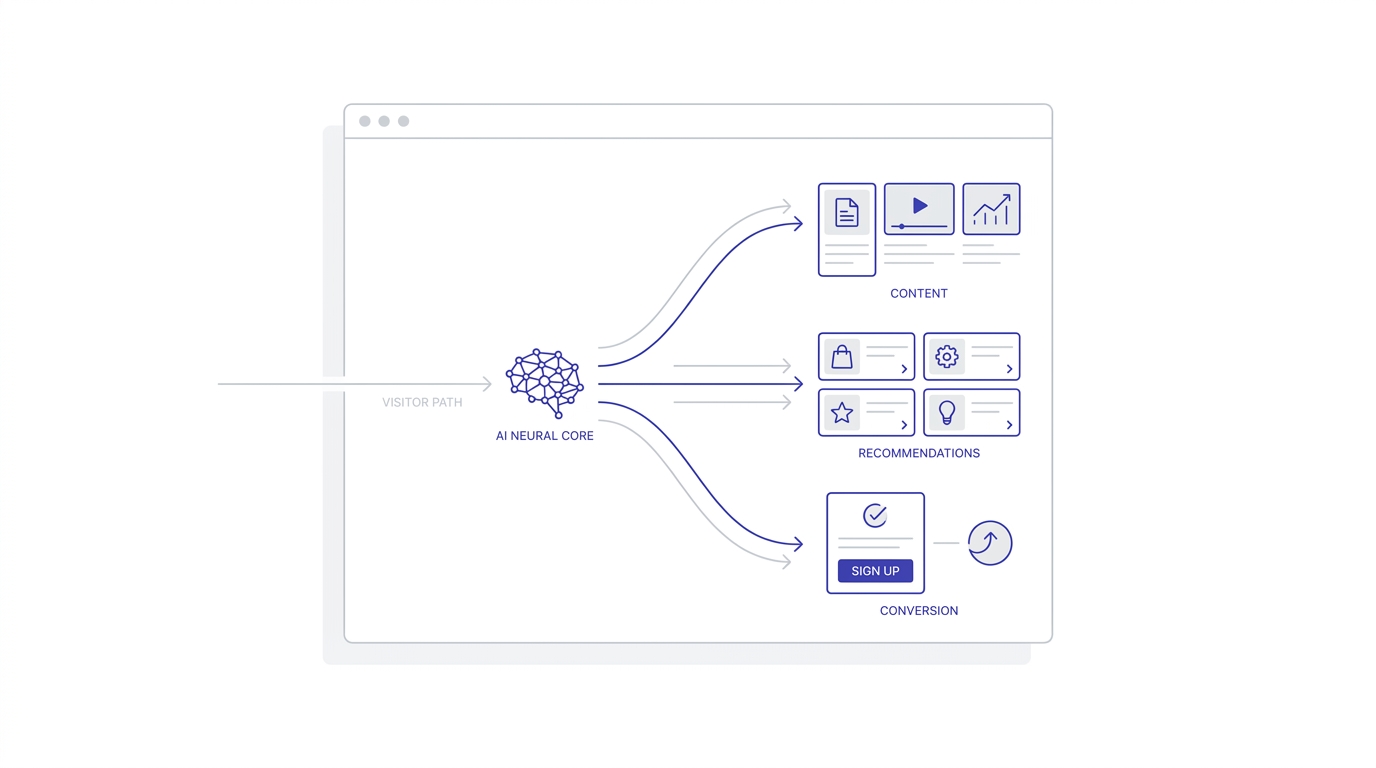
Most beginners think about AI in digital marketing as a set of individual tools bolted onto individual tasks. That misses the bigger shift happening underneath: AI is quietly rebuilding the entire customer journey into something that looks different for every single visitor, rather than one fixed path everyone follows.
Dynamic Website Experiences Based on Visitor Behavior
Tools like Dynamic Yield and Optimizely now let a website change its own layout, headline, or offer in real time depending on who’s looking at it. A first-time visitor arriving from a Google search might see an educational headline explaining what the product does. A returning visitor who abandoned a cart three days ago might see the exact item they left behind with a small discount nudge. Both are viewing the same URL, but the AI layer is deciding which version actually gets served based on behavioral signals collected in milliseconds.
The practical takeaway here is that a single, static homepage designed for an imaginary “average visitor” is quickly becoming outdated. Even a basic level of behavioral personalization, showing returning visitors different content than first-timers, tends to lift conversion noticeably, and most ecommerce platforms now offer some version of this without needing a developer to build it from scratch.
Predictive Journey Mapping
Beyond reacting to what a visitor just did, some AI systems now predict what a visitor is likely to do several steps ahead, based on the paths thousands of similar past visitors took before either converting or leaving. Salesforce’s Marketing Cloud, for example, uses this to flag which stage of the funnel a specific lead is likely stuck at and suggests the next best action, an email, a retargeting ad, a discount code, to move them forward.
This sounds abstract until you see it applied. A B2B software company noticing that leads who download a pricing PDF but don’t book a demo within five days rarely convert can use a predictive model to flag that exact pattern automatically and trigger a specific nudge sequence, rather than relying on a sales rep remembering to follow up. The mistake to avoid here is over-automating this to the point where every touchpoint feels engineered. A predictive nudge should feel like good timing, not surveillance.
Personalization at Scale Without Losing the Human Feel
The tension every marketer runs into eventually is that hyper-personalized AI-driven experiences can start to feel invasive if they’re too obviously data-driven. Getting an email that says “we noticed you looked at this product four times this week” reads as slightly creepy to most people, even though it’s technically accurate. The better approach, and the one brands doing this well actually use, is letting the personalization show up in what content or offer someone sees, not in language that announces the tracking out loud. Subtlety is the actual skill here, and it’s a human judgment call that no AI model makes on its own.
Think about it from the other side for a second. Most people don’t actually mind personalization itself. What bothers them is being reminded that they’re being watched while it happens. A recommendation that just quietly shows the right product feels helpful. A message that spells out exactly how that recommendation was generated feels like surveillance. The AI is doing the same job in both cases. The difference between “helpful” and “creepy” comes down entirely to how a human on the marketing team chose to phrase the output, which is a good reminder that even the most advanced personalization system still needs a person deciding where the line sits.
Step-by-Step: How to Start Using AI in Your Digital Marketing
Reading about AI tools and actually using one productively are two different things. Here’s a framework that avoids the two most common failure modes: either doing nothing because it feels overwhelming, or adopting five tools at once and abandoning all of them within a month because nothing sticks.
Step 1: Audit Your Current Workflow
Before touching a single tool, list out what you actually do in a typical week. Writing product descriptions, scheduling social posts, drafting email copy, analyzing campaign reports, responding to customer questions. Circle the tasks that are repetitive and time-consuming but not particularly complex. Those are your AI candidates. Complex, judgment-heavy work, like deciding overall brand strategy or handling an upset high-value customer, is not where you start.
The mistake most people make at this step is skipping it entirely and just grabbing whatever AI tool is trending that week. Without the audit, you end up bolting AI onto a task that didn’t need it while ignoring the task that would have saved you six hours a week.
Step 2: Pick One Repetitive Task to Automate First
Choose exactly one task from that list. Not five. One. If it’s writing product descriptions, start there. If it’s drafting the first version of your weekly email newsletter, start there. Narrowing to one task means you can actually measure whether the tool made a real difference, instead of a vague sense that “things feel faster now” without any evidence backing it up.
A common example: an ecommerce store with 200 SKUs and no product descriptions written yet. Feeding product specs into ChatGPT with a clear prompt (brand tone, target customer, key benefits to hit) can produce a workable first draft for each product in a fraction of the time a human writer would need. The mistake at this step is publishing that first draft directly. It still needs a human pass for accuracy and voice, but even with that edit built in, the time saved is real and measurable.
Step 3: Choose the Right Tool for That Task, Not the Most Hyped One
Different tools are built for different jobs, and the most talked-about tool isn’t always the right fit. For long-form writing and nuanced tone matching, Claude tends to hold context and instructions more consistently across a longer document. For fast, punchy ad copy variations, ChatGPT is quick and iterates well in a back-and-forth conversation. For SEO-specific content scoring against competitors, Surfer SEO does something neither general AI chatbot does natively.
The mistake here is assuming one tool should handle everything. Using ChatGPT to try to do keyword-difficulty analysis, a job built for a dedicated SEO tool with actual search volume data, gives you a confident-sounding answer that’s frequently just wrong, because the chatbot has no live access to real search volume numbers unless it’s specifically connected to that data.
Step 4: Measure the Result Before Scaling to More Tasks
Before adding a second AI tool or task, check whether the first one actually moved a real number: time saved, conversion rate, open rate, cost per lead. If the product descriptions written with AI assistance are converting at the same rate as the manually written ones, and took a third of the time, that’s a real win worth scaling. If they’re converting worse, something in the process needs fixing (usually not enough brand-specific detail in the prompt) before adding more AI tools on top of a broken process.
For anyone building this into a full structured approach rather than one task at a time, the Alpha Marketer Foundation Program covers this kind of workflow design alongside the core digital marketing skill set, which matters because AI tools are only as good as the strategy directing them.
Real Tools Beginners Actually Use for AI in Digital Marketing
There’s no shortage of “50 best AI marketing tools” listicles online, and most of them are recycled affiliate content. Here’s what’s actually worth your time, broken down honestly.
Free Tools Worth Starting With
ChatGPT’s free tier handles drafting, brainstorming, and rewriting well enough for most beginners to get real value without paying anything. Google’s Gemini is built into many Workspace tools already, so if you’re using Google Docs or Sheets for marketing planning, it’s already sitting there. Canva’s Magic Design feature, free on the basic plan, generates layout options from a text prompt, which is genuinely useful for someone with zero design background needing a social graphic fast. If design is a gap for you specifically, it’s worth pairing that with actual design fundamentals so you understand why a layout works, not just how to generate one.
Paid Tools Worth the Money
Klaviyo’s predictive analytics features, bundled into its paid tiers, genuinely earn their cost for ecommerce brands with an existing customer list of a few thousand or more, since the lifetime-value predictions get more accurate with more historical purchase data feeding the model. Surfer SEO, at roughly $89 a month on its entry plan, pays for itself quickly for anyone publishing content regularly and trying to compete on search rankings, because it removes hours of manual competitor analysis. Jasper, built specifically around brand voice consistency across a team, makes more sense for an agency or a larger marketing team than a solo marketer, where the value is keeping five different writers sounding like the same brand.
Tools That Overpromise More Than They Deliver
AI Tools for Analytics and Reporting
Google Analytics 4 quietly runs machine learning models in the background to fill gaps in your data, predicting purchase probability and churn probability for segments of your audience, even when cookie-based tracking is incomplete. That’s a direct response to the privacy changes across the industry over the past few years, and it means the reporting a beginner sees inside GA4 today already has AI-driven estimation baked into it, whether anyone reads the fine print or not.
For a more digestible reporting layer, tools like Looker Studio combined with AI-generated summaries can turn a messy spreadsheet of campaign numbers into a plain-language summary of what actually changed week over week. This matters more than it sounds, because most marketers waste real time each week manually scanning dashboards for what moved, when an AI summary can flag “conversion rate dropped 12% on mobile traffic from Instagram” in one line instead of someone hunting for it across four separate reports.
Plenty of “AI marketing automation” platforms sell themselves as fully autonomous systems that will run your entire campaign without oversight. In practice, most of them still need a human checking outputs regularly, because the AI is trained on general patterns, not your specific brand, audience, or product nuance. Be skeptical of any tool claiming it will “10x your results with zero effort.” If a tool sounds like it eliminates the need for marketing knowledge entirely, that’s usually the sign it will eliminate your budget instead. A good tool comparison resource before committing to a paid plan saves a lot of wasted subscription money.
Mistakes People Make When Using AI in Digital Marketing
Most of the disappointment people report with AI in marketing traces back to a handful of repeated mistakes, not a flaw in the technology itself.
Trusting AI Output Without Fact-Checking
Generative AI tools produce confident-sounding text whether the underlying facts are correct or not. This is often called hallucination: the system generates a statistic, a source, or a claim that sounds plausible but doesn’t actually exist. A marketer publishing a blog post with an AI-generated statistic that turns out to be fabricated damages credibility fast, especially in industries like finance or health where accuracy actually matters legally. Every factual claim generated by AI needs a real source check before it goes live, no exceptions.
This gets worse, not better, the more confident the AI sounds. A model will state a made-up percentage or a fake study name in the exact same tone it uses for something completely accurate, with zero difference in phrasing to warn a reader. That’s the trap. Nobody expects a robotic, hedging tone from AI-generated hallucinations. It reads exactly as authoritative as the correct information sitting right next to it, which is precisely why a manual fact-check on every number, every named source, and every specific claim needs to become a non-negotiable step before publishing, not an optional nice-to-have when time allows.
Using AI Content Without Any Editing
Publishing raw AI output, unedited, is easy to spot. It tends to have a repetitive rhythm, generic phrasing, and a strange lack of specific detail or genuine opinion. Readers notice, and increasingly, so do search engines. The fix isn’t avoiding AI entirely. It’s using it for the first draft, then adding real examples, a genuine point of view, and details only someone who actually knows the subject would include. That editing pass is where the real value gets added, not in the generation step.
Ignoring Data Privacy and Compliance
Feeding customer data, email lists, purchase history, personal details, into a public AI tool without checking its data handling policy is a real risk, not a theoretical one. Some AI platforms use input data to train future models unless you specifically opt out or use an enterprise-tier plan with data protection guarantees. Under regulations like GDPR in Europe or India’s Digital Personal Data Protection Act, mishandling customer data through a third-party AI tool can create genuine legal exposure for a business, not just an awkward mistake. Always check a tool’s data policy before pasting anything containing real customer information into it.
Losing Brand Voice Consistency Across AI-Generated Content
A brand that sounds slightly different in every blog post, email, and social caption because five different team members are each prompting AI tools in their own way ends up with a Frankenstein voice that confuses readers over time. This shows up subtly at first, one post uses short punchy sentences, another sounds overly formal, and a customer following the brand across channels starts to sense something’s off even if they can’t name it.
The fix is building a short, specific brand voice reference document, three or four adjectives describing the tone, a few example sentences that sound “on brand,” and a few that sound “off brand,” and feeding that into every AI prompt as context. Klaviyo and Jasper both let teams save this as a reusable brand profile so it’s applied automatically rather than re-explained every single time someone opens a new chat window.
How to Measure ROI When You Add AI to Your Marketing Stack
Adopting an AI tool without measuring whether it actually paid for itself is how marketing budgets quietly bleed money on subscriptions nobody’s using properly six months later. Measuring this properly isn’t complicated, but it does require deciding on the right numbers before you start, not after.
Time Saved Versus Cost of the Tool
The simplest starting metric is hours saved multiplied by what that time is worth. If a $50-a-month AI writing tool saves a marketer six hours a week that would otherwise go into drafting product copy, and that marketer’s time is worth even a modest hourly rate, the tool pays for itself within the first week of the month. Track this for the first thirty days of using any new AI tool specifically, writing down actual time spent before and after, rather than guessing, because the “it feels faster” impression is often wrong in either direction once someone actually measures it.
Output Quality, Not Just Output Speed
Speed alone isn’t the full picture. A tool that produces content twice as fast but requires so much editing that the net time saved is minimal isn’t actually delivering ROI, it’s just moving the time cost from writing to editing. Track a rough quality score, even a simple 1 to 5 rating from whoever reviews the output, alongside the time saved metric, so a tool that looks like a win on speed doesn’t hide a quality problem underneath.
Conversion and Revenue Impact Over a Full Sales Cycle
For tools touching customer-facing content or targeting, like AI-driven ad optimization or personalized email sequences, the real ROI question is whether conversion rate, average order value, or customer lifetime value moved, not just whether the process felt smoother. This requires patience most beginners underestimate: a full sales cycle needs to complete before the data means anything, which for a B2B company with a 60-day sales cycle means waiting two months before drawing conclusions, not two weeks. Pulling the plug on a tool after ten days because the numbers “don’t look different yet” is a common and avoidable mistake.
The Future of AI in Digital Marketing
It’s worth being honest about where this is actually heading, rather than repeating vague predictions about AI “changing everything.”
Jobs Are Changing, Not Disappearing
The marketers losing work to AI right now are the ones whose entire value was producing generic output fast, and nothing beyond that. The marketers gaining ground are the ones directing AI tools with sharp strategy, catching the mistakes AI makes, and adding the human judgment and brand-specific knowledge that no model has access to. A junior copywriter who only ever wrote generic product descriptions faces real pressure. A strategist who understands customer psychology, brand positioning, and how to prompt and edit AI output effectively is more valuable now than five years ago, not less, because they can produce far more output per hour without sacrificing quality.
Look at what actually happens inside agencies handling this shift well. Roles that used to be split between a junior copywriter, a junior designer, and a junior media buyer are increasingly merging into a single “AI-assisted marketing generalist” role, someone who can draft copy, generate a rough creative concept, and set up a basic ad campaign, all using AI tools to speed up each step, then loop in a specialist only for the final polish. That’s not a hypothetical trend. It’s already how a lot of small agencies and in-house teams are restructuring their hiring, because paying for three separate junior roles doing 30% of a job each makes less sense when one person with the right tools can cover 80% of it directly.
Skills Worth Learning Right Now
Prompt engineering, meaning the ability to give an AI tool clear, specific instructions that produce genuinely useful output on the first or second try, is a real, learnable skill, not a gimmick. A vague prompt like “write me an ad” produces generic filler. A specific prompt naming the audience, the product’s actual benefit, the tone, and an example of copy the brand likes produces something usable on the first pass. That difference alone separates people getting real value from AI tools from people writing off the whole category after one bad result.
Data literacy matters more too, since so many AI tools are producing predictions and recommendations that a marketer needs to be able to sanity-check rather than blindly trust. Knowing enough to ask “what data was this prediction actually trained on, and does our business look anything like that dataset” prevents a lot of wasted budget chasing a recommendation that doesn’t actually fit. And plain old marketing fundamentals, understanding a customer’s actual problem, writing persuasively, structuring a funnel, matter more than ever, because those are exactly the things AI still can’t do on its own with any real accuracy. The tools amplify skill. They don’t replace the need for it.
AI in Digital Marketing: What Still Needs a Human in the Loop
After going through every category and channel above, it’s worth being blunt about where AI genuinely falls short, because most of the disappointment beginners feel comes from expecting it to do jobs it was never built for.
Understanding Genuine Customer Emotion
AI can analyze sentiment in customer reviews or support tickets, flagging words associated with frustration or satisfaction. What it can’t do is sit with a genuinely upset customer on a call and read the specific mix of tone, hesitation, and unspoken concern that tells an experienced support rep exactly what the customer actually needs to hear next. A chatbot handling a simple shipping question works fine. The same chatbot handling a customer threatening to leave a negative review over a botched order tends to escalate frustration rather than defuse it, because it’s matching patterns, not genuinely reading the room.
Making Strategic Calls With Incomplete Information
AI models make decisions based on historical data. A brand entering a genuinely new market, launching a category-defining product, or navigating a sudden reputation crisis is operating in a situation with no clean historical pattern to learn from. A marketer’s judgment, built from years of pattern recognition across situations that never repeat exactly, still outperforms a model trained on the past when the present doesn’t look like the past. This is exactly why strategic planning, brand positioning, and crisis response remain firmly human-led functions even at companies that have adopted AI heavily everywhere else.
Knowing When Not to Automate Something
Maybe the most underrated skill in all of this is recognizing which parts of a customer relationship should stay manual on purpose, even if AI technically could handle them. A handwritten thank-you note from a founder to an early customer, a personal reply from an account manager instead of an automated sequence, a human voice on the phone during a genuine emergency: these moments build the kind of loyalty that automated efficiency actively works against if applied without judgment. The businesses getting the most out of AI right now aren’t the ones automating everything possible. They’re the ones automating the repetitive 80% so there’s more real bandwidth for the 20% that actually needs a human touch.
Conclusion
So, what is AI in digital marketing, at the end of all this? It’s not a single tool and it’s not magic. It’s a set of technologies, machine learning, natural language processing, generative AI, and computer vision, embedded into the platforms marketers already use, handling the repetitive analysis and first-draft creation so humans can spend more time on strategy, judgment, and the specific brand knowledge no algorithm has access to. The marketers winning with it right now aren’t the ones using the most tools. They’re the ones who picked one workflow, learned it properly, measured the result, and only then expanded from there.
If there’s one action to take after reading this, it’s Step 1 from earlier: sit down and actually audit your own workflow this week, find the one repetitive task eating the most time, and test a single AI tool against it before touching anything else.
Frequently Asked Questions
What is AI in digital marketing in simple terms?
AI in digital marketing means using software that can analyze data, generate content, or make decisions automatically, based on patterns learned from past information, rather than a human doing every step manually. Common examples include chatbots, automated ad bidding, and tools that write draft marketing copy.
Is AI the same thing as marketing automation?
No. Automation follows fixed rules that don’t change unless a human edits them, like sending an email three hours after a cart abandonment. AI learns from data and adjusts its behavior over time, such as testing different subject lines and automatically favoring the ones that perform best for each subscriber.
What are the best AI tools for beginners in digital marketing?
ChatGPT and Claude are strong starting points for content drafting and brainstorming. Canva’s Magic Design helps with visuals for anyone without design experience. For SEO specifically, Surfer SEO gives beginners a clear, structured way to see what top-ranking content actually covers.
Will AI replace digital marketers?
AI is more likely to replace specific repetitive tasks than entire jobs. Marketers who only produced generic content or manual reports face real pressure, while marketers who combine strategy, brand judgment, and AI tool skills are becoming more valuable, since they can produce far more work per hour.
How do I start using AI in my marketing if I have zero experience?
Start by listing your weekly tasks and identifying the most repetitive, time-consuming one that doesn’t require complex judgment. Test a single AI tool on that one task, measure whether it actually saved time or improved results, and only then consider expanding to a second task or tool.
Is AI-generated content bad for SEO?
Unedited, mass-produced AI content can hurt SEO because search engines are specifically designed to detect and deprioritize generic, low-value content. AI-assisted content that’s edited to include real examples, specific data, and genuine expertise performs fine and is treated the same as any other well-written page.
What is generative AI, and how is it different from other types of AI used in marketing?
Generative AI creates new content, text, images, or video, based on patterns learned during training, rather than analyzing existing data to make a prediction. Tools like ChatGPT and Midjourney are generative AI. Tools that predict customer churn or lead quality are typically machine learning, a related but different category.
Can small businesses actually afford to use AI in their marketing?
Yes. Many of the most useful AI tools, including ChatGPT’s free tier, Canva’s free design features, and Gemini inside Google Workspace, cost nothing to start with. Paid tools like Klaviyo or Surfer SEO become worth the cost once a business has enough customer data or content volume to justify the investment.
How does AI affect Google Ads and paid advertising specifically?
Google’s Performance Max and Meta’s Advantage+ campaigns now use AI to handle bidding, audience targeting, and creative rotation automatically across multiple platforms at once. This shifts the marketer’s job from manually building audience segments to feeding the system strong creative inputs and monitoring whether the automated decisions are actually delivering results.
What is AI hallucination, and why does it matter for marketing content?
AI hallucination is when a generative AI tool produces a statistic, source, or claim that sounds confident and accurate but is actually fabricated. This matters for marketing content because publishing a false statistic or fake source in a blog post or ad can damage a brand’s credibility and, in regulated industries, create real legal risk.
Do I need to know how to code to use AI in digital marketing?
No. Most AI tools used in marketing, like ChatGPT, Canva, Klaviyo, and Surfer SEO, are built with a visual interface or simple prompt-based system that requires no coding knowledge at all. Coding becomes relevant only if you’re building custom AI integrations or automations beyond what these off-the-shelf tools already offer.
What is the biggest mistake beginners make with AI in marketing?
The most common mistake is publishing AI-generated content or decisions without any human review. Whether it’s a factual claim that turns out to be fabricated or copy that sounds generic, skipping the editing and fact-checking step is what causes most of the disappointment people report with AI marketing tools.
Is ChatGPT better than Claude for marketing content?
Neither tool is universally better. ChatGPT tends to work well for fast, iterative back-and-forth on shorter copy like ad headlines or social captions. Claude tends to hold instructions and brand tone more consistently across longer documents like blog posts or email sequences. Testing both on the same task for a few weeks is the only reliable way to know which fits a specific team’s workflow.
How long does it take to see ROI from AI marketing tools?
For tools affecting time saved on a repetitive task, the payoff can show up within days or a couple of weeks once actual hours saved are tracked. For tools affecting conversion rate or customer lifetime value, a full sales cycle needs to complete before the data is reliable, which can mean waiting one to three months depending on the business.
What happens if I feed customer data into an AI tool without checking its privacy policy?
Some AI platforms use submitted data to train future models unless a business opts out or uses an enterprise plan with data protection terms. Feeding customer names, emails, or purchase history into a public AI tool without checking this first can create real compliance risk under regulations like GDPR or India’s Digital Personal Data Protection Act, not just an awkward privacy slip.